
Part 1: Dream Presentation
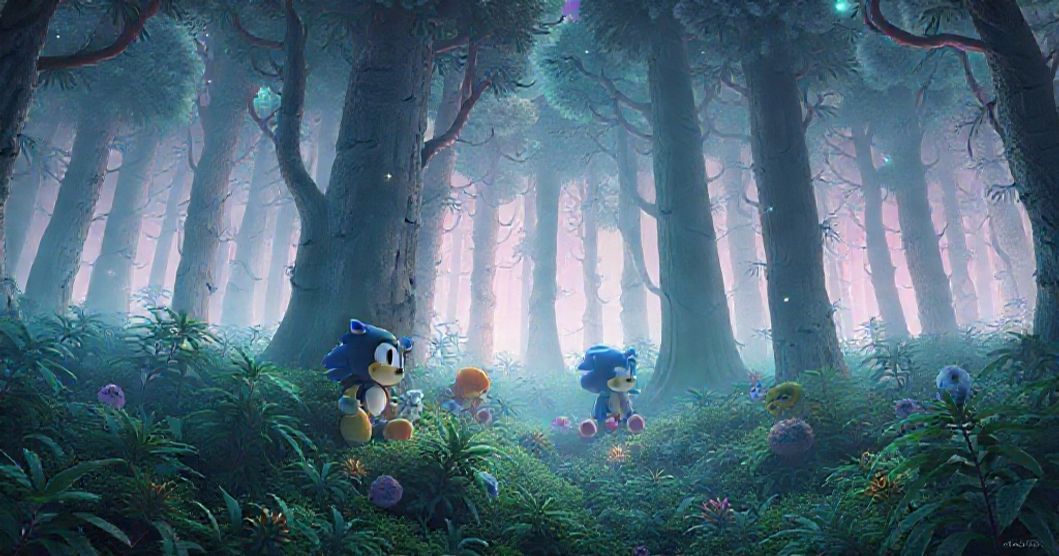
The mind’s creative machinery often produces surreal landscapes that defy rational explanation, and for this dreamer, those landscapes have taken on a distinctly digital, liminal quality. The recurring forest dreams materialize as a haunting intersection of early 3D computer graphics and psychological threshold states—sparse trees with angular, pixelated branches clawing at a fog-choked sky, their skeletal forms emerging from a gray mist or pitch-black void that feels both inescapable and strangely beautiful. These aren’t ordinary forests; they resemble the blocky, imperfect rendering of early Garry’s Mod maps or PlayStation 2-era video games, where technological limitations created an otherworldly aesthetic rather than realism. The dreamer describes the setting as “old” and “fascinating,” despite labeling them “nightmares,” revealing a paradoxical emotional response to these liminal spaces.
The narrative unfolds without clear plot, shifting between perspectives and elements in a nonlinear, glitched manner. One dream merged video game reality with the dreamer’s own experience, blurring the boundary between player and played. Another introduced tattered Sonic plushies—childhood icons rendered with digital decay—linked to an abduction case and a thirteen-day observation period, evoking themes of surveillance and digital memory. The dreamer notes these experiences began after quitting weed for the third time, suggesting a connection between substance withdrawal and the intensity of these surreal dreamscapes.
Part 2: Clinical Analysis
Want a More Personalized Interpretation?
Get your own AI-powered dream analysis tailored specifically to your dream
🔮Try Dream Analysis FreeSymbolic Landscape: The Forest as Psychological Threshold
The recurring forest in these dreams embodies classic liminal symbolism—a space between two states, neither fully real nor fully imagined. In Jungian psychology, forests often represent the collective unconscious, while their “liminal” quality (neither here nor there, neither past nor future) suggests a psychological threshold. The old CGI aesthetic amplifies this liminality: it evokes digital nostalgia for a technological era the dreamer likely experienced in childhood or adolescence, creating a bridge between past and present. The sparse, skeletal trees with their pixelated forms symbolize emotional emptiness or existential liminality—like a mind in transition, lacking the “fullness” of established reality.
The Sonic plushies introduce another layer of symbolism. These childhood icons, rendered in tattered, “glitched” form, represent the dreamer’s inner child—innocence corrupted by digital decay. In dreams, plush toys often symbolize attachment, comfort, or unresolved childhood issues, while their frayed state suggests emotional vulnerability or a sense of self that’s been worn down by life’s challenges. The abduction case narrative, linked to these plushies, hints at feelings of being “abducted” by one’s past or by digital nostalgia, a common theme during periods of significant life change.
Psychological Perspectives: Processing Withdrawal Through Dreamwork
Freud’s theory of dream work helps explain the condensation and displacement of elements in these dreams. The abduction case, video game reality blur, and plushies likely represent displaced anxieties about control and identity during the process of quitting weed. Weed withdrawal often triggers intense dreams as the brain adjusts to chemical changes, and the dream’s surreal quality may reflect the mind’s attempt to process this disruption. From a Jungian perspective, the forest and its digital aesthetic could be a manifestation of the collective unconscious’s response to technological modernity—a realm where the dreamer’s psyche processes the tension between digital immersion and authentic experience.
Cognitive dream theory offers another lens: during withdrawal, the brain may reprocess emotional memories, using bizarre imagery to make sense of the shift from habitual substance use to sobriety. The nonlinear, glitched nature of the dreams aligns with the fragmented thinking that often occurs during periods of change, as the mind struggles to reorganize neural pathways associated with the old habit.
Emotional & Life Context: Weed Withdrawal and the Fascination with Liminality
The connection between quitting weed and the onset of these dreams is significant. When we discontinue substances, the brain experiences a temporary “reward deficit,” triggering intense emotional states and vivid dreams as it adjusts to new neurotransmitter balances. The dreamer’s description of the forest as “fascinating” despite labeling it “nightmare” suggests an emotional paradox: the discomfort of withdrawal is balanced by an unexpected curiosity about the dream’s imagery. This tension may reflect the dreamer’s ambivalence about quitting—a common emotional response to habit change, where the familiar (even in withdrawal) feels safer than the unknown.
The old CGI aesthetic and video game elements hint at the dreamer’s relationship with technology and digital culture. The YouTube shorts comparison suggests a digital trigger for the dream, indicating how modern media can infiltrate the unconscious during periods of psychological vulnerability. The abduction case symbolism may represent fears of losing control—a common anxiety during withdrawal, where the body and mind feel unmoored from their usual routines.
Therapeutic Insights: Navigating the Unconscious Through Dream Exploration
This dream offers rich material for self-reflection, as the liminal forest and surreal elements serve as a mirror for the dreamer’s internal landscape. The fascination with the dream despite its unsettling quality suggests a healthy openness to exploring the unconscious, a valuable therapeutic stance. To integrate these insights, the dreamer might consider keeping a dream journal focused on the emotional tone of these dreams, noting which elements trigger strong feelings (the plushies, the forest, the video game blur).
Reflective exercises could include creating art or writing about the forest, using the digital nostalgia as a starting point for exploring childhood memories and how they influence current emotional states. The nonlinear nature of the dreams suggests the need for flexibility in processing emotions—allowing space for the mind to work through complex feelings without imposing a linear narrative.
FAQ Section
Q: What does the old CGI forest symbolize in these dreams?
A: The old computer graphics represent digital nostalgia, technological transition, and psychological liminality—the “in-between” space of uncertainty during change. It may reflect anxiety about digital identity or a longing for a simpler technological era.
Q: Why do the dreams feel both unsettling and fascinating?
A: This paradox reflects the brain’s dual processing of change: discomfort with withdrawal (unsettling) and curiosity about the unknown (fascinating). The liminal quality satisfies the unconscious need to explore new emotional territory.
Q: How might the Sonic plushies and abduction case relate to each other?
A: The plushies (childhood icons) and abduction case (loss of control) likely symbolize feeling “kidnapped” by one’s past or by digital nostalgia, suggesting unresolved childhood issues or fears of losing agency during life transitions.