
Part 1: Dream Presentation
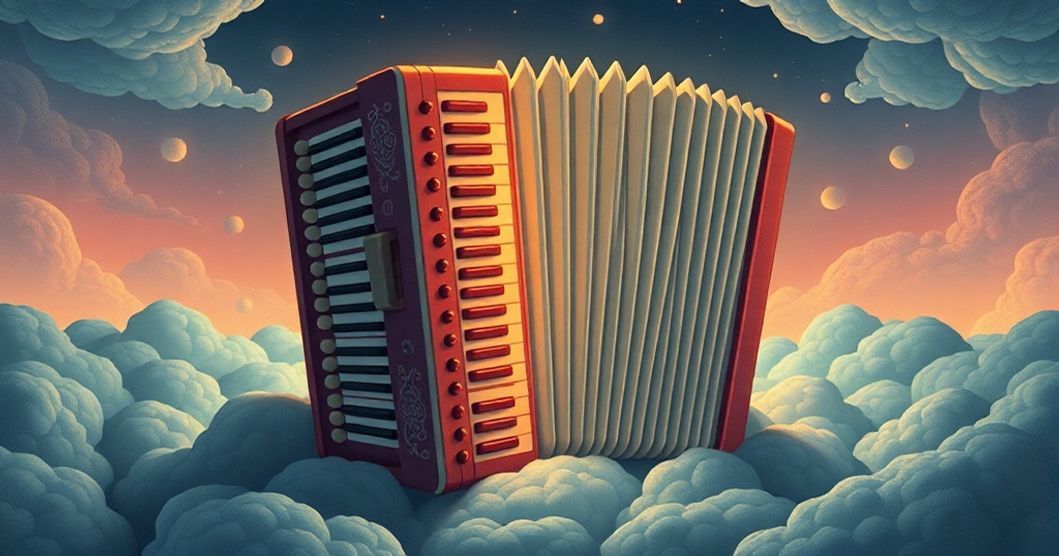
Dreams often surprise us with their illogical yet deeply meaningful imagery, and this particular dream about a spine transplant with an accordion is no exception. The absurdity of the scenario—where a medical procedure becomes unexpectedly comical—reveals the subconscious mind’s playful side even in contexts of vulnerability and transformation. The dream begins in a sterile hospital room, the fluorescent lights casting a cold glow over the white sheets and medical equipment. The dreamer, facing a spine transplant, experiences a mix of fear and relief, then wakes to discover their new spine has been replaced by an accordion. The comical sound 'RRRRRRE REHHHH' with each step, combined with the absurdity of a musical instrument as a bodily part, triggers uncontrollable laughter that lingers even upon waking.
Part 2: Clinical Analysis
Symbolic Landscape: Decoding the Accordion Spine
Want a More Personalized Interpretation?
Get your own AI-powered dream analysis tailored specifically to your dream
🔮Try Dream Analysis FreeThe spine in dreams universally represents one’s 'backbone'—the structural support, emotional resilience, and sense of direction in life. Here, the spine’s transplant introduces themes of transformation and adaptation. The accordion, however, is a symbol of flexibility, music, and playfulness. Its insertion into a medical context creates a paradox: the spine, which should provide rigidity and support, becomes fluid and musical, suggesting the subconscious mind’s desire to balance structure with spontaneity. The hospital setting amplifies vulnerability, while the unexpected replacement with an accordion transforms this vulnerability into comedy—a defense mechanism that lightens the weight of fear and uncertainty.
The sound 'RRRRRRE REHHHH' is not merely auditory; it’s the dream’s comedic punctuation mark. Accordions produce sound through bellows movement, and in this dream, the sound becomes the literal expression of the spine’s new function. This could symbolize the dreamer’s need to 'make noise' about their true desires or the absurdity of trying to fit into rigid structures (like medical expectations) that stifle authentic expression.
Psychological Undercurrents: From Freud to Jung
From a Freudian perspective, the spine transplant might represent repressed anxieties about physical function and control. The accordion, as a 'foreign body' in the body, could symbolize unresolved conflicts about identity or how one’s body performs in social contexts. The laughter, in Freudian terms, might be the ego’s attempt to manage anxiety by transforming it into humor—a common defense mechanism against threatening thoughts.
Jungian psychology offers a complementary view, seeing the accordion as an expression of the 'shadow' self: the playful, unexpected aspects of the personality that the conscious mind might repress. The spine, as the 'central axis' of the body, represents the anima/animus archetype—the integration of masculine and feminine energies. An accordion, with its dual nature of structure and flexibility, could embody the tension between the need for order and the need for creative expression.
Neuroscientifically, this dream reflects the brain’s random activation during REM sleep, where the default mode network (responsible for self-referential thought) interacts with the limbic system (emotions) and motor cortex (movement). The absurd combination of medical procedure and musical instrument suggests the brain’s attempt to make sense of disconnected neural activity through narrative, creating humor as a way to process otherwise disjointed experiences.
Emotional and Life Context: Structure vs. Flexibility
The dream likely arises from the dreamer’s relationship with structure and flexibility in waking life. The spine transplant implies a period of transformation or medical vulnerability, where the dreamer feels their 'backbone' is at risk. The accordion’s insertion—an instrument associated with dance, celebration, and adaptability—suggests a subconscious longing to transform fear of loss into creative expression. If the dreamer is navigating a period of change (career, relationships, or health), the absurdity might represent their internal conflict between maintaining control and embracing uncertainty.
The laughter itself is significant: it shows the dreamer’s ability to find joy in absurdity, even in situations of vulnerability. This could indicate a healthy defense mechanism against stress—a reminder that humor can be a powerful tool for resilience during difficult times. The dream might also reflect a desire to 'play' more in life, to let go of rigid expectations and allow for spontaneity.
Therapeutic Insights: Embracing the Accordion Within
This dream offers several therapeutic lessons. First, it encourages the dreamer to embrace humor as a healing force. When facing medical or life challenges, laughter can reduce anxiety and foster emotional resilience. The dream suggests that even in moments of perceived 'breakdown' (like a damaged spine), there’s room for 'breakthrough' through playfulness.
Second, the accordion spine invites reflection on how the dreamer structures their life. Are they too rigid in their approach to problems, or does their current 'spine' (support system) lack the flexibility needed to navigate change? The dream’s humor encourages the dreamer to balance discipline with spontaneity, to allow themselves to 'bend' without breaking.
Practical exercises include keeping a 'humor journal' to document moments when absurdity arises, noting how laughter transforms difficult situations. Another practice is to identify one area in life where the dreamer feels 'stiff' or constrained, then visualize injecting 'accordion-like' flexibility into that area—whether through creative hobbies, new routines, or playful interactions.
FAQ Section
Q: Why would a spine transplant be replaced with an accordion in a dream?
A: The accordion symbolizes flexibility and playfulness. This dream likely reflects a subconscious need to transform rigidity (spine) into adaptability, using humor to manage anxiety about change.
Q: What does the laughter in the dream signify?
A: Laughter in dreams often represents the ego’s defense against fear or anxiety. It suggests the dreamer can find joy even in vulnerable situations, a sign of emotional resilience.
Q: How can this dream help with waking life challenges?
A: The dream encourages embracing flexibility and humor in difficult situations. It reminds us that rigid structures can be transformed into creative, playful solutions when we allow ourselves to 'bend' without breaking.