
Part 1: Dream Presentation
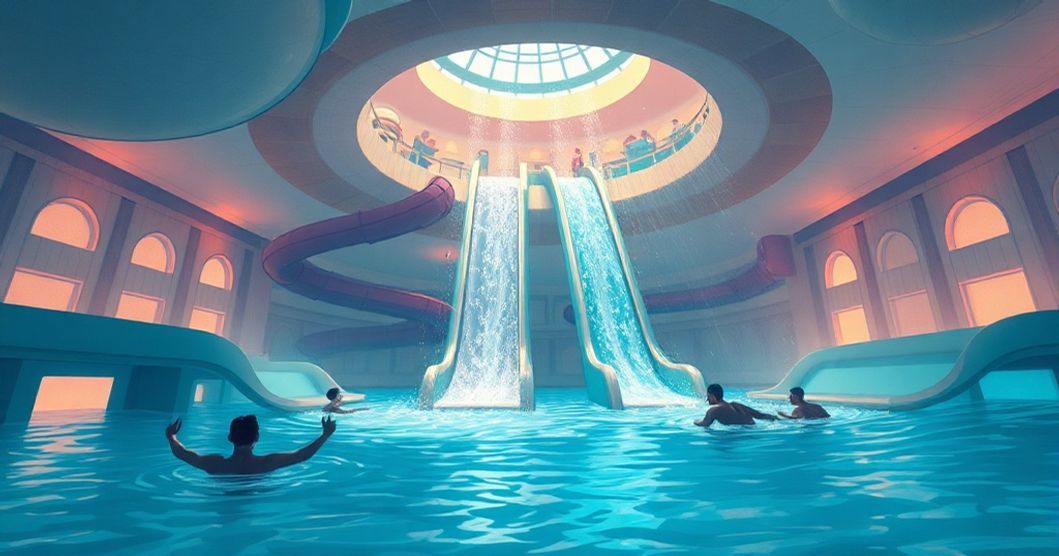
The mind’s journey into the subconscious often reveals unexpected landscapes, and this dream of an indoor waterpark offers a vivid glimpse into the interplay between modern architecture, primal instincts, and cultural memory. In this dream, the dreamer navigates a space defined by smooth white-and-cyan tiled walls, winding tunnel slides, and the cool embrace of artificial water—a liminal realm that feels simultaneously familiar and alien. The dream’s narrative unfolds through sensory details: the humidity thick in the air, the smooth texture of metal ladder rungs, the rush of water as it speeds down the tunnel slide, and the disorienting clarity of endless, featureless walls. This setting, while distinctly modern, evokes deeper psychological currents that connect to our relationship with water, enclosed spaces, and the collective human experience of transition.
Part 2: Clinical Analysis
### Symbolic Landscape: Water, Tiles, and Liminality
Want a More Personalized Interpretation?
Get your own AI-powered dream analysis tailored specifically to your dream
🔮Try Dream Analysis FreeThe indoor waterpark in the dream functions as a powerful symbol of liminality—a threshold space between defined states of being. The smooth white-and-cyan tiles, uniform and unbroken, suggest both order and sterility, while the tunnel slides represent the passage of time and the unconscious mind’s tendency to move between states of awareness. Water, a universal symbol across cultures, embodies both life-giving nourishment and transformative power. In this context, the enclosed waterpark amplifies water’s dual nature: the dreamer feels both invigorated by the water’s movement and confined by its boundaries, mirroring how modern life often creates paradoxical feelings of freedom and restriction.
The tiled architecture hints at another layer of symbolism: the smooth, repetitive surfaces evoke both cleanliness and dehumanization, while the tunnel structure taps into the archetype of the labyrinth—a classic motif of psychological exploration and self-discovery. The absence of natural light in this indoor space further emphasizes its liminal quality, as it exists outside the normal boundaries of day and night, inside and outside, waking and dreaming.
### Psychological Currents: Jungian and Freudian Perspectives
From a Jungian perspective, such dreams may reflect the collective unconscious—archetypes that transcend individual experience. The waterpark could represent the Aquarius archetype, associated with transformation and emotional depth, while the tunnel slides embody the shadow—the hidden aspects of the psyche that emerge during dream states. The uniformity of the tiles might symbolize the persona—the social mask we present to the world, polished and unblemished yet ultimately hollow.
Freudian analysis, meanwhile, might interpret the waterpark as a manifestation of repressed childhood desires for freedom and play. The tunnel slide, with its dark interior and rush of water, could symbolize the unconscious’ exploration of forbidden pleasures or the anxiety of confronting repressed memories. The dream’s emphasis on order (smooth tiles) versus chaos (the unpredictable rush of water) aligns with Freudian concepts of the ego’s struggle to balance id impulses with superego constraints.
### Emotional and Life Context: Modernity, Transition, and Ancestral Echoes
The dream’s prevalence across individuals suggests it taps into universal emotional states of modern life. Indoor waterparks, as a relatively recent cultural invention, represent the tension between our ancient biological needs and contemporary technological environments. The dreamer’s question about ancient Roman bathhouses hints at this connection: the smooth tiles, enclosed spaces, and water rituals in ancient bathhouses mirror the modern waterpark’s design, suggesting a continuity in how humans seek order and comfort in enclosed aquatic spaces.
In waking life, such dreams may arise during periods of transition—career changes, relationship shifts, or identity exploration. The waterpark’s liminal quality becomes a metaphor for the dreamer’s own uncertain place in life, while the tunnel slide represents the anxiety of moving forward without clear direction. The dream’s timing, occurring before the “liminal spaces” trend, suggests these dreams are not merely cultural products but reflections of deeper psychological needs.
### Therapeutic Insights: Navigating the Liminal Space
For the dreamer, this dream invites reflection on how they navigate life’s transitions. The smooth, ordered tiles may represent the need for structure in uncertain times, while the tunnel slide urges embracing the unknown. Practical exercises could include journaling about water-related dreams and identifying patterns in their lives where they feel both confined and free. Creating a “dream journal” to record these liminal experiences can help the dreamer recognize recurring themes, fostering self-awareness.
In a broader sense, understanding the prevalence of such dreams encourages appreciation for the subconscious’ ability to synthesize modern experiences with ancient psychological patterns. The waterpark, while new, connects to our primal relationship with water and enclosed spaces—a reminder that even in an increasingly technological world, our deepest psychological needs remain rooted in fundamental human experiences.
### FAQ Section
Q: Why do so many people have similar dreams about indoor waterparks?
A: These dreams likely connect to universal themes of transition, water symbolism, and the collective unconscious’ response to modernity. They reflect our need for both order and freedom, emerging during periods of life change.
Q: How does the tunnel slide symbolize psychological processes?
A: The tunnel represents the unconscious’ exploration of repressed thoughts, while the slide’s rush mirrors the acceleration of time and the mind’s movement between states of awareness.
Q: Can these dreams be interpreted as warnings about modern life?
A: No—they are more likely invitations to explore how we balance structure and spontaneity. The waterpark’s sterility and order may reflect our need for control, while its fluidity represents the need to embrace uncertainty.