
Part 1: Dream Presentation
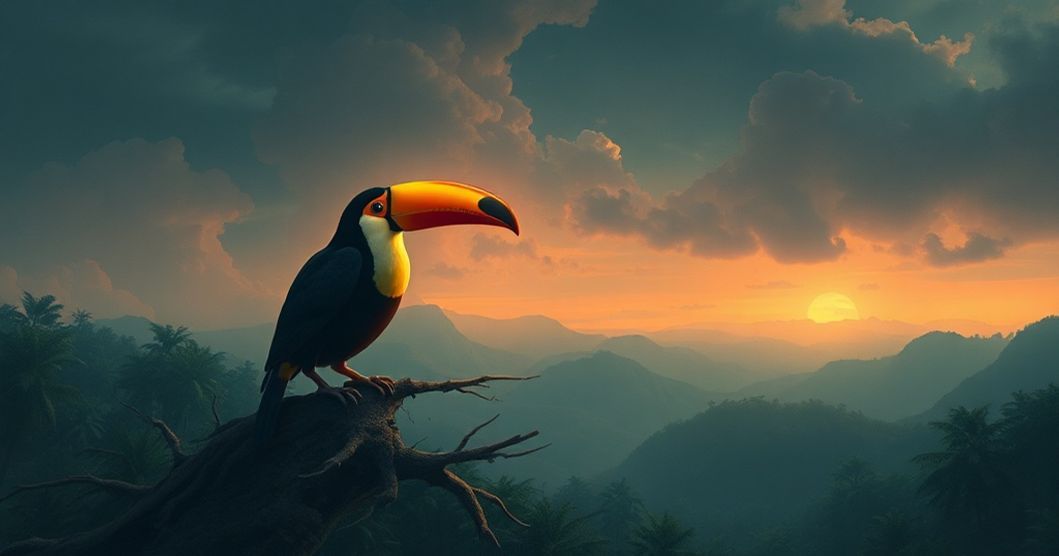
Dreams often serve as windows into the unconscious mind, revealing emotional landscapes we may not fully articulate in waking life. This particular dream, recurring throughout childhood, presents a vivid symbolic journey through a misty jungle valley. The dreamer approaches a narrow bridge, encounters a toucan that pecks her hand, experiences sudden pain and terror, and falls into a misty ravine. The setting—a lush jungle with a river below, heavy mist, and a straight, 'tighter' bridge—creates an atmosphere of both beauty and danger, while the toucan’s unexpected attack and subsequent fall introduce themes of vulnerability and emotional overwhelm.
The rewritten dream narrative captures this journey in rich sensory detail: the feel of mist on the skin, the texture of the wooden bridge rail, the sharp pain of the toucan’s peck, and the disorienting fall into the swirling mist. The emotional arc—from cautious approach to panicked reaction—highlights the dream’s psychological significance, as recurring dreams often signal unresolved emotional patterns or memories that demand attention.
Part 2: Clinical Analysis
Want a More Personalized Interpretation?
Get your own AI-powered dream analysis tailored specifically to your dream
🔮Try Dream Analysis FreeSymbolic Landscape: The Jungles of the Unconscious
The dream’s setting—the misty jungle valley with its river and narrow bridge—establishes a symbolic landscape rich with archetypal meaning. In Jungian psychology, jungles represent the 'shadow' aspect of the psyche—the unconscious material we may resist or fear. The river, flowing beneath the mist, symbolizes the unconscious mind itself, its currents both mysterious and ever-present. The mist creates ambiguity, blurring the line between reality and fantasy, much like how childhood anxieties can feel both immediate and surreal.
The 'tighter' bridge is a powerful symbol of boundaries and thresholds. In dreamwork, bridges often represent transitions between conscious and unconscious states, or between different life stages. A 'tighter' bridge suggests a precarious balance—one that feels both necessary and threatening. The wooden rail, where the dreamer places her hand, embodies the attempt to establish safety and stability in an uncertain environment. Its worn surface hints at repeated attempts to cross this threshold, reinforcing the dream’s recurring nature.
The toucan, a vibrant, exotic bird, introduces a layer of unexpected danger. Toucans are often associated with communication, color, and the 'call' of the unconscious. In this context, its peck represents an intrusion—an unexpected violation of personal space or boundaries. The specificity of the attack (on the back of the hand) suggests vulnerability in a place where one expects protection. The hand itself, a symbol of agency and connection, becomes a target, highlighting the dreamer’s fear of losing control or safety.
Psychological Perspectives: Freud, Jung, and the Unconscious
From a Freudian perspective, the dream may represent repressed childhood anxieties. The toucan’s attack and subsequent fall could symbolize forbidden desires or fears of punishment, as Freud often associated dreams with unconscious conflicts. The recurring nature of the dream suggests an unresolved conflict that persists until addressed.
Jung’s analytical psychology offers a complementary view, emphasizing the dream as a 'compensation' for waking life imbalances. The jungle valley may represent the dreamer’s inner world, while the bridge symbolizes a life transition or psychological threshold. The toucan, as a 'spirit animal' archetype, could represent the dreamer’s shadow—parts of the self she finds threatening or difficult to integrate. The fall into the misty ravine may signify regression or the loss of control, both common themes in dreams of childhood vulnerability.
Neuroscientifically, this recurring dream pattern may reflect the brain’s attempt to process emotional trauma or unresolved memories. The amygdala, responsible for fear responses, becomes hyperactive during REM sleep, reprocessing emotional memories. The vivid sensory details—the mist, the peck, the fall—suggest that this memory is emotionally charged, requiring repeated exposure in dreams to achieve integration or resolution.
Emotional & Life Context: Childhood Fears and Boundaries
The dream’s emotional core centers on vulnerability and boundary violation. The toucan’s unexpected attack, occurring in a seemingly safe environment (the bridge), suggests a fear of being caught off guard in waking life. The fall into the misty ravine amplifies this fear, representing the loss of control and the collapse of safety.
Childhood recurring dreams often emerge during periods of developmental transition—such as starting school, moving homes, or facing new social challenges. The jungle valley, with its mix of beauty and danger, may symbolize the complexity of childhood experiences: the wonder of exploration balanced by the fear of the unknown. The bridge, as a threshold, could represent the transition from childhood innocence to the responsibilities of growing up, with the 'tighter' structure symbolizing the narrowing of safe spaces.
The emotional distress upon waking suggests that this dream was not just a random image but a meaningful emotional signal. The dreamer’s hand, a symbol of agency and connection, is violated, reflecting a deeper fear of having one’s boundaries disrespected. This could relate to real-life experiences of feeling unprotected or misunderstood during childhood, where the self felt vulnerable to external threats or internal fears.
Therapeutic Insights: Integrating the Dream’s Wisdom
For the dreamer, this recurring dream offers several therapeutic insights. First, it highlights the importance of acknowledging and validating childhood fears, even those that seem irrational in hindsight. Dreams like this often persist because they carry unprocessed emotions, not because they predict future events.
A practical reflection exercise involves exploring the 'toucan' in waking life—what does this symbol represent? Is there a relationship or situation where the dreamer feels attacked or unprotected? Journaling about recent experiences that trigger similar feelings can help identify patterns.
The bridge itself suggests a metaphor for navigating boundaries. The dreamer might benefit from practicing assertive communication, learning to recognize and protect personal limits. This involves both setting clear boundaries with others and honoring the boundaries of one’s own emotional safety.
Finally, the recurring nature of the dream indicates that the mind is working through something important. By engaging with the dream’s symbolic elements—rather than dismissing it as 'just a nightmare'—the dreamer can begin to integrate these childhood experiences into a more mature understanding of vulnerability and strength.
FAQ Section
Q: Why did the toucan attack specifically on the hand?
A: The hand is a symbol of agency and connection; the attack on the hand suggests fear of losing the ability to protect oneself or connect with others. It may represent real-life experiences of feeling powerless in certain situations.
Q: What does the misty ravine symbolize in this context?
A: The misty ravine represents the unknown depths of the unconscious, where unresolved fears reside. Falling into it signifies regression or the need to confront these fears directly.
Q: How can I tell if my recurring dreams are trying to tell me something important?
A: Recurring dreams often persist when they carry unprocessed emotions. Notice patterns in the dream’s details and how they connect to waking life stressors. If the dream evokes strong emotions, it’s likely signaling something to address.