
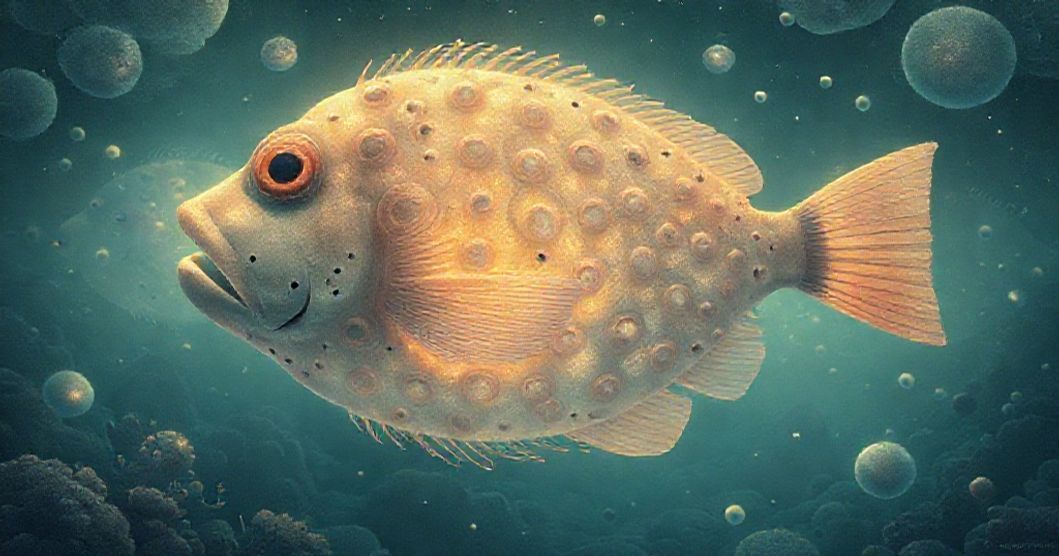
Part 1: Dream Presentation
Dreams serve as a unique language of the unconscious, often delivering messages wrapped in symbols that defy immediate understanding. Consider the dreamer whose nightly narratives repeatedly feature a puffer fish—a creature that seems to materialize without logical cause in their waking life. In each dream, the setting shifts dramatically, yet the puffer fish remains an unwavering presence: sometimes in a bustling city street, other times floating in an endless ocean, and once even in a crowded department store. The dreamer’s recognition of this repetition (“This again”) underscores the uncanny nature of the experience, as they feel no real-world connection to puffer fish yet cannot escape their symbolic appearance. This perplexity and the dreamer’s sense of being “weirded out” reveal the dream’s potential to illuminate deeper psychological currents.
The puffer fish, with its distinctive ability to inflate into a spherical form as a defense mechanism, appears as a recurring symbol in these dreams. Its presence across wildly different dreamscapes suggests the unconscious is urgently conveying a singular message, despite the dreamer’s lack of conscious awareness of puffer fish in their daily life. The dreamer’s bewildered internal dialogue—Why me? Why now?—reflects the tension between the rational mind and the intuitive wisdom of the unconscious.
Part 2: Clinical Analysis
Want a More Personalized Interpretation?
Get your own AI-powered dream analysis tailored specifically to your dream
🔮Try Dream Analysis FreeSymbolic Landscape: The Puffer Fish as Emotional Defense
The puffer fish’s most striking characteristic is its defensive inflation—a survival mechanism that transforms its appearance to deter threats. In dream symbolism, this behavior often represents emotional defensiveness or overprotection. The dreamer’s repeated encounters with the puffer fish suggest their unconscious is signaling a need to examine situations where they feel the urge to “puff up” as a protective response. The lack of real-world connection to puffer fish further emphasizes that this symbol operates on an internal, emotional level rather than referencing external circumstances. The creature’s persistence across dream settings implies the theme is unresolved, demanding attention from the conscious mind.
Psychological Undercurrents: Jungian and Cognitive Perspectives
From a Jungian framework, the puffer fish may represent a personal archetype—the shadow self’s expression of unintegrated aspects of the psyche. Jung believed recurring symbols emerge when the unconscious seeks balance, prompting the dreamer to confront repressed emotions or unacknowledged fears. On a cognitive level, dream repetition aligns with memory consolidation theories, where the brain processes emotional themes by replaying them in sleep. The puffer fish’s presence across varied dreamscapes suggests the mind is attempting to process a single emotional pattern through multiple scenarios, much like a therapist might explore a theme through different case studies.
Emotional and Life Context: Unpacking Unconscious Triggers
The dreamer’s “weirded out” reaction hints at a dissonance between conscious awareness and unconscious communication. The absence of real-world puffer fish encounters suggests the symbol addresses internal conflicts rather than external events. Possible triggers could include recent experiences requiring emotional boundaries—such as professional stress, relationship challenges, or life transitions where the dreamer feels the need to protect themselves. The repetition of the puffer fish might signal that these boundary-related emotions remain unprocessed, creating a loop of symbolic reminders.
Therapeutic Pathways: Integrating Unconscious Messages
To understand the puffer fish’s meaning, the dreamer can begin by exploring waking life moments when they feel the urge to “inflate” emotionally. Journaling about dreams, noting details of each setting, and reflecting on how they felt during the dream can reveal patterns. Mindfulness practices focusing on breath and bodily sensations may help recognize when defensiveness activates. The dream invites the dreamer to ask: What situations make me want to “puff up” or withdraw? By identifying these triggers, the unconscious message can transition from confusion to actionable insight.
FAQ: Navigating Repetitive Dream Symbols
Q: Why does the same symbol appear in different dreams?
A: Repetitive symbols signal unresolved emotions or themes needing attention, acting as a persistent reminder to address inner work.
Q: How can I connect the puffer fish to my waking life?
A: Reflect on situations where you feel the need to “puff up” (protect, overreact) or when boundaries feel threatened.
Q: Is this a cause for concern?
A: No—dreams are natural communication. The message is more important than the symbol itself; explore what it’s urging you to notice.