
Part 1: Dream Presentation
Dreams often serve as psychological mirrors, reflecting our inner landscapes even when we least expect them to. In this vivid nocturnal experience, the dreamer finds themselves navigating a surreal scenario of fire, retail therapy, and unexpected self-assurance—a tableau that blends the mundane world of consumerism with the charged territory of crisis response.
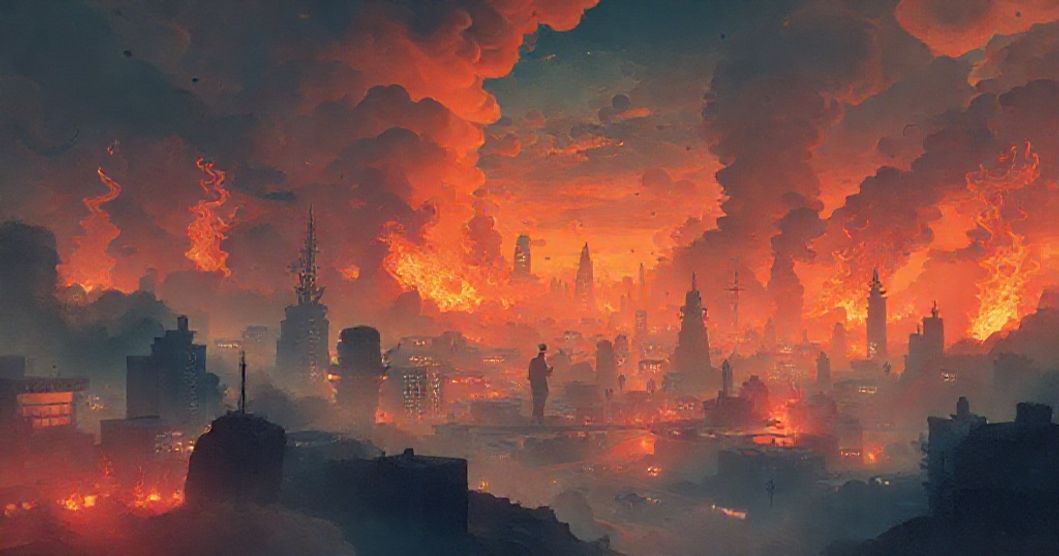
In the dream’s opening moments, I found myself at the base of a ten-story building that bore the unmistakable signage of a Chinese clothing shop—one that specialized in affordable, counterfeit reproductions of designer brands. The air felt thick with the clatter of mannequins and the faint scent of synthetic fabrics, yet beneath this ordinary retail atmosphere, an undercurrent of unease lingered. An ancient, rusted elevator stood before me, its doors gaping open like silent invitations to ascend. Though I knew logically it might be unsafe, I felt compelled to use it, drawn by an unspoken need to reach the upper levels. As I rose, the building’s interior transformed into a maze of discounted garments, the clothing racks towering above me like silent sentinels. Workers in blue uniforms occasionally darted past, their faces grim as they whispered warnings about spreading flames. ‘There’s a fire,’ one of them called out, his voice urgent. ‘You should leave now.’ But my mind had already latched onto the idea of finding something valuable among the discounted goods, and I dismissed the warning with a calm shrug. ‘I’ll be fine,’ I thought, continuing my exploration. On the tenth floor, the situation grew more urgent. Firefighters and police officers were visible below, their vehicles and flashing lights painting the street with stark contrasts of red and blue. The workers’ pleas intensified, but I remained oblivious, lost in the thrill of discovery. Then, without warning, the air grew smoky and the flames—previously hidden behind clothing racks—erupted into view. The windows now revealed only black, billowing smoke, and I could feel the heat radiating from within. At that moment, a strange clarity settled over me. ‘I guess it’s time to leave,’ I thought, my voice steady. Instead of panicking, I climbed out of the window and began descending the building’s exterior, one window ledge at a time. My hands gripped the concrete edges, my feet finding purchase on narrow ledges, and despite the danger, I moved with surprising precision. When I reached the ground, the onlookers—who had been shouting and pointing—stared in disbelief. ‘I told you I’d be fine,’ I said simply, my tone matter-of-fact. Then I walked away, leaving them to their chaos and my mind to the quiet certainty of having faced the fire and emerged unscathed.
Part 2: Clinical Analysis
Want a More Personalized Interpretation?
Get your own AI-powered dream analysis tailored specifically to your dream
🔮Try Dream Analysis FreeThe Symbolic Landscape: Unpacking the Dream’s Visual Language
The ten-story building in this dream functions as a powerful metaphor for the dreamer’s sense of self and life structure. In Jungian psychology, such architectural structures often represent the conscious and unconscious mind, with height symbolizing ambition, awareness, or spiritual elevation. The 10th level specifically carries numerological significance, evoking completion, wholeness, or a threshold moment in personal growth. The burning fire, meanwhile, serves as a dual symbol: destruction and transformation. In dream imagery, fire typically signifies purging, passion, or the combustion of old belief systems—a process that, while initially terrifying, can lead to renewal. The fact that the fire is contained within a retail environment introduces an additional layer of meaning related to consumer culture.
The Chinese clothing shop, with its focus on cheap brand copies, offers insight into the dreamer’s relationship with identity and self-presentation. Counterfeit goods often symbolize inauthenticity, the desire to appear successful or fashionable without the genuine effort, or the pressure to conform to societal ideals of status. The shop’s location in the dream may reflect the dreamer’s awareness of how they present themselves to the world—whether through superficial appearances, material possessions, or carefully curated social identities. The workers’ warnings about the fire, despite the dreamer’s dismissal, suggest an internal conflict between external pressures (to conform, to follow safety protocols) and the dreamer’s stubborn self-reliance.
The elevator and window-climbing represent contrasting approaches to navigating challenges. The elevator symbolizes shortcuts, reliance on external systems, or expectations of easy success, while the manual climbing down the building’s exterior embodies self-reliance, adaptability, and direct action. The dreamer’s calm demeanor throughout the crisis—‘I told you I’ll be fine’—contrasts sharply with the onlookers’ panic, highlighting a core theme of internal confidence versus external chaos.
Psychological Undercurrents: Theoretical Frameworks at Play
Freudian analysis might interpret this dream through the lens of the pleasure principle and the reality principle. The dreamer’s initial refusal to acknowledge danger and focus on shopping could reflect repressed desires for immediate gratification or avoidance of anxiety about real-world responsibilities. The fire, as a manifestation of the id (unconscious drives), erupts unexpectedly, forcing the dreamer to confront uncomfortable truths about their priorities. The dream’s resolution—climbing to safety through direct action—suggests the ego’s (conscious mind) ability to adapt and find solutions, even when faced with internal or external chaos.
From a Jungian perspective, the dreamer’s experience aligns with the shadow archetype emerging to challenge the conscious self. The shadow represents repressed aspects of the psyche—fears, anger, or unacknowledged strengths. In this case, the shadow manifests as the fire, demanding attention and transformation. The dreamer’s calm confidence could represent the anima/animus (the masculine/feminine aspects of the self) asserting itself, providing the courage to face danger without external validation. The clothing shop, as a symbol of external identity, may be the shadow’s target—calling the dreamer to recognize the gap between how they appear and how they truly are.
Cognitive dream theory offers another perspective, suggesting dreams function as problem-solving tools. The dreamer’s experience of navigating the burning building might reflect waking life challenges where they must make decisions without clear guidance. The act of climbing down the building could symbolize the dreamer’s unconscious attempt to develop strategies for handling uncertainty—a process that occurs naturally in sleep, where the mind experiments with solutions to waking problems.
Emotional and Life Context: Connecting the Dream to Waking Reality
The dream’s focus on a retail environment and fire suggests the dreamer may be grappling with issues of self-worth tied to material possessions or social status. The cheap brand copies could represent feelings of inadequacy about one’s authentic identity versus how they project themselves to others—a common concern in consumer-driven societies where external appearances often take precedence over internal values. The dreamer’s calm confidence in the face of crisis might indicate a growing sense of self-assurance, even as they navigate external pressures to conform.
The contrast between the dreamer’s detachment and the others’ panic hints at a pattern of independent decision-making in waking life. Perhaps the dreamer often finds themselves trusting their instincts over others’ advice, even when those around them see danger. The act of climbing down the building without hesitation could reflect a willingness to take risks, embrace uncertainty, or let go of control in certain aspects of life. The dream’s resolution—walking away calmly after the crisis—suggests the dreamer has developed a resilience that allows them to process challenges without being overwhelmed by external reactions.
Therapeutic Insights: Integrating the Dreamer’s Self-Assurance
This dream offers several therapeutic takeaways for the dreamer. First, it validates their natural tendency toward calm confidence in the face of adversity—a strength that should be nurtured rather than dismissed. The dreamer might benefit from exploring why they often resist external warnings, as this could reveal patterns of self-reliance or fear of vulnerability. Journaling exercises could help clarify whether the clothing shop symbolizes a specific area of life where they feel inauthentic or pressured to conform.
Practical reflection questions might include: ‘In what areas of my life do I feel pressured to “perform” or appear a certain way?’ and ‘How do I balance self-trust with listening to others’ advice?’ These questions encourage the dreamer to examine their relationship with external validation and internal values.
For integration, the dreamer could experiment with small acts of bold self-expression in waking life—perhaps choosing a different path than the “elevator” (easy shortcuts) when facing a challenge, and instead taking the more direct, manual approach. This aligns with the dream’s message that confidence and self-reliance can lead to safety and success, even in the face of unexpected obstacles.
FAQ Section: Navigating the Dream’s Nuances
Q: What does the burning building symbolize in this dream?
A: The burning building represents a crisis in the dreamer’s life—possibly related to identity, relationships, or self-worth. It symbolizes the destruction of old patterns and the potential for renewal, with the fire acting as both threat and transformative force.
Q: Why is the setting a clothing shop with cheap brand copies?
A: The clothing shop symbolizes the dreamer’s relationship with self-presentation and authenticity. The counterfeit goods reflect feelings about appearing successful without substance, or the pressure to conform to external standards of value and status.
Q: How does the dreamer’s calm demeanor relate to waking life confidence?
A: The calm confidence suggests the dreamer has an inner resilience they may not fully recognize. This could indicate a growing ability to trust their instincts, even when others panic—a valuable strength to cultivate in real-world challenges.