
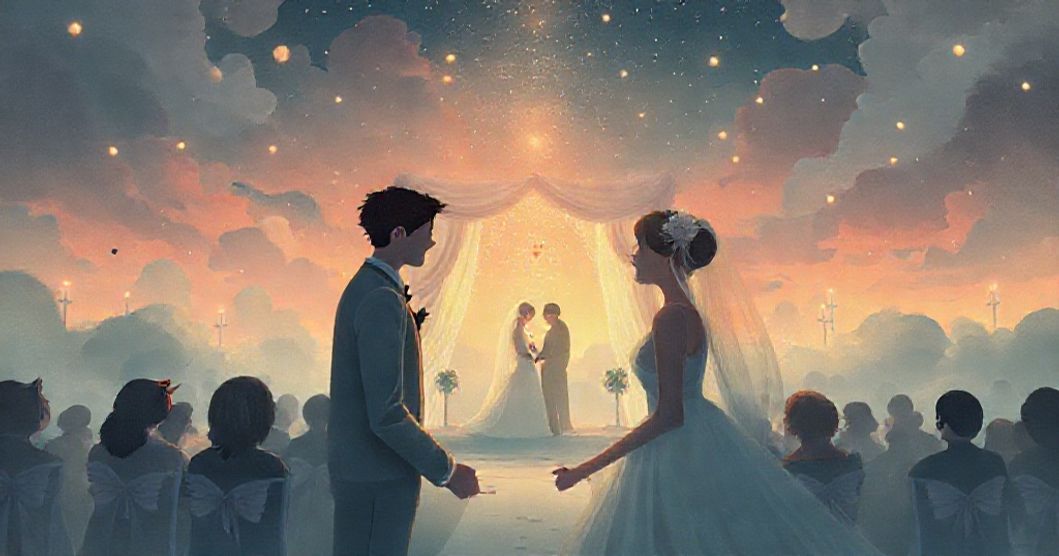
Part 1: Dream Presentation
Dreams have a way of revisiting us with uncanny persistence, especially during the turbulent years of adolescence when identity is still taking shape and societal expectations collide with personal desires. For this dreamer, those visits took the form of recurring wedding ceremonies that felt both vividly real and emotionally charged, yet never quite resolved. In each dream, the dreamer stands at the threshold of a wedding, surrounded by the trappings of celebration—the floral arrangements, the guests, the anticipation of a future they never explicitly desired. Yet beneath this surface of expected joy lies an undercurrent of dread that propels the dreamer to flee, leaving the ceremony in disarray. These dreams, which began in the teenage years, persisted with such frequency that they blurred into a single, haunting narrative, yet the dreamer could never reconcile them with their waking reality. By age sixteen, marriage had been an abstract concept at best, yet the dreams continued, their emotional intensity undimmed. Now, years later, the dreamer remains haunted by the question: why did these wedding dreams recur so insistently, and what might they reveal about the self they were then—and the self they’ve become.
Part 2: Clinical Analysis
Symbolic Landscape: The Wedding as Archetype
Want a More Personalized Interpretation?
Get your own AI-powered dream analysis tailored specifically to your dream
🔮Try Dream Analysis FreeThe wedding ceremony in dreams carries profound symbolic weight, representing not merely romantic union but the integration of self, societal expectations, and future identity. In this dream, the recurring wedding serves as a powerful archetype of transition—a liminal space where the dreamer stands between two states of being: the child who hasn’t yet fully claimed adulthood and the adult who fears the responsibilities that come with it. The act of 'breaking' the wedding is particularly significant, as it disrupts the symbolic journey of commitment and integration. In dreamwork, weddings often symbolize the desire for wholeness or the fear of losing one’s autonomy—a tension that resonates deeply with teenage identity formation, where the self is still in flux.
The dreamer’s age during these dreams is critical: sixteen to eighteen is a period of intense self-exploration, where societal pressures to conform to adulthood milestones (including marriage, traditionally framed as a 'milestone' for women) collide with internal uncertainty. The fact that the dreamer 'never thought of wedding when I was that young' suggests that the wedding symbol itself is not about a real desire for marriage but about something deeper: the fear of being forced into adulthood against one’s will, or the confusion of trying to define identity in a world that expects certain milestones to be met. The dream’s persistence into adulthood hints that these themes of identity and societal pressure have not been resolved, manifesting symbolically in the recurring wedding imagery.
Psychological Perspectives: Unconscious Processing of Identity
From a Jungian perspective, the wedding represents the 'synthesis' of opposites—the union of conscious and unconscious aspects of the self. The recurring wedding dreams could signal an unconscious attempt to integrate conflicting parts of the self: the desire for freedom versus the need for connection, the fear of adulthood versus the potential for growth. Jung might interpret the act of 'breaking the wedding' as a defense mechanism—the dreamer’s psyche resisting a forced integration that feels inauthentic. This resistance could reflect deeper psychological processes: the dreamer’s unconscious recognizing that marriage, as a societal construct, might not align with their true desires or sense of self.
Freudian analysis, while less relevant to modern dream theory, might view these dreams as a manifestation of repressed anxieties about adulthood and societal expectations. The wedding, as a symbol of adult responsibility and commitment, could represent the dreamer’s unconscious fear of losing freedom—a common theme in teenage dreams as the self struggles to separate from parental influence and societal norms. The fact that the wedding 'never happened' in waking life mirrors the dreamer’s own resistance to conforming to societal expectations of adulthood, even if they weren’t consciously aware of it.
Neuroscientifically, recurring dreams often reflect unresolved emotional conflicts or unprocessed memories that the brain continues to work through during sleep. The wedding imagery might be a neural 'loop' processing themes of identity, commitment, and transition that the waking mind hasn’t yet resolved. This aligns with the dreamer’s confusion about the dreams’ meaning, as the unconscious works through these themes while the conscious mind remains perplexed.
Emotional & Life Context: Adolescence as a Time of Uncertainty
Teenage years are inherently liminal—a period of transition where the self is neither fully child nor adult, and societal expectations collide with personal desires. The recurring wedding dreams likely emerged from this period of uncertainty, as the dreamer grappled with emerging adult roles and the pressure to conform to societal milestones. The fact that the dreamer 'didn’t even think of wedding when I was that young' suggests that the wedding imagery is not literal but symbolic, representing the broader themes of adulthood that felt inescapable yet alien.
These dreams may also reflect the dreamer’s internal conflict between autonomy and connection—a fundamental tension of adolescence. The wedding symbolizes connection and commitment, but the dreamer’s repeated disruption of the ceremony represents a deeper need for autonomy and self-determination. This tension between wanting to belong and fearing loss of self is universal in teenage development, and the recurring dreams might be the mind’s way of working through this conflict.
Therapeutic Insights: Unpacking the Symbolic Resistance
For the dreamer, these recurring dreams offer a unique opportunity for self-reflection. The act of 'breaking' the wedding in dreams is not a failure but a form of symbolic resistance—a signal from the unconscious that certain societal expectations do not align with the dreamer’s authentic self. To integrate this insight, the dreamer might benefit from journaling about their feelings toward adulthood, commitment, and societal expectations. Exploring the specific emotions triggered by the wedding dreams—anticipation, dread, confusion—can reveal deeper truths about what these dreams symbolize.
A practical exercise could involve creating a timeline of teenage experiences that might have influenced these dreams: family dynamics, peer pressure, or personal milestones. By examining how these external factors might have created internal conflict, the dreamer can begin to understand the roots of their symbolic resistance. Additionally, reflecting on current life circumstances—whether in relationships, career, or personal growth—can reveal if these themes of identity and commitment continue to resonate.
FAQ Section
Q: Why do wedding dreams often recur in adolescence?
A: Adolescence is a period of identity formation where societal expectations collide with personal uncertainty. Wedding dreams symbolize transition and commitment, often reflecting fears of adulthood or resistance to societal pressures to conform to milestones like marriage.
Q: What does it mean when I keep breaking the wedding in my dreams?
A: Breaking the wedding likely represents unconscious resistance to societal expectations or fears of losing autonomy. It may signal a need to assert personal boundaries or question what 'success' or 'adulthood' truly means for you.
Q: How can I connect these childhood dreams to my current life?
A: Reflect on current relationships, career choices, or life transitions. Notice if you feel similarly pressured to conform to expectations, or if you struggle with commitment in ways that echo your teenage resistance to the wedding ceremony.