
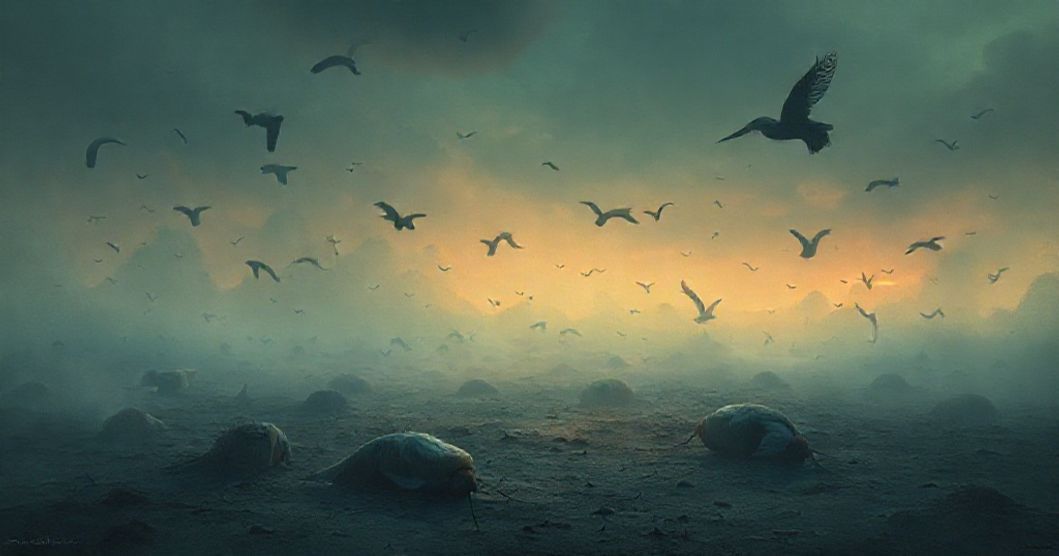
Part 1: Dream Presentation
Dreams often serve as emotional barometers, reflecting the subtle tensions we carry beneath waking awareness. In this narrative, a visit to ancestral roots in the countryside becomes the stage for a haunting discovery and an unspoken plea for recognition. The setting—grandparents’ rural home—evokes safety and tradition, yet the dreamer’s experience there is tinged with unease. The first dream unfolds with the detection of a strange smell, leading to the discovery of four dead birds in a forgotten cage, while family members react with surprise at the dreamer’s prescience. This is followed by a second dream involving a dog bite that grows from a minor concern into a source of distress, as the dreamer’s legitimate fears are dismissed by loved ones.
I found myself in my grandparents’ countryside home, a place where time seemed to slow in the hush of rural air. The familiar scent of aged wood and distant hay filled the rooms, yet an unfamiliar stillness hung in the air, disrupted only by the soft rustle of my female relatives—my aunts—moving through the house. A strange, sweetish odor permeated the space, neither pleasant nor entirely unpleasant, but unmistakably out of place in this peaceful setting. My aunts, gathered near the kitchen, seemed oblivious to the discomfort I felt as I followed their gaze toward a corner where a parrot cage sat untouched. One aunt, noticing my unease, began searching for the source of the smell, lifting the cage door to check on the parrots—they chirped calmly, their feathers sleek and bright, so clearly alive that I relaxed slightly. But then, in a shadowed corner, she discovered another cage, smaller and more forgotten, its contents still as the air itself. Inside lay four birds, their bodies rigid and lifeless, their once-vibrant plumage dulled by decay. When she gasped, I simply stated that the smell must have been coming from them, and her eyes widened in surprise—how had I known? She whispered that the birds had worms, a detail I’d somehow intuited before seeing them. Later, as my second aunt and my mother joined us around the kitchen table, I felt an overwhelming urge to leave. Before departing, I reached out and touched my second aunt’s shoulder, offering a silent comfort I hoped she might feel. This dream left me with a heavy, lingering sadness, as if I’d witnessed something irreplaceable. That same night, another dream unfolded: a small dot appeared on my hand, initially no larger than a pinprick, but it rapidly expanded into a dark, spreading lesion that seemed to consume the skin. When I showed it to my family, they dismissed it as trivial, suggesting I wash it with soap. But as I stared at the growing mark, I knew it was serious—a warning they refused to acknowledge. Their indifference felt like a weight, echoing the earlier dream’s sense of unspoken truths.
Part 2: Clinical Analysis
Want a More Personalized Interpretation?
Get your own AI-powered dream analysis tailored specifically to your dream
🔮Try Dream Analysis FreeSymbolic Landscape: The Dead Birds as Messengers of Unseen Loss
The four dead birds in the dream represent a powerful symbol of unexpressed grief or neglected emotional states. In dreamwork, birds often symbolize communication, freedom, and spiritual connection—their death thus suggests a disruption of these vital aspects of self. The setting in the grandparents’ countryside home adds layers of meaning: this space likely evokes family history, tradition, and ancestral connections, making the birds’ demise a metaphor for relationships or aspects of the self that feel neglected or dying. The contrast between the healthy parrot cage and the forgotten cage with dead birds highlights a crucial psychological distinction: what appears outwardly normal (the vibrant parrots) versus what lies beneath the surface (the decaying birds). The “strange smell” preceding the discovery of the dead birds functions as a sensory metaphor for repressed emotions or unaddressed issues—something unpleasant that lingers in awareness but remains unacknowledged.
The “four” dead birds is particularly significant, as the number four often symbolizes stability, structure, and completion in dreams. In this context, it may represent four distinct areas of life that feel neglected or in decline, or four emotional states that need attention. The mention of “worms” adds another layer of symbolism, suggesting decay at a deeper level—perhaps relationships or personal growth that have become infested with unresolved issues. Worms in dreams frequently symbolize transformation or the decomposition of old patterns, hinting that the dreamer may be experiencing a period of necessary decay before renewal.
Psychological Currents: Family Dynamics and Unheeded Concerns
From a Jungian perspective, the aunts represent the dreamer’s connection to family archetypes—perhaps maternal or paternal lineage, or the collective wisdom of female relatives. The grandmother’s house, as a setting, embodies the “shadow” of the unconscious, where repressed memories and emotions reside. The aunt’s surprise at the dreamer’s prescience (“she was surprised that I already knew”) suggests a moment of synchronicity between the conscious and unconscious mind—the dreamer’s intuition about the dead birds reflects a deeper awareness of something important that the family is collectively ignoring.
Freudian analysis might interpret the dead birds as a manifestation of repressed anger or sadness. The initial dismissal of the smell and the discovery of the dead birds could represent the dreamer’s attempt to bring attention to something that the family (the superego, in Freudian terms) deems unimportant or “normal.” The act of touching the second aunt’s shoulder to comfort her suggests a desire to restore connection—a need to mend relationships that feel broken or distant.
The second dream of the dog bite introduces another layer of psychological tension. The small, darkening bite mark mirrors the dead birds’ decay, suggesting a parallel between neglected emotional issues and physical symptoms that are dismissed. In this case, the family’s response (“they said it was nothing”) reflects a common pattern of minimizing legitimate concerns, which the dreamer experiences as a betrayal of trust. The bite’s progression from a small dot to a dark, spreading lesion symbolizes how unaddressed fears can escalate into something overwhelming, even as others remain oblivious.
Emotional & Life Context: Unspoken Grief and Unheard Fears
The emotional weight of the first dream—leaving the room feeling depressed, needing to comfort the second aunt—suggests the dreamer is processing grief or loss in waking life, possibly related to family relationships or personal growth. The countryside home, with its nostalgic associations, may represent a time or place of safety that now feels threatened by decay, both literally (the dead birds) and emotionally (the family’s dismissal).
The dog bite, appearing in the same night, likely reflects a waking concern about being ignored or unheard. The dog, in dream symbolism, often represents loyalty, protection, or instinctual fears. A dog bite can signify betrayal of trust or a sense that one’s boundaries are being violated. The family’s dismissal of the bite as “nothing” mirrors how the dreamer may feel in waking life—their legitimate concerns about relationships, health, or personal growth are minimized by others, leading to a sense of isolation.
This dual dream narrative suggests the dreamer is navigating a period of emotional vulnerability, where both external relationships and internal emotional states are in flux. The dead birds represent unprocessed grief or neglected emotional needs, while the dog bite represents the fear of being dismissed when seeking help or validation.
Therapeutic Insights: Honoring Unseen Losses and Validating Concerns
The first step in integrating these dreams is to acknowledge the emotional truth they reveal: the dreamer is carrying unspoken grief or loss, and this grief is manifesting in the form of neglected relationships or self-care. Reflective exercises could include journaling about four specific areas of life that feel “dead” or neglected—these might correspond to the four birds—and writing letters to those areas, expressing the feelings they’ve been suppressing.
The act of touching the second aunt’s shoulder in the dream suggests a desire to bridge emotional gaps. In waking life, this could translate into initiating difficult conversations about unaddressed issues, using gentle gestures to show care and support without judgment.
For the dog bite dream, the dreamer might benefit from creating space to validate their own experiences, even when others dismiss them. This involves distinguishing between others’ perspectives and their own truth—learning to trust one’s intuition about what feels important, even if others don’t see it that way.
The recurring theme of “unheeded fears” across both dreams suggests the dreamer is in a period of emotional awakening, where previously ignored concerns are now demanding attention. Engaging in self-compassion practices, such as mindfulness meditation to connect with physical sensations, can help discern when emotions are signaling deeper issues that require action.
FAQ Section
Q: What does the number four in the dead birds symbolize?
A: The number four often represents stability and completion in dreams. Here, it likely signifies four distinct areas of life (relationships, health, career, or emotional states) that feel neglected or in decline, requiring focused attention.
Q: Why does the family’s reaction to both dreams matter?
A: The family’s dismissal in both dreams mirrors the dreamer’s waking experience of having concerns minimized. This dynamic suggests the dreamer is processing feelings of isolation or betrayal, needing to learn self-validation while honoring others’ perspectives.
Q: How do the two dreams connect thematically?
A: Both dreams revolve around unacknowledged decay—one literal (dead birds) and one metaphorical (dismissed bite). Together, they suggest the dreamer is navigating a period where emotional and physical needs are being neglected, and the unconscious is urging attention to these overlooked areas.