
Part 1: Dream Presentation
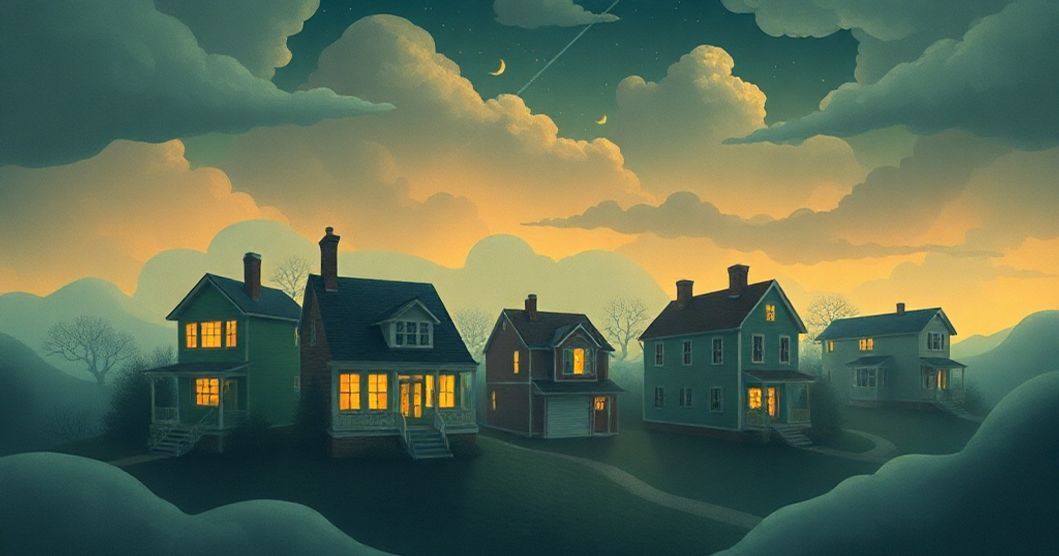
Dreams of vintage houses often serve as portals to the subconscious, where the past and present intersect in symbolic landscapes. This dreamer’s recurring encounters with haunted architectural spaces reveal a profound exploration of memory, identity, and emotional transformation. The first dream unfolds as a compulsive journey into an unfamiliar vintage apartment complex that resembles an abandoned hotel, its halls echoing with spectral residents. Despite occupying a familiar home, the 71-square-meter space exerts an inexplicable pull, drawing the dreamer into a world of faded luxury and creeping dread. Without keys to the flat, a display room offers a glimpse of its supposed interior—vintage dining sets, a round couch with a blue throw, and antique decor—yet beyond this facade, closed stairs lead to a dark hallway lined with empty jail cells, their shadows whispering of forgotten stories. The dreamer’s desperate escape attempt aboard a school bus filled with spectral figures—old men and young girls—culminates in a surreal reunion with ghostly classmates in a kitchen reminiscent of the dreamer’s grandmother’s, where making cookies becomes a strangely comforting act despite the eerie setting.
The second dream revisits this haunted territory but offers a different perspective: the dreamer lives in the vintage house, now fully aware of its haunted nature, when an invisible guide materializes. This silent companion walks beside the dreamer, revealing the house’s hidden history through fragmented visions. Unlike the first dream’s terror, this journey feels exploratory rather than desperate, as the dreamer gradually sheds fear and accepts the past’s presence within the present moment.
Part 2: Clinical Analysis
Want a More Personalized Interpretation?
Get your own AI-powered dream analysis tailored specifically to your dream
🔮Try Dream Analysis FreeSymbolic Landscape of Vintage Houses
The vintage house in these dreams functions as a powerful symbol of the past’s persistent presence in the present. In Jungian psychology, such architectural imagery often represents the collective unconscious—the repository of inherited memories, archetypes, and ancestral patterns. The 71-square-meter apartment size suggests a compressed or restricted space, symbolizing how the dreamer may feel confined by past experiences or societal expectations. The apartment complex’s hotel-like appearance hints at a performance of identity—presenting a facade of normalcy while hiding deeper truths, much like how people often present curated versions of themselves to the world.
The jail cells in the dark hallway represent repressed memories or forbidden aspects of self that the dreamer has not yet integrated. Their emptiness suggests these are not active memories but rather dormant ones waiting to be acknowledged. The vintage aesthetic—the round couch, blue throw, and antique decor—signifies a longing for a past idealized or romanticized, a common theme in dreams where the past is revisited with nostalgia.
Psychological Layers of Unconscious Memory
Freud’s concept of dream work helps explain the transformation of repressed memories into symbolic imagery. The dreamer’s compulsion to rent the house without inspection mirrors how the unconscious mind sometimes acts on repressed desires or fears without conscious awareness. The absence of keys symbolizes the dreamer’s feeling of powerlessness in controlling life circumstances, while the display room—showing what the flat should be rather than what it is—represents the gap between reality and idealized expectations.
The ghost town setting embodies the concept of psychological entrapment, where the past has become a physical landscape the dreamer cannot escape. This aligns with the Jungian idea of the shadow—those aspects of the self we disown or repress—manifesting as spectral figures in the dreamscape. The school bus, a symbol of collective experience and socialization, carries these spectral figures toward a destination that feels both familiar and alien, representing how the past continues to shape current behaviors and relationships.
Emotional Resonance in the Dreamer’s Life
The recurring vintage house dreams likely reflect the dreamer’s relationship with the past—perhaps unresolved grief, nostalgia for childhood, or anxiety about identity. The grandmother’s kitchen in the first dream introduces personal, familial memory, suggesting the dreamer is processing intergenerational themes or reconnecting with ancestral roots. The act of making cookies in this space—an ordinary, comforting domestic activity—contrasts with the surrounding horror, symbolizing how even in the face of haunting memories, moments of warmth and connection persist.
The second dream’s invisible guide represents the dreamer’s emerging self-awareness and willingness to engage with the past. This guide could symbolize the dreamer’s intuition, inner wisdom, or therapeutic self—elements of the psyche that help integrate fragmented experiences. The transition from fear to acceptance in the second dream suggests psychological growth: the dreamer is learning to process difficult emotions rather than fleeing them, indicating increased emotional resilience.
Emotional Transformation and Therapeutic Insights
These dreams invite the dreamer to consider how the past shapes current identity without being defined by it. The first dream’s chaotic flight and the second’s patient exploration represent two approaches to dealing with the past: avoidance versus integration. The key insight from these dreams is that the past does not need to be escaped but rather acknowledged and integrated.
Therapeutic reflection exercises could include journaling about specific vintage items or spaces from the dream, exploring their emotional associations. Dreamers often find clarity by asking: What emotions arise when I think about these spaces? and What aspects of myself might be represented by the spectral figures? These questions help identify unconscious patterns and unresolved issues.
For long-term integration, the dreamer might benefit from creating a