
Part 1: Dream Presentation
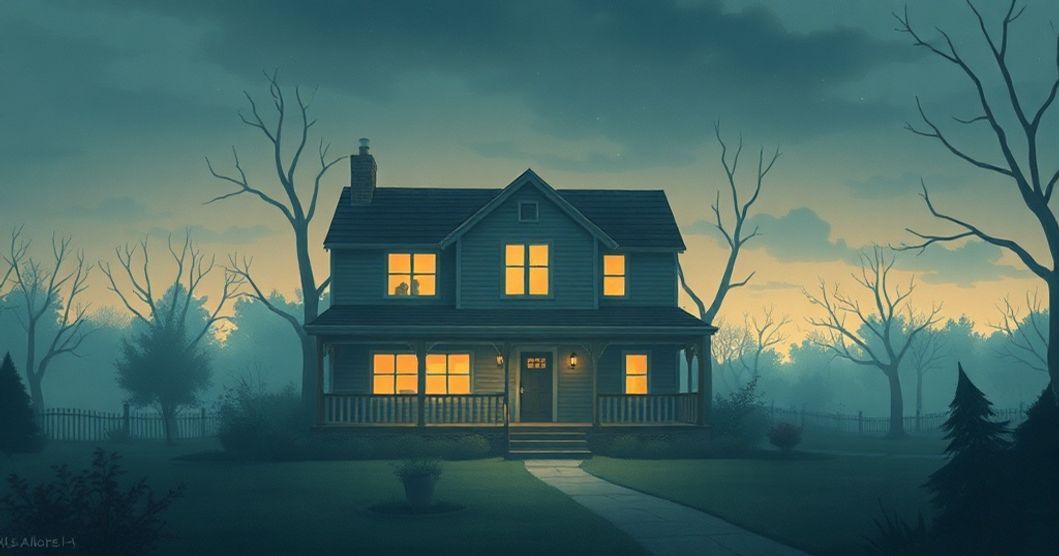
Dreams have a remarkable way of revisiting us with stubborn persistence, even when our waking minds have moved forward. In this case, the dreamer’s nightly visions of a childhood home—sold after three decades of family life—offer a window into the unconscious work of processing profound change. The house, where thirty-one years of memories were forged, represents not merely a physical structure but the emotional anchor of identity, family bonds, and a sense of belonging. This dream’s recurring nature suggests an unfinished emotional task, even as the dreamer rationally accepts their parents’ new chapter.
The dream narrative reveals several key elements: the house as a repository of childhood (faded wallpaper, kitchen counter lessons), the emotional arc from initial grief to acceptance, the parents’ happiness in their new home, and the perplexing persistence of nightly dreams despite conscious resolution. The house’s dual nature—both familiar and strange—highlights the dream’s symbolic function: to process the transition of leaving a physical space that once contained the dreamer’s entire sense of self.
Part 2: Clinical Analysis
Want a More Personalized Interpretation?
Get your own AI-powered dream analysis tailored specifically to your dream
🔮Try Dream Analysis FreeThe Symbolic Landscape of Home: Roots and Transition
The house in this dream embodies multiple layers of symbolic meaning. In Jungian psychology, the home represents the 'anima' or 'animus' of the unconscious—the personal unconscious containing archetypal images of safety, family, and identity. A residence that has stood for thirty-one years becomes a 'container' for collective memory, holding the dreamer’s earliest sense of self. When parents sold this home, they weren’t just moving to a new location; they were dismantling a decades-long anchor of stability.
The house’s sensory details—the faded wallpaper, the kitchen counter—are not mere set dressing but emotional triggers. These specific textures and spaces are encoded with neural pathways of comfort, safety, and family connection. The dream’s repetition suggests the mind is still processing the loss of this container, even as the conscious self has accepted the physical change. The house’s 'cozy' quality in the dreamer’s description mirrors its role as a 'safety object'—a place where the dreamer felt protected, loved, and unconditionally accepted.
Psychological Undercurrents of Unfinished Grief
From a Freudian perspective, dreams often revisit unresolved conflicts, and the persistence of this dream suggests an unconscious attachment to the past. The dreamer’s initial 'upset' followed by 'acceptance' reveals a classic defense mechanism: intellectualizing emotions to avoid deeper processing. This intellectual acceptance creates a split between conscious and unconscious states, where the mind continues to work through what the conscious self has deemed 'resolved.'
Cognitively, the brain’s memory consolidation processes may be integrating this significant life change during sleep. The hippocampus, responsible for memory formation, often replays emotional experiences during REM sleep to solidify emotional memories. In this case, the house—with its wealth of emotional associations—becomes a recurring narrative in the dreamer’s sleep mind, as if the brain is trying to 'make sense' of the loss of this central life space.
Emotional Resonance of the Unconscious Goodbye
The paradox of 'accepting' while still dreaming reveals a critical psychological truth: emotional processing often occurs outside conscious awareness. The dreamer’s statement 'I thought I came around' suggests a subtle disconnect between cognitive understanding and emotional reality. The house, as a symbol of family roots, represents more than a physical structure—it embodies the dreamer’s sense of self, their identity as a child of that home, and the relationships formed within its walls.
The recurring nature of the dream may also reflect the dreamer’s role in the family transition. As the child who grew up in the home, the dreamer now occupies a new 'post-home' identity. Dreams about the house could be processing this identity shift, as the mind struggles to reconcile the past self (child in the house) with the present self (adult who must now let go of that foundational space).
Therapeutic Insights: Honoring the Past While Moving Forward
Dreams like this offer valuable therapeutic opportunities for emotional integration. The first step is recognizing that these dreams are not signs of regression but of necessary processing. The house, in dreams, often represents the 'unfinished business' of change—even when change is objectively positive.
Practical exercises might include creating a 'memory box' with symbolic items from the house, allowing the dreamer to physically honor the past while separating it from present identity. Alternatively, journaling about specific rooms in the house can help identify which emotional themes need attention. These practices externalize the internal processing the dream represents, helping the mind move from rumination to resolution.
FAQ Section
Q: Why do I keep dreaming about a place I’ve already accepted?
A: Dreams process emotions before they become conscious. Your mind is still integrating the loss of this foundational space, even as your intellect has moved forward. The house symbolizes more than the building—it represents identity and belonging.
Q: How can I distinguish between missing the house and missing my parents?
A: The house symbolizes family roots and safety; your dreams likely reflect loss of that environment, not just parents. The emotional weight of the house itself is distinct from parental relationships.
Q: When will these dreams stop?
A: Dreams typically decrease as emotional processing completes. Creating new rituals or spaces that honor the past while building present identity can accelerate this process. The key is integrating rather than suppressing the memory.