
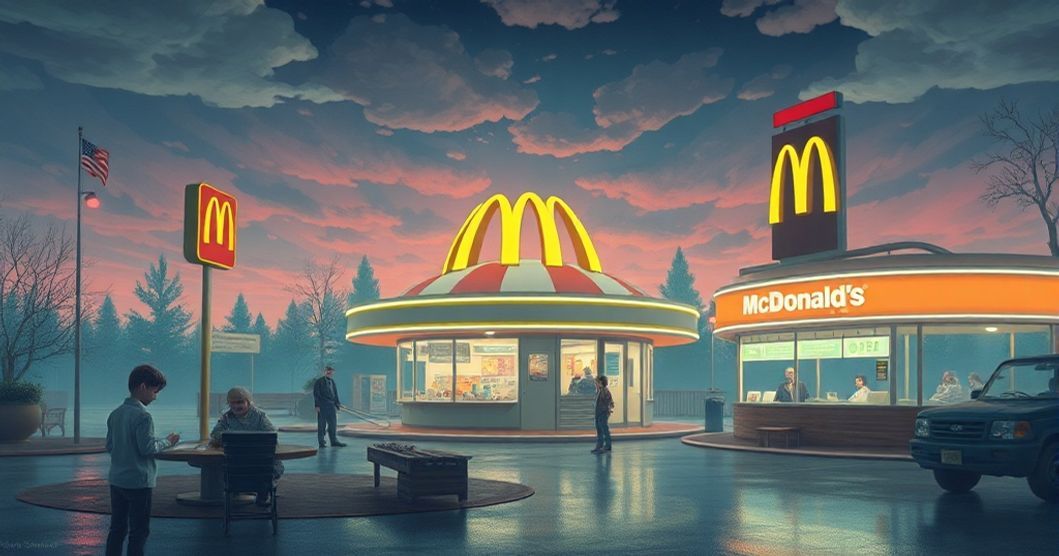
Part 1: Dream Presentation
Dreams often serve as portals to our inner worlds, and for some, they revisit specific childhood landscapes with uncanny persistence. In this recurring dream narrative, the dreamer finds themselves in a surreal, oversized version of 2000s McDonald’s play areas—a space that defies logical scale yet feels deeply familiar. The dream unfolds with sensory richness: the smell of grease and fry fat, the cool plastic texture of jungle gyms, and the echoing silence of an otherwise empty play structure. This isn’t merely a nostalgic flashback; it’s a psychological landscape where the boundaries between past and present blur, suggesting deeper emotional currents at play.
The recurring nature of this dream is key. The dreamer repeatedly navigates these plastic labyrinths, never quite finding resolution but always returning to the same surreal environment. The play place’s scale—impossibly large, almost cathedral-like—contrasts sharply with the actual memories of smaller, more manageable playgrounds, hinting at a dissonance between childhood reality and adult perception.
Part 2: Clinical Analysis
Want a More Personalized Interpretation?
Get your own AI-powered dream analysis tailored specifically to your dream
🔮Try Dream Analysis FreeSymbolic Landscape: The Playland as Psychological Metaphor
The 2000s McDonald’s play place functions as a multi-layered symbol. First, it represents a specific cultural touchstone—the commercialization of childhood, the plastic jungles that became ubiquitous in suburban America during that decade. These structures were designed to be both entertainment and marketing, creating a space where consumption and play intersected. In dreams, such symbols often reflect how we internalize societal values, and the persistent playland imagery may signal an unprocessed relationship with consumer culture.
The