
Part 1: Dream Presentation
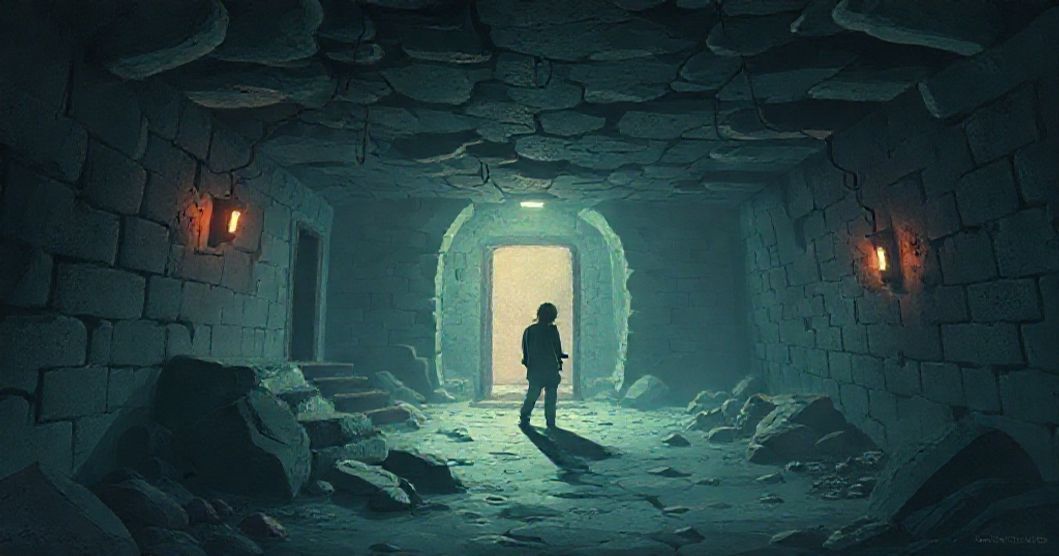
Dreams often unfold like forgotten chapters of our inner lives, revealing truths we may not yet be ready to face. In this particular dream, the narrative unfolds as a tense, recurring scenario: I find myself once again in a woman’s basement, bound and desperate to escape. The cold concrete beneath my palms, the faint smell of damp earth mingling with the musty air of old wood, and the flickering bulb casting long, trembling shadows across the cinderblock walls all serve to anchor this moment in visceral reality. My heart pounds with a familiar urgency as I recognize the setting—a place I’ve visited before, though the details slip through my mind like sand.
I remember the woman who stands in the doorway: her face is blurred, yet there’s a stern, almost maternal stillness to her presence that feels both threatening and oddly comforting, a contradiction I can’t quite resolve. This time, as I search for an exit, I recall fragments of a 'first time' escape—a moment of clarity where I found a loose floorboard, a window, or some other means of freedom. But now, in this 'sequel,' I feel the weight of that prior escape as if it were a physical memory, not just a dream fragment. The confusion mounts: Was that first kidnapping a separate dream from years ago, or was this entire experience a single, fragmented nightmare that my sleeping mind has split into parts? The tension between remembering and forgetting creates a psychological tug-of-war, leaving me both terrified and strangely compelled to understand the dream’s message.
Part 2: Clinical Analysis
Want a More Personalized Interpretation?
Get your own AI-powered dream analysis tailored specifically to your dream
🔮Try Dream Analysis FreeSymbolic Landscape: The Basement, Kidnapping, and the Woman
The basement as a symbolic space represents the unconscious mind’s deeper recesses—the hidden, often feared parts of ourselves we may avoid in waking life. Its darkness, confined space, and lack of escape routes mirror the feeling of being trapped by unresolved emotions or psychological patterns. Kidnapping, as a recurring theme, typically symbolizes a loss of control, a sense of powerlessness, or feeling 'taken over' by external forces in waking life. The specific woman in the dream, with her ambiguous maternal yet threatening presence, introduces complexity: she may represent a figure from the dreamer’s past (a parent, authority figure, or significant relationship) whose influence still lingers in the unconscious.
The recurring nature of the dream, combined with the 'forgotten first escape,' suggests a psychological loop—perhaps the dreamer is revisiting a trauma or fear that was never fully processed. The basement, as a liminal space between waking and sleeping states, becomes a metaphor for the threshold between conscious awareness and the unconscious mind, where memories can feel both real and unreal.
Psychological Perspectives: Jungian, Freudian, and Cognitive Frameworks
From a Jungian perspective, this dream may represent the 'shadow self'—the parts of ourselves we disown or fear. The woman could embody the dreamer’s anima or animus (the feminine or masculine aspects of the self), while the kidnapping symbolizes a loss of integration between conscious and unconscious. The basement as a dark, enclosed space aligns with Jung’s concept of the 'collective unconscious,' where repressed memories and archetypal patterns reside.
Freud might interpret the kidnapping as a manifestation of repressed anxiety or sexual conflict, though the maternal figure complicates this interpretation. The 'forgotten first escape' could represent a defense mechanism—the mind’s attempt to protect itself from the full impact of the trauma by compartmentalizing the experience.
Cognitive neuroscience offers another lens: dreams process and consolidate memories, and the confusion between 'first time' and 'sequel' might reflect the brain’s struggle to organize fragmented memory during sleep. The dream’s repetition suggests the mind is trying to resolve an emotional conflict or integrate a new memory, resulting in a dream that feels both continuous and disconnected.
Emotional & Life Context: Unresolved Emotions and Trauma
The recurring nature of this dream suggests underlying emotional patterns or unprocessed experiences. The dreamer may be feeling trapped in a situation in waking life—a job, relationship, or personal responsibility—that evokes feelings of powerlessness. The 'woman' could symbolize a relationship or authority figure from the past whose demands or influence still feel oppressive.
The 'forgotten first escape' hints at a history of avoiding confrontation or resolution. The dreamer might have experienced a previous trauma (perhaps emotional or relational) that was never fully addressed, leading the unconscious to revisit it through symbolic kidnapping. The basement, with its connotations of entrapment and darkness, mirrors the emotional 'darkness' of unresolved issues that persist beneath conscious awareness.
Therapeutic Insights: Processing Unconscious Messages
This dream invites the dreamer to explore areas of their life where they feel trapped or controlled. Journaling exercises could help identify waking life situations that trigger similar feelings of powerlessness. Reflecting on the woman’s ambiguous nature—her maternal yet threatening presence—might reveal unresolved relationship patterns or expectations.
Therapeutic approaches like dream work, particularly active imagination, can help the dreamer explore the 'escape' elements of the dream as potential paths to empowerment. The dream suggests that the first 'escape' was a successful attempt, perhaps in a previous waking life situation, but the mind is still processing this lesson.
FAQ Section
Q: Why do I feel like the first kidnapping was a separate dream?
A: This confusion often occurs because the brain organizes fragmented memories during sleep. The 'first time' may represent a repressed memory or a previous dream, while the 'sequel' shows the mind’s ongoing work to resolve the issue.
Q: How can I tell if this is a trauma dream or just a recurring nightmare?
A: Trauma dreams often feel more visceral and specific, while nightmares may lack resolution. If the dream evokes physical sensations of fear or entrapment, consider whether you’ve experienced similar feelings in waking life that need processing.
Q: What does the woman in the basement symbolize?
A: She likely represents an internalized authority figure, a relationship dynamic, or an aspect of yourself you’re struggling to integrate—her ambiguous nature reflects the complexity of these unconscious forces.