
Part 1: Dream Presentation
Dreams often serve as a bridge between the conscious mind and the depths of our psyche, revealing truths we may not yet recognize in our waking lives. In this particular nocturnal journey, a mundane setting—a familiar living room with a computer—unspools into a surreal encounter with sound, text, and a shadowy presence that lingers like an unspoken fear. The dream begins in a space of digital comfort, yet quickly transforms into a landscape where the boundaries between the real and the symbolic blur, leaving the dreamer adrift in a mixture of confusion and terror.
The rewritten dream narrative, as presented above, captures the dreamer’s experience: the unexpected transformation of online text into a haunting phrase, the jarring sound of distorted trumpets, and the subsequent confrontation with a shadowy, non-human creature at the top of a staircase. This sequence—from digital calm to auditory and visual chaos—creates a psychological rollercoaster that mirrors the tension between rational thought and primal emotion.
Part 2: Clinical Analysis
Want a More Personalized Interpretation?
Get your own AI-powered dream analysis tailored specifically to your dream
🔮Try Dream Analysis FreeSymbolic Landscape: Text, Sound, and the Blurred Boundary of Mortality
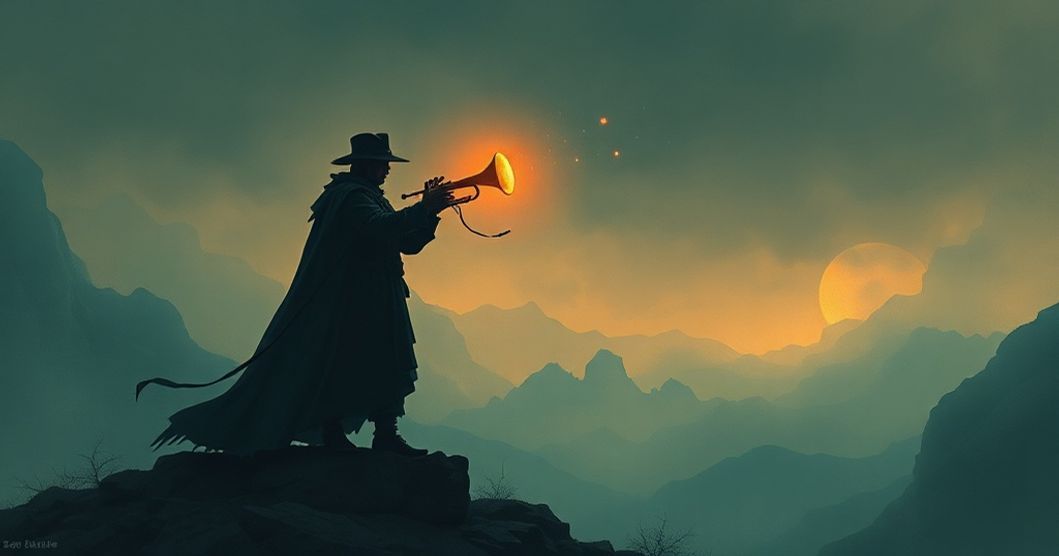
The dream’s opening act—the transformation of 4chan text into the phrase “I hear trumpets when I’m near dead people”—represents a powerful symbolic inversion. The internet, often a space of information overload and fragmented communication, here becomes a vessel for a deeply personal, almost prophetic statement. The phrase “near dead people” directly references mortality, while the word “trumpets” evokes both religious or ceremonial announcements (such as the Last Trumpet in apocalyptic traditions) and the sudden, jarring intrusion of sound into a quiet moment. The distortion of the trumpets—blending train horn and ceremonial fanfare—suggests this confrontation with mortality is not a gentle reminder but a disruptive, inescapable force.
The non-human creature at the top of the stairs is equally significant. Its black, blob-like form with a cavernous mouth and enormous pupils embodies the archetypal “shadow” figure from Jungian psychology—a representation of repressed, primal aspects of the self. The chromatic aberration effect, where colors bleed around its edges, indicates a distortion of perception, suggesting the dreamer views the threat (or the truth about mortality) as something that warps reality itself. This creature is not merely a monster but a manifestation of the dreamer’s fear of the unknown, the terror of confronting aspects of the self or life that feel unknowable and overwhelming.
Psychological Perspectives: Unpacking the Layers of Fear
From a Freudian lens, the dream may reflect repressed death anxiety. The forbidden or “dead” aspects of the psyche—taboos, unresolved grief, or fears of mortality—often manifest in dreams as threatening figures or symbolic events. The 4chan reference, though seemingly random, could represent the dreamer’s exposure to online discourse that touches on mortality, controversy, or existential themes, triggering unconscious fears that surface in the dreamscape.
Jungian psychology offers another layer: the creature as a shadow archetype. The shadow is the part of the psyche we disown, yet it seeks integration. The dream’s progression—from digital text (external information) to auditory terror (internalized sound) to physical confrontation (the shadow creature)—suggests the dreamer is being called to confront these repressed aspects. The “I hear trumpets” phrase, emerging from the digital realm, could symbolize the shadow’s voice breaking through the rational, logical barriers of the conscious mind.
Neuroscientifically, the dream’s rapid shifts between comfort and terror align with REM sleep’s activation of the amygdala, the brain’s fear center. The distorted trumpets and creature may represent the brain’s attempt to process emotional material that the waking mind cannot yet articulate, using surreal imagery to encode the intensity of these feelings.
Emotional & Life Context: Confronting the Unconfrontable
The dream likely reflects the dreamer’s unconscious processing of recent experiences with mortality, loss, or existential uncertainty. The sudden, jarring nature of the text transformation and the creature’s appearance suggests a fear of confronting these themes head-on. The living room setting, a space of daily routine, contrasts with the dream’s surreal events, emphasizing the dissonance between how we think about mortality and how we feel about it.
The 4chan reference, while seemingly out of place, might symbolize the overwhelming nature of digital information—how online content, even from spaces we don’t regularly engage with, can trigger deep-seated emotions. The dream could be a response to feeling bombarded by messages about mortality, death, or the fragility of life in modern society, even if these messages are not consciously processed.
Therapeutic Insights: Integrating the Unconscious Message
For the dreamer, this dream offers an invitation to explore their relationship with mortality and fear. Journaling about recent experiences that might have triggered these feelings—such as loss, aging, or uncertainty about life direction—can help decode the dream’s specific meanings. Asking: “What aspects of my life feel ‘near dead’—stagnant, unfulfilled, or in need of transformation?” can reveal areas of growth or change needed.
Mindfulness practices focused on accepting uncertainty rather than fleeing it might help integrate the shadow aspects represented by the creature. Regular reflection on the dream’s symbols—trumpets as calls to awareness, the creature as a reminder of unacknowledged fears—can transform terror into understanding. The dream’s message is not to be feared but to be explored: mortality is not just an end but a reminder of the preciousness of life, and the shadow creature may be a guide to self-discovery rather than a threat.
FAQ Section
Q: What does the transformation of text into “I hear trumpets when I’m near dead people” signify?
A: This phrase likely represents the dreamer’s unconscious recognition that proximity to mortality (or endings) brings a specific, unsettling awareness—perhaps of unprocessed grief, fears of loss, or existential questions about life’s purpose.
Q: Why does the creature have chromatic aberration?
A: Chromatic aberration distorts reality, symbolizing how the dreamer perceives the threat of mortality as warped or unknowable. It may also represent the blurring of boundaries between the conscious and unconscious realms.
Q: How does the dream relate to waking life concerns?
A: The dream suggests the dreamer is grappling with themes of mortality, uncertainty, or repressed fears. The digital setting hints at how modern information overload may be triggering these deep-seated emotions, urging a deeper exploration of what “near dead people” might symbolize in their life.