
Navigating the Nightmare Labyrinth: Interpreting Recurring Dreams of Horror Video Game Realms
Part 1: Dream Presentation
Dreams have long served as windows into the unconscious mind, and recurring nightmares often carry particular significance, acting as psychological compasses pointing toward unresolved emotional territories. Consider this vivid dream experience: the dreamer enters a sequence that begins with apparent normalcy, only to dissolve into a surreal horror video game landscape. The narrative unfolds in three distinct phases: the initial comfort of a familiar relationship dynamic, the jarring recognition of being trapped in a dream, and the subsequent descent into a terrifying, game-like reality filled with pursuit and existential dread.
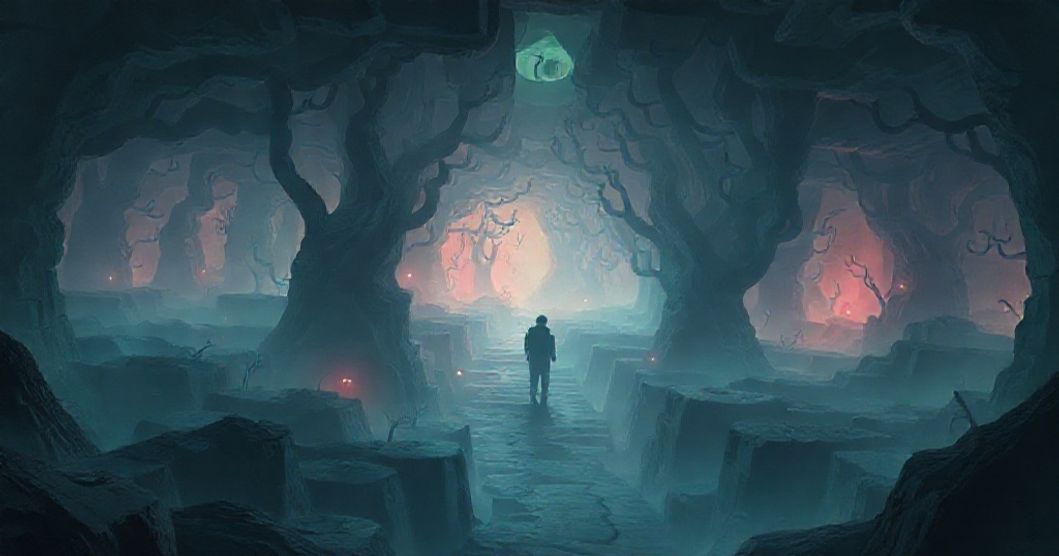
I experience recurring nightmares that unfold like a twisted narrative through time and reality, beginning in ordinary stillness before they fracture into something profoundly unsettling. The dream always starts with a familiar scene—one that feels almost comforting at first—yet beneath the surface, a subtle unease simmers. I find myself in a space that should be ordinary, yet everything feels slightly off-kilter, as if the world itself has been stretched just beyond its natural proportions. Most often, this uncanny calm is interrupted by the presence of my ex-partner, whose face appears with the same haunting familiarity it held in waking life, yet somehow lacks the warmth we once shared. It is in these moments that I first sense the dream’s artificiality—the way details blur at the edges, the way emotions feel both vivid and muted simultaneously. Then, a critical shift occurs: I recognize I am dreaming. The realization hits like a cold splash of water, bringing with it a paralyzing dread. I know, with gut-wrenching certainty, that I am trapped in a dream loop from which I cannot wake, a realization that paradoxically heightens my awareness but leaves me powerless to change my circumstances. As this awareness settles, the dream world undergoes a dramatic transformation. The environment shifts from mundane to aggressively surreal, as if the dream itself has been infected by the logic of a survival horror video game. The colors intensify, the sounds sharpen into discordant screeches, and the air thickens with an oppressive sense of danger. I move through these environments without purpose, yet driven by an instinctual need to survive—a sensation that feels both natural and foreign, as if I’ve been dropped into a pre-programmed nightmare sequence. Sometimes I traverse narrow passageways that seem to twist into themselves, leading inevitably toward a void that radiates existential terror, a space that feels like the threshold to death itself. At other times, I am pursued by shadowy figures or monstrous creatures that exist only in the liminal space between fear and logic. Their forms are indistinct, yet their presence is palpable—a relentless, inescapable pressure that mirrors the weight of unaddressed anxieties. The dream always ends abruptly, leaving me gasping awake, heart pounding, and the residue of that inescapable dread lingering long after I’ve opened my eyes. I’ve often wondered if these recurring nightmares are merely random neural activity or if they carry deeper meaning, a question I now seek to answer through the lens of dream psychology.
Part 2: Clinical Analysis
Want a More Personalized Interpretation?
Get your own AI-powered dream analysis tailored specifically to your dream
🔮Try Dream Analysis FreeSymbolic Landscape: Unpacking the Horror Video Game Realms
The recurring dream’s symbolic landscape is rich with psychological imagery that demands careful decoding. The transition from ordinary reality to a horror video game environment represents a fundamental shift in the dreamer’s relationship to control and safety. In dream psychology, video game narratives often symbolize how we navigate life’s challenges with a sense of agency or powerlessness—a theme deeply relevant here. The