
Part 1: Dream Presentation
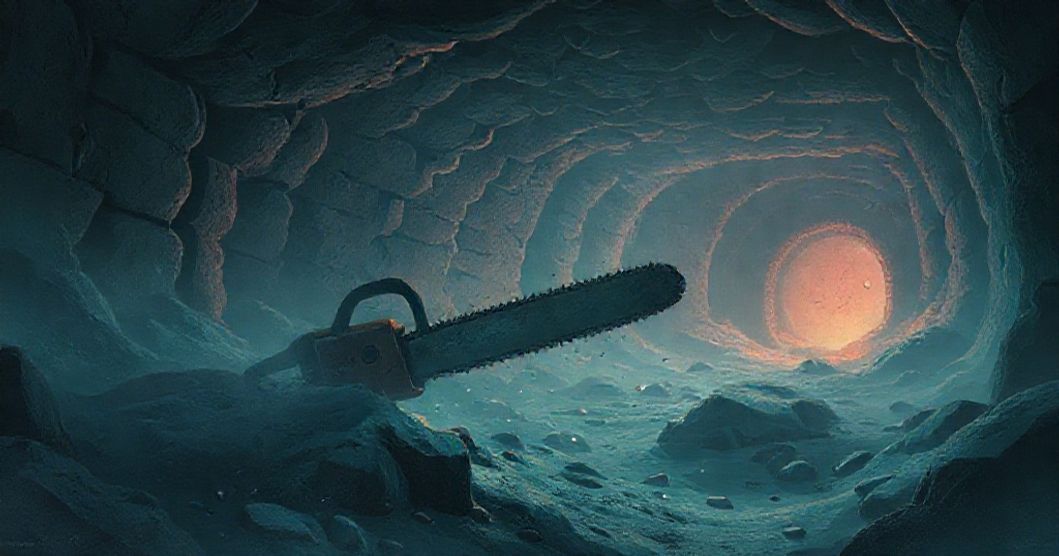
Dreams have long served as the unconscious mind’s cryptic language, revealing truths we cannot always articulate in waking life. For over two years, a recurring nightmare has haunted this dreamer, its details as consistent as a clock’s tick. In this nocturnal landscape, the dreamer finds themselves in Lapland at their grandmother’s house—a place of childhood memories now twisted into something profoundly unsettling. The air carries the crisp chill of winter, yet the house itself feels oppressively cold, as if the very walls retain the residue of forgotten dread. The basement, a dimly lit passage with stone walls slick with moisture, becomes a threshold to deeper fears. Here, two small children huddle in silent terror, their pale faces reflecting the dreamer’s own unspoken panic. Then, from the darkness, a tall, broad-shouldered man emerges, wielding a chainsaw whose roar cuts through the stillness like a blade. This figure is no stranger—he is an old relative from the father’s side, a man the dreamer encountered in family photographs, and whose aggressive, unpleasant nature the father confirmed in waking life. The relentless chase through the icy basement, the children’s silent fear, and the man’s menacing presence create a nightmare that feels both deeply personal and archetypally universal—a recurring specter that demands attention.
Part 2: Clinical Analysis
The Symbolic Landscape: Unpacking the Dream’s Elements
Want a More Personalized Interpretation?
Get your own AI-powered dream analysis tailored specifically to your dream
🔮Try Dream Analysis FreeThe recurring nightmare is rich with symbolic imagery that collectively speaks to deep-seated psychological themes. The setting of Lapland at grandmother’s house introduces a layer of cultural and familial significance. Lapland, often associated with remote landscapes and ancestral roots, may symbolize the dreamer’s connection to heritage and distant family histories. Grandmother’s house, traditionally a site of warmth and safety, transforms into a source of dread—a powerful reversal that suggests the dreamer’s relationship with family legacy carries unresolved tension. The basement, a space typically hidden and overlooked, represents the unconscious mind’s shadowed regions, where repressed memories and emotions reside.
The children in the dream embody innocence and vulnerability, their silent fear reflecting the dreamer’s own unprocessed emotions. They may symbolize parts of the self that feel threatened by the aggressive, chaotic forces of the past. The chainsaw, a tool of destruction and violence, is a particularly charged symbol. In dreams, tools often represent how we approach challenges or conflicts; a chainsaw’s destructive power suggests the dreamer may be facing overwhelming forces they cannot easily manage, or perhaps the need to confront deeply rooted patterns of conflict.
The aggressive relative with a chainsaw is perhaps the most significant symbolic figure. This man, confirmed by the father as unpleasant and mean-spirited, represents the external and internalized threats of the past. His identity as a family member suggests that the conflict is not merely historical but ongoing, echoing in the dreamer’s psyche as a persistent, unaddressed issue. The repetition of this nightmare since 2022 implies that this particular family dynamic or trauma has reached a critical point in the dreamer’s emotional development, demanding acknowledgment.
Psychological Perspectives: Understanding the Unconscious Narrative
From a Freudian perspective, the recurring nightmare can be seen as a manifestation of repressed desires and conflicts. The father’s confirmation of the relative’s unpleasant nature suggests that the dreamer has unconsciously absorbed this judgment or conflict into their psyche. The chainsaw, as a phallic symbol of aggressive power, may represent the dreamer’s fear of masculine authority or the pressure to conform to familial expectations. The basement, as a space of hidden memories, aligns with Freud’s concept of the unconscious as a repository for forbidden thoughts and emotions.
Jungian psychology offers a complementary lens, viewing the dream as a reflection of the collective unconscious and archetypal patterns. The aggressive relative could be seen as a shadow archetype—the dark, repressed aspects of the dreamer’s family history that have not been integrated into conscious awareness. The chainsaw, a tool of destruction, may represent the shadow’s attempt to break through into the conscious mind, demanding attention. The children, as symbols of the inner child or the dreamer’s own vulnerable aspects, embody the need to protect and nurture these parts of the self from the shadow’s destructive forces.
Neurologically, recurring nightmares often correlate with unresolved emotional conflicts or trauma. The brain’s default mode network, active during sleep, processes emotional memories and integrates them into waking life. When these memories remain unprocessed, they reemerge in dreams, often in distorted, symbolic forms. The consistent repetition of the same nightmare suggests that the emotional material has not been adequately digested, requiring the dreamer’s attention to resolve.
Emotional and Life Context: The Unconscious’s Mirror
The timing of the recurring nightmare since 2022 is significant. This year marks a period of potential life transitions, stress, or emotional upheaval for the dreamer. Major life events—such as career changes, relationship shifts, or family conflicts—often trigger the reemergence of repressed emotions in dreams. The dreamer’s father’s confirmation of the relative’s unpleasant nature introduces the possibility of family conflict or tension that has been brewing beneath the surface.
The aggressive relative may symbolize a broader pattern of conflict avoidance or the fear of confronting difficult conversations. In waking life, the dreamer might be avoiding situations that bring up feelings of anger, disappointment, or betrayal related to family dynamics. The children’s silent fear could reflect the dreamer’s own suppressed feelings of powerlessness or the need to protect vulnerable parts of themselves from external threats.
The emotional weight of the nightmare suggests that the dreamer is in a period of psychological growth or transition, where the unconscious is pushing for resolution of past issues. The consistent repetition indicates that the dreamer’s defenses against these emotions are weakening, allowing the deeper psychological material to surface. This process is uncomfortable but necessary for emotional integration.
Therapeutic Insights: Navigating the Unconscious Journey
For the dreamer, recurring nightmares offer an opportunity for self-discovery and emotional healing. One practical approach is to maintain a dream journal, documenting not just the details but also the emotions and thoughts that arise when waking from the nightmare. This practice can help identify patterns and themes that may not be immediately apparent.
Exploring family history with a therapist or trusted family member can provide clarity on the relative’s role in the family dynamic. Understanding the context of the relative’s behavior—whether rooted in trauma, personality, or historical context—can reduce its power as a symbol of fear. Journaling exercises that visualize the dreamer standing up to the relative, or reinterpreting the chainsaw as a tool of protection rather than destruction, can help reframe the nightmare’s meaning.
Therapeutic techniques like guided imagery or EMDR may assist in processing the emotional material associated with the nightmare. These approaches can help the dreamer safely revisit the repressed emotions, allowing them to be integrated rather than avoided. Additionally, mindfulness practices can help the dreamer distinguish between the safety of waking life and the chaos of the nightmare, fostering a sense of control over their emotional responses.
FAQ: Addressing Common Questions About Recurring Dreams
Q: Why does the same nightmare repeat every night?
A: Recurring dreams often repeat because the emotional material they represent remains unresolved. The unconscious mind uses repetition to ensure these issues receive attention, and the dreamer’s defenses against them are weakening over time.
Q: How can I differentiate between a nightmare and a symbolic message?
A: Nightmares often trigger intense fear, while symbolic dreams may contain messages that are less emotionally charged. The recurring nature and specific details here suggest it is both, with the fear representing the intensity of the unconscious material needing resolution.
Q: Is there a cultural or familial meaning to the chainsaw symbol?
A: Chainsaws symbolize power, destruction, and the cutting away of old patterns. In this context, the chainsaw may represent the need to cut through emotional barriers or confront difficult family truths, with the aggressive relative embodying the external or internalized conflict driving this need.
Conclusion: Integrating the Unconscious Message
This recurring nightmare is not just a source of fear but a powerful tool for self-awareness. The symbolic elements—the icy basement, the children, the aggressive relative, and the chainsaw—collectively speak to the dreamer’s need to confront unresolved family dynamics and repressed emotions. By approaching this nightmare with curiosity rather than dread, the dreamer can unlock a deeper understanding of their emotional landscape and begin the healing process. The journey from fear to understanding is challenging, but the rewards—greater emotional clarity, stronger self-awareness, and integration of the unconscious—are invaluable. Through careful exploration and therapeutic support, the dreamer can transform this recurring nightmare from a source of terror into a guide for growth and healing.