
Part 1: Dream Presentation
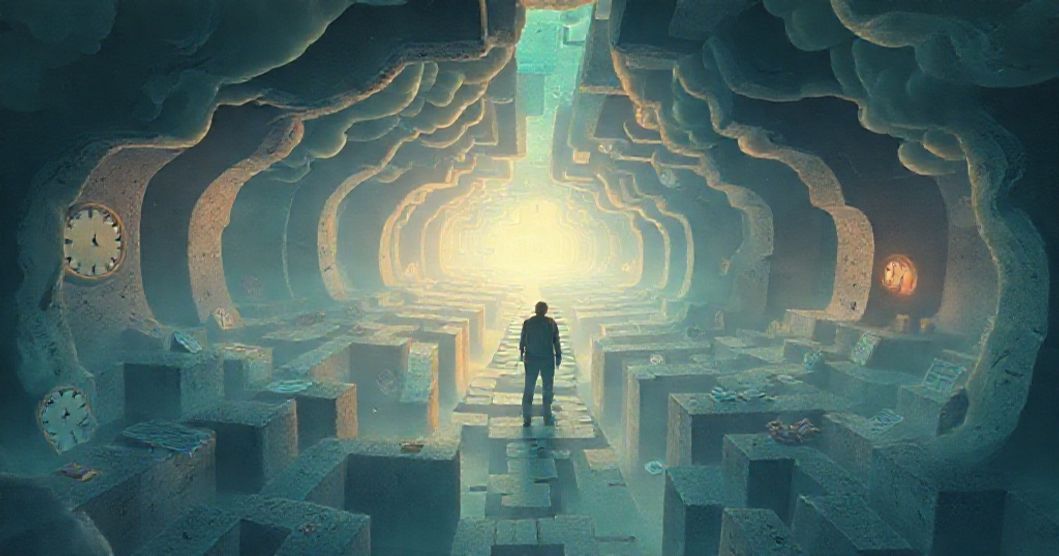
Dreams often arrive unannounced, carrying fragments of our deepest anxieties in symbolic form. In this case, the dreamer’s experience unfolds as a psychological journey through familiar spaces transformed into uncanny landscapes, blending the comfort of home with the terror of surreal collapse. The dream begins with the relief of returning 'after a week being outside'—a metaphor for needing stability after a period of uncertainty or disconnection—before shifting into a sequence that mirrors both social longing and existential dread.
The rewritten dream narrative captures this tension: starting in a 'huge apartment alone' (representing the dreamer’s need for space or isolation after external demands), transitioning to friends in the living room (social connection), and then a catastrophic shift when the dreamer 'remembers the myth' of recognizing dreams, triggering a surreal transformation. The friends’ eyes turning white and falling silent symbolize a loss of emotional connection or authenticity, while the room’s destruction and backrooms-like decay represent the collapse of familiar structures. The woman’s voice, with its urgent '23 hours left to your punishment, find an intact budget to avoid it,' introduces a concrete, modern anxiety tied to financial security and time pressure.
Part 2: Clinical Analysis
Want a More Personalized Interpretation?
Get your own AI-powered dream analysis tailored specifically to your dream
🔮Try Dream Analysis FreeSymbolic Landscape: The Dreamer’s Inner World Unpacked
The dream’s symbolic elements form a cohesive psychological map of the dreamer’s emotional terrain. The 'backrooms' imagery, a cultural reference to liminal spaces of anxiety and existential dread, functions as a metaphor for the dreamer’s subconscious feeling of being trapped in a space without clear boundaries or escape. This aligns with Jung’s concept of the 'uncanny'—a feeling of dread triggered by the recognition of something familiar yet distorted, as if reality itself has 'decayed' (Freud, 1919).
The 'intact budget' is a striking, specific detail that grounds this abstract nightmare in concrete reality. Dreams often transform waking concerns into symbolic imagery, and here the 'budget' likely represents the dreamer’s relationship with financial security, control, or deadlines. The '23 hours' deadline introduces a temporal urgency, suggesting the dreamer feels pressured by time—perhaps with upcoming financial obligations, life transitions, or social expectations that feel like imperatives.
The friends’ eyes turning white and falling silent is one of the dream’s most unsettling elements. In dream analysis, eyes represent the 'window to the soul' (Jung, 1916), and their transformation here suggests the dreamer’s subconscious perception of social connections as hollow or inauthentic. When the dreamer attempts to 'wake up' in the dream, the friends’ inability to respond may symbolize the dreamer’s fear of losing agency in relationships or social contexts.
Psychological Perspectives: Layers of Understanding
From a Jungian perspective, this dream reflects the integration of the 'shadow self'—the dreamer’s unconscious fears and unresolved issues. The 'punishment' and 'budget' may represent the shadow’s projection of self-judgment around financial responsibility or life choices. The collapsing apartment mirrors the shadow’s tendency to disrupt comfort zones when we attempt to 'wake up' to our true selves.
Freudian analysis might interpret the dream as a manifestation of repressed anxieties. The 'intact budget' could symbolize the dreamer’s unconscious guilt or fear of failure in meeting financial obligations, while the '23 hours' deadline represents the pressure of societal expectations to 'perform' successfully within a limited timeframe.
Cognitive neuroscience offers another lens: dreams as problem-solving mechanisms during sleep. The 'find an intact budget' directive might reflect the dreamer’s waking mind grappling with financial decisions, replaying them in symbolic form during rest. The 'backrooms' imagery, a modern cultural reference, taps into collective anxieties about liminal spaces—transitions between safety and danger, control and chaos—common in our digital age of constant uncertainty.
Emotional & Life Context: The Dreamer’s Unconscious Whispers
The dreamer’s note that they 'felt the worst nightmare of my life' suggests intense emotional activation, likely tied to waking stressors. The sequence of returning home after a week 'outside' may represent a period of isolation, travel, or emotional distance, creating a psychological need for reconnection that the dream both fulfills and sabotages.
The '23 hours' and 'intact budget' elements strongly suggest financial anxiety. This could manifest as upcoming bills, job uncertainty, or pressure to maintain stability in a precarious situation. The 'backrooms' collapse mirrors the dreamer’s fear of losing control over their financial future—a common modern anxiety amplified by the dream’s surreal imagery.
The friends’ transformation into silent, white-eyed figures hints at social anxiety: perhaps the dreamer feels misunderstood or disconnected from friends, or fears that social relationships are becoming hollow or performative. The 'huge apartment alone' phase may represent a desire for solitude versus the need for connection, a conflict often played out in dreams as we navigate adult independence.
Therapeutic Insights: Translating Dream to Self-Awareness
This dream offers valuable clues for the dreamer to explore waking concerns. First, journaling about financial deadlines and social pressures can help identify specific triggers. The '23 hours' deadline may represent a real-world time constraint; examining what 'intact budget' means (security, flexibility, or something else) can reveal priorities.
Reflecting on the friends’ transformation: Are there relationships where the dreamer feels unheard or disconnected? Journaling about these interactions could reveal patterns of communication or emotional distance needing attention.
The 'backrooms' imagery suggests a need for grounding exercises—practices that anchor the dreamer in the present moment to separate dream anxiety from waking reality. Mindfulness techniques, such as 5-4-3-2-1 grounding (noting five things seen, four felt, etc.), can reduce the dream’s emotional impact.
Finally, the dream’s collapse and transformation invite the question: When faced with uncertainty, how does the dreamer 'find an intact budget'? This could mean redefining financial security beyond external metrics, focusing on internal resources, or creating contingency plans that feel manageable.
FAQ Section
Q: Why did the friends’ eyes turn white in the dream?
A: White eyes often symbolize loss of self or connection in dream imagery. They may reflect the dreamer’s subconscious feeling that social interactions lack authenticity or depth, or a fear of being seen without a 'true self' in relationships.
Q: What does 'intact budget' represent in a dream about a nightmare?
A: The 'budget' likely symbolizes control over resources or security, while 'intact' suggests wholeness or lack of compromise. The dream may be processing anxiety about financial stability, upcoming obligations, or maintaining integrity in the face of pressure.
Q: How can I differentiate between my dream’s anxiety and real-life stress?
A: Dreams often amplify real concerns. Notice if the '23 hours' deadline aligns with a waking deadline, and if 'budget' reflects specific financial stressors. Grounding exercises and journaling can help separate dream imagery from practical action steps.