
Part 1: Dream Presentation
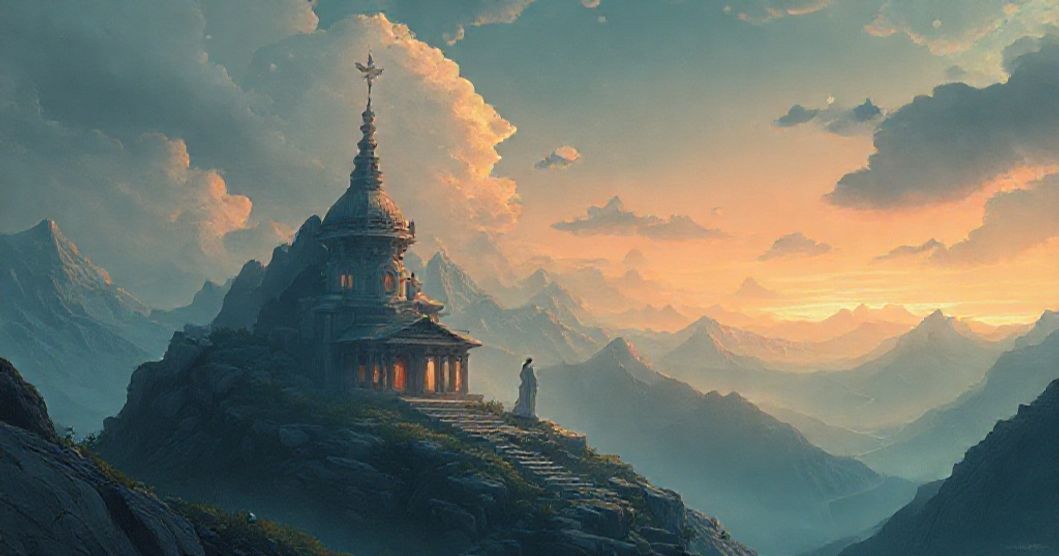
Dreams have a way of transporting us to realms both familiar and utterly strange, as if our unconscious mind crafts a narrative that defies waking logic yet resonates with deeper truths. In this particular dream, the dreamer’s experience unfolds on a mountain-top temple—a sacred space where a goddess-like figure enters and vanishes, leaving behind only the echo of mystery and the tangible memory of a place that seemed to exist both in the dream and in reality.
The dream begins with a journey: ascending a mountain whose slopes transition from greenery to rocky cliffs, a visual metaphor for the spiritual ascent or challenges the dreamer may have been navigating. The temple itself is described with sensory detail—the glow of carved stones, the golden light filtering through windows, and the 'sacred stillness' in the air—creating an atmosphere of reverence and otherworldliness. The goddess-like woman, with her flowing robes and serene expression, embodies the archetypal feminine divine, intuition, or the dreamer’s inner sense of the sacred. Her deliberate entrance through the door and subsequent vanishing are pivotal actions: the door represents a threshold between the known and unknown, while her disappearance suggests transience, transcendence, or the dissolution of boundaries between the conscious and unconscious.
The dream’s vividness and the subsequent search for a real-world counterpart (Priya Vihar) add layers of significance. The fact that the dreamer discovered a temple matching their vision—something 'never heard of before'—introduces the concept of synchronicity, where the unconscious mind seems to align with external reality in unexpected ways.
Want a More Personalized Interpretation?
Get your own AI-powered dream analysis tailored specifically to your dream
🔮Try Dream Analysis FreePart 2: Clinical Analysis
Symbolic Landscape: Decoding the Dream’s Elements
The mountain in dreams typically symbolizes spiritual ascent, challenges, or the journey toward self-discovery. In this case, the mountain’s transition from greenery to rocky cliffs may represent the dreamer’s own process of navigating life’s challenges—moving from comfort (green slopes) to uncertainty (rocky terrain) as they seek deeper meaning. The temple itself functions as a mandala, a symbol of wholeness and spiritual center, where the dreamer encounters the divine within or without.
The goddess-like figure embodies the Anima archetype in Jungian psychology—the feminine aspect of the unconscious mind that represents intuition, creativity, and spiritual wisdom. Her presence suggests the dreamer’s need to connect with these aspects of themselves. The flowing robes and serene expression indicate a state of peace or transcendence, while her vanishing speaks to the fluid, non-linear nature of the unconscious mind, which resists being confined to a single interpretation.
The door serves as a threshold symbol, representing the boundary between conscious and unconscious realms. The act of entering without resistance (or the dreamer’s inability to follow) suggests the dreamer’s openness to new experiences or their recognition of something beyond their immediate understanding. The temple’s architecture, described as 'intricate' and 'glowing,' hints at the complexity of spiritual or emotional truths the dreamer is beginning to explore.
Psychological Perspectives: Layers of Interpretation
From a Jungian perspective, the dream may reflect the dreamer’s search for meaning in an increasingly fragmented world. The temple as a mandala represents the self, and the goddess figure as the Anima archetype invites the dreamer to integrate feminine qualities—intuition, empathy, or spiritual insight—into their waking life. The mountain’s ascent could symbolize the individuation process, where the dreamer is moving toward self-realization.
Freudian analysis might view the dream as a manifestation of repressed spiritual or romantic longings. The goddess figure could represent an idealized feminine presence, while the temple symbolizes a desire for the security and meaning found in organized religion or spiritual practice. The vanishing figure might reflect the dreamer’s fear of losing this idealized connection, or the unconscious’s protection against the anxiety of unfulfilled expectations.
Modern psychology, influenced by neuroscience, suggests dreams process emotional memories and consolidate information. The dream’s vividness and the subsequent real-world match (Priya Vihar) might indicate that the dreamer’s mind was actively seeking meaning, using the temple as a symbol for their own internal search. The synchronicity of finding a real temple that matched the dream could be seen as the mind’s way of validating the dream’s significance.
Emotional and Life Context: Waking Connections
The dream occurred in 2021, a year that often marks life transitions—career changes, relationship shifts, or periods of uncertainty. The dreamer’s description of the dream as 'vivid' and their subsequent search for meaning suggests they were in a reflective phase, questioning their path. The fact that the temple was 'never heard of before' hints at a new spiritual or cultural connection emerging in the dreamer’s life.
The emotional tone of the dream—wonder, curiosity, and a sense of loss upon the goddess’s vanishing—reflects the dreamer’s current emotional state: open to new experiences but also uncertain about how to proceed. The temple, as a place of worship, might symbolize the dreamer’s need for structure or purpose in their waking life. The search for Priya Vihar after the dream suggests the dreamer was seeking external validation for their internal experience, a common response when the unconscious reveals something significant.
Therapeutic Insights: What the Dream Reveals
This dream invites the dreamer to explore their spiritual or existential questions without judgment. The temple’s mountain-top location suggests the need to climb beyond surface-level concerns to reach deeper truths. The goddess’s vanishing encourages the dreamer to embrace uncertainty and allow their intuition to guide them, rather than seeking concrete answers immediately.
A reflective exercise could involve journaling about current life questions: What spiritual or emotional needs are unmet? What aspects of the self (like the Anima archetype) might need integration? The dream’s synchronicity with Priya Vihar offers an opportunity to explore the temple’s history or significance, connecting the dream’s symbolic elements to real-world meaning.
Therapeutically, this dream suggests the importance of listening to the unconscious mind’s messages. The dreamer’s proactive search for meaning demonstrates a healthy engagement with their inner world, and this can be nurtured through practices like dream journaling, meditation, or exploring spiritual traditions that resonate with their experience.
FAQ Section
Q: Why did the goddess vanish in the dream?
A: The goddess’s vanishing symbolizes the fluid, ever-changing nature of the unconscious mind, which resists being confined to a single interpretation. It may also represent transcendence or the dissolution of ego boundaries, inviting the dreamer to embrace uncertainty.
Q: What does the mountain temple represent in dreams?
A: Mountains symbolize spiritual ascent and challenges, while temples represent sacred spaces for self-discovery. Together, they suggest the dreamer is navigating a journey toward deeper meaning, moving from the known to the unknown.
Q: Is finding a real-world temple (Priya Vihar) significant?
A: Yes, this synchronicity suggests the dream tapped into something meaningful—perhaps the dreamer’s unacknowledged spiritual yearnings or a connection to a new cultural or religious experience they’re beginning to explore.
Keywords
mountain temple, goddess figure, vanishing, priya vihar, spiritual symbolism, dream synchronicity, unconscious mind, sacred space, archetypal symbols, threshold experience
Entities
mountain temple, goddess-like woman, Priya Vihar, spiritual awakening, unconscious narrative