
Part 1: Dream Presentation
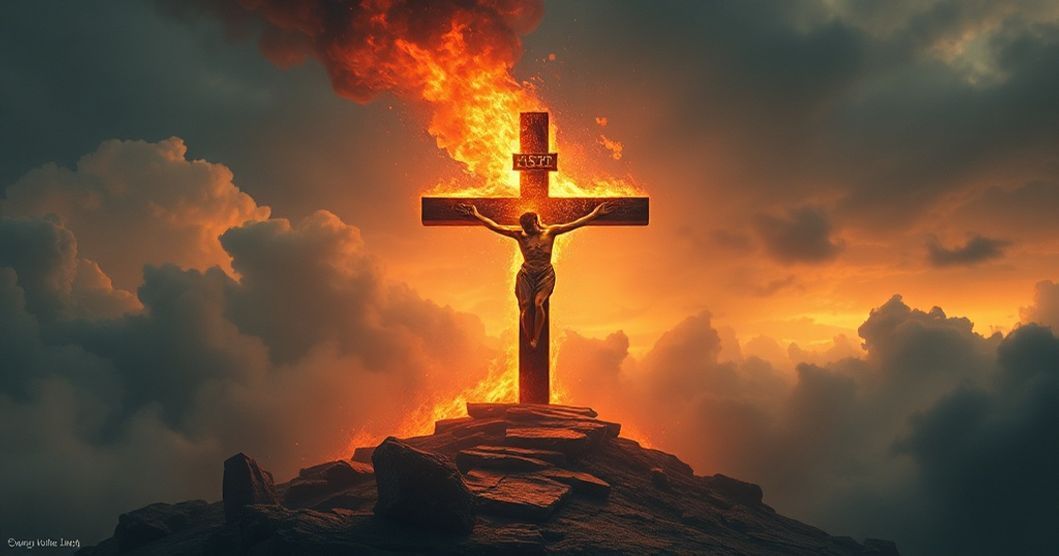
Dreams often serve as portals between conscious awareness and the depths of our psyche, bridging spiritual symbolism with visceral emotional experiences. In this case, the dreamer’s encounter with a colossal cross bathed in blinding light and followed by a persistent burning sensation offers a rich tapestry for exploration. The narrative unfolds as follows: standing before a towering cross in an environment of intense, almost tangible white light, the dreamer experiences both spiritual reverence and physical discomfort. The burning sensation, which persists into wakefulness, creates a striking fusion of the metaphysical and the physical, suggesting a deeper psychological process at work.
The dreamer, who identifies as religious, encounters the cross—a universal symbol of faith, sacrifice, and divine presence—within a realm of overwhelming illumination. This luminous environment contrasts sharply with the dreamer’s usual sleeping position (side sleeper) and the subsequent awakening on their back, introducing an element of disorientation that may mirror internal psychological shifts. The burning sensation, which manifests both during the dream and post-wakefulness, becomes a critical thread connecting the symbolic and the somatic, demanding attention to how the unconscious communicates through physical sensations.
Part 2: Clinical Analysis
Want a More Personalized Interpretation?
Get your own AI-powered dream analysis tailored specifically to your dream
🔮Try Dream Analysis FreeSymbolic Landscape: Cross, Light, and Burning
The cross, as a religious symbol, carries profound archetypal significance in Jungian psychology, representing the intersection of opposites—the spiritual and the material, the finite and the infinite. For a religious dreamer, this symbol likely activates the collective unconscious’ spiritual archetypes, suggesting a dialogue between conscious faith and deeper spiritual yearnings. The giant cross amplifies this archetype, indicating a heightened spiritual presence or a call to confront one’s relationship with the divine.
The intense white light constitutes another layer of symbolism. In dreamwork, light often represents illumination, truth, or spiritual awakening, while its overwhelming nature may signify both transcendence and potential overwhelm. The brightness could symbolize clarity emerging from the unconscious, forcing the dreamer to confront aspects of themselves or their faith that require deeper understanding. The paradoxical nature of this light—simultaneously comforting and oppressive—reflects the dualities inherent in spiritual experiences: the peace of faith and the discomfort of growth.
The burning sensation emerges as the most compelling element, bridging the symbolic and the physical. In dreams, physical sensations rarely occur randomly; they often represent emotional or psychological states. Burning can signify purification, transformation, or the intensity of suppressed emotions. This persistent burning, continuing into wakefulness, suggests the dream’s themes have touched upon deeply resonant aspects of the dreamer’s psyche, leaving an emotional and physical imprint.
Psychological Perspectives: Archetypes and Unconscious Processing
From a Jungian perspective, the cross represents the Self—the integration of conscious and unconscious elements. The giant cross in a luminous field may symbolize the dreamer’s encounter with the Self on a collective level, a spiritual awakening or a call to align with one’s authentic values. The light, as the 'numinous' in Jungian terms, represents the transcendent aspect of the psyche that exceeds conscious understanding.
Freudian analysis might interpret the cross as a manifestation of repressed religious conflicts or unconscious guilt, while the burning sensation could symbolize the dreamer’s unresolved tensions between spiritual ideals and everyday life. The physical discomfort during sleep and wakefulness may reflect the unconscious’s attempt to resolve these tensions through symbolic imagery.
Neuroscientifically, the dream’s vividness and persistent physical sensation could relate to hypnagogic hallucinations or the brain’s tendency to project emotional states into sensory experiences during sleep. The burning sensation might stem from the amygdala’s activation of emotional memory, creating a psychosomatic response to the dream’s emotionally charged imagery.
Emotional & Life Context: Faith, Transformation, and Uncertainty
The dreamer’s religious identity frames the cross as a familiar symbol, yet its context within overwhelming light introduces a new dimension. The burning sensation, occurring in a setting of spiritual imagery, suggests the dreamer may be experiencing a period of spiritual questioning or growth. The collision of the sacred (cross) and the intense (light) might reflect a tension between comfort and challenge in their faith journey.
The unexpected sleeping position (belly up, despite being a side sleeper) could symbolize vulnerability or a need to 'face upward' to something greater, suggesting the dreamer is confronting existential questions or seeking clarity. The burning, as a physical manifestation of emotional intensity, may indicate that the dreamer is processing significant changes or pressures in their waking life, particularly those related to faith or personal values.
Therapeutic Insights: Reflecting on Spiritual and Emotional Landscapes
The dream invites the dreamer to explore the tension between spiritual comfort and emotional discomfort. Journaling about recent spiritual practices or life challenges could reveal patterns where the unconscious uses symbolic imagery to communicate unresolved issues.
Practices like mindfulness meditation on the burning sensation might help the dreamer discern if it represents a need for purification (positive transformation) or a sign of emotional overwhelm (negative pressure). Reflecting on the cross’s role in their faith journey—whether it represents a source of strength or a source of pressure—can illuminate areas for spiritual growth.
The persistent physical sensation after waking suggests the dream’s themes demand attention. The dreamer might benefit from exploring how their faith intersects with daily life, particularly in moments of stress or uncertainty. The burning could be a call to embrace discomfort as part of spiritual or personal transformation.
FAQ Section
Q: What does the cross symbolize in this dream?
A: For a religious dreamer, the cross likely represents faith, spiritual connection, or a call to deeper devotion. Its size and the luminous setting suggest a heightened spiritual presence or a need to confront one’s relationship with the divine.
Q: Why did the burning sensation persist after waking?
A: The burning reflects the emotional intensity of the dream’s themes. It may signify unresolved tensions between spiritual ideals and daily life, or a psychosomatic response to the powerful imagery.
Q: How can the dreamer integrate this experience into waking life?
A: Reflect on spiritual practices and emotional states. The burning may signal a need for purification or transformation; journaling about these themes can help identify growth opportunities.