
Part 1: Dream Presentation
Dreams often arrive as cryptic messengers, bridging the conscious and unconscious realms through symbolic language we rarely understand in our waking lives. This particular dream, though fragmented, carries the weight of suppressed memories and unspoken longings, emerging from a mind that typically experiences sleep as a blank void. The dreamer finds herself seated across from an unseen boy at a table, surrounded by photographs that reveal a younger version of herself—a figure she barely recognizes in the present moment. As the narrative unfolds, we witness a journey through forgotten identity, hidden connections, and the gradual emergence of a desired self-image, culminating in a moment of clarity that dissolves into darkness.
The dream begins with the dreamer in a liminal space—a table that serves as a threshold between past and present, reality and imagination. The boy, whose face remains obscured throughout most of the dream, becomes a vessel for the dreamer’s unconscious curiosity. He presents photographs of her childhood self, triggering recognition and surprise. These images, though blurry in the dream, represent the dreamer’s lost or neglected aspects—parts of herself that have been shelved in the chaos of daily life. The boy’s statement that he 'knew her from an acquaintance' hints at a connection that exists in waking life but remains unacknowledged, suggesting an untapped relationship potential or a forgotten social bond.
As the dream progresses, the boy reads a letter behind the photograph—a symbolic act of revealing hidden truths. The letter, though unspoken, represents the dreamer’s unexpressed desires to connect with this person and with her own past. Their subsequent meeting, filled with shared interests and mutual understanding, suggests a deep-seated need for authentic connection that transcends surface-level interactions. The dreamer’s realization that they have 'so many things in common' reflects a universal human longing for meaningful relationships and emotional resonance.
Want a More Personalized Interpretation?
Get your own AI-powered dream analysis tailored specifically to your dream
🔮Try Dream Analysis FreeThe dream’s climax arrives with the video call—a technological interface that bridges the gap between the seen and unseen. Here, the boy’s face materializes as 'the ideal type,' a figure constructed from the dreamer’s unconscious ideals and desires. This moment of clarity, however, is brief, dissolving into darkness that signifies the dream’s abrupt end. This darkness symbolizes the unfinished nature of the dreamer’s unconscious journey, leaving her with a sense of longing and unresolved questions about identity, connection, and self-discovery.
Part 2: Clinical Analysis
Symbolic Landscape: Unseen Faces and the Unconscious Self
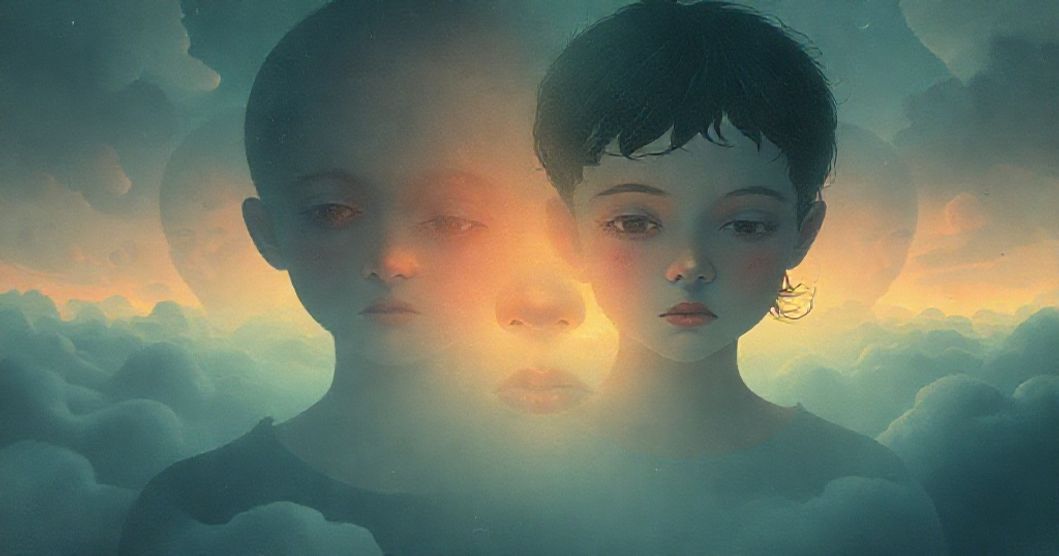
The dream’s most striking element is the boy’s unseen face, which persists throughout most of the narrative before materializing at the conclusion. In dream psychology, the 'unseen face' often represents aspects of the self or relationships that remain unknown or unintegrated in waking life. This phenomenon aligns with Carl Jung’s concept of the 'shadow,' the unconscious aspects of personality we repress or avoid. The boy’s obscured features may symbolize the dreamer’s own shadow self—parts of her identity she has not yet acknowledged or integrated.
The childhood photographs represent another layer of symbolism. Photographs in dreams typically signify memory, identity, and the passage of time. The dreamer’s younger self in the images suggests a longing to reclaim or reconnect with her authentic self—a self that existed before adulthood’s complexities and responsibilities. This imagery may reflect a period of life when the dreamer felt more carefree or connected to her true desires, now overshadowed by the demands of daily life.
The video call functions as a threshold between the seen and unseen, a digital interface that both reveals and conceals. In dreams, technology often symbolizes communication barriers or breakthroughs. The video call’s sudden illumination of the boy’s face as 'the ideal type' suggests that the dreamer’s unconscious has synthesized her deepest desires into a single, tangible figure—a projection of what she wants in relationships and self-expression.
Psychological Perspectives: Jungian Archetypes and the Unconscious
From a Jungian perspective, this dream embodies the 'anima' archetype—the feminine counterpart in the male psyche, representing intuition, emotional depth, and the unconscious feminine aspects. In this case, the dreamer’s projection of an 'ideal type' onto the boy may reflect her own anima—her own feminine qualities that she seeks to integrate or express. The boy’s unseen face until the end could symbolize the dreamer’s struggle to reconcile her conscious ideals with her unconscious reality.
Sigmund Freud would likely interpret the dream as a manifestation of repressed desires and unfulfilled longings. The boy’s presence and the dreamer’s emotional response to seeing his face as 'ideal' suggest repressed sexual or emotional desires that have found expression in the dream. The letter, read by the boy, represents the dreamer’s need to communicate her true feelings, which remain unspoken in waking life.
Cognitive dream theory offers another lens, suggesting dreams process recent experiences and consolidate memories. The dreamer’s statement that she 'almost never dreams' may indicate a period of emotional or psychological stillness, allowing the unconscious to surface more clearly. The dream’s focus on connection and identity could reflect the dreamer’s waking life experiences with relationships, social connections, or self-exploration.
Emotional & Life Context: Unmet Needs and Identity Exploration
This dream likely emerges from the dreamer’s waking life experiences with identity, relationships, and emotional fulfillment. The recurring theme of 'not seeing the face' suggests a disconnection between her conscious self and her deeper desires or relationships. The dreamer may be navigating a period of uncertainty about her social connections or romantic life, feeling unfulfilled in her current relationships or lacking meaningful interactions.
The childhood photographs hint at nostalgia for a simpler time, possibly reflecting a desire to escape current responsibilities or reconnect with her authentic self. In many cases, such dreams arise during periods of self-reflection or midlife transitions, when individuals question their path and seek to reclaim lost aspects of themselves.
The 'ideal type' figure represents the dreamer’s unconscious ideals for relationships—qualities she values in others and, by extension, in herself. This projection suggests a longing for emotional resonance and compatibility that she may not have found in her waking life, prompting the dream to explore these unmet needs.
Therapeutic Insights: Integrating Dream Wisdom
The dream offers several therapeutic insights for the dreamer. First, it urges her to explore the 'unseen' aspects of her identity and relationships—the parts she has not yet acknowledged or integrated. Journaling exercises that focus on her reactions to the dream can help her identify these hidden aspects.
Reflective practices like dream journaling can deepen self-awareness. By recording the dream in detail and noting her emotional responses, the dreamer can begin to connect the dots between her unconscious and conscious experiences. Asking herself, 'What aspects of myself do I feel are unseen or unexpressed?' can help her identify areas for growth.
The dream also suggests the importance of addressing unmet emotional needs. If the dreamer is feeling disconnected in her relationships, exploring these feelings with a trusted friend or therapist can provide clarity. The 'ideal type' figure may represent a call to action—to seek relationships that align with her authentic self and values, rather than settling for surface-level connections.
FAQ Section
Q: What does it mean when the boy’s face remains unseen until the end of the dream?
A: An unseen face often symbolizes aspects of yourself or relationships you haven’t fully integrated. It may represent hidden parts of your identity or unacknowledged emotions waiting to be explored.
Q: Why did the dream end with darkness after seeing the boy’s face?
A: Darkness in dreams typically signifies the unknown or unresolved aspects of your journey. It may indicate that the dream is incomplete, leaving you with a sense of longing to continue exploring these themes in waking life.
Q: How can this dream help with waking life relationships?
A: The dream’s focus on connection and ideal type suggests examining your current relationships for depth and authenticity. It may encourage you to seek relationships that align with your unconscious desires and values, fostering more meaningful connections.