
Part 1: Dream Presentation
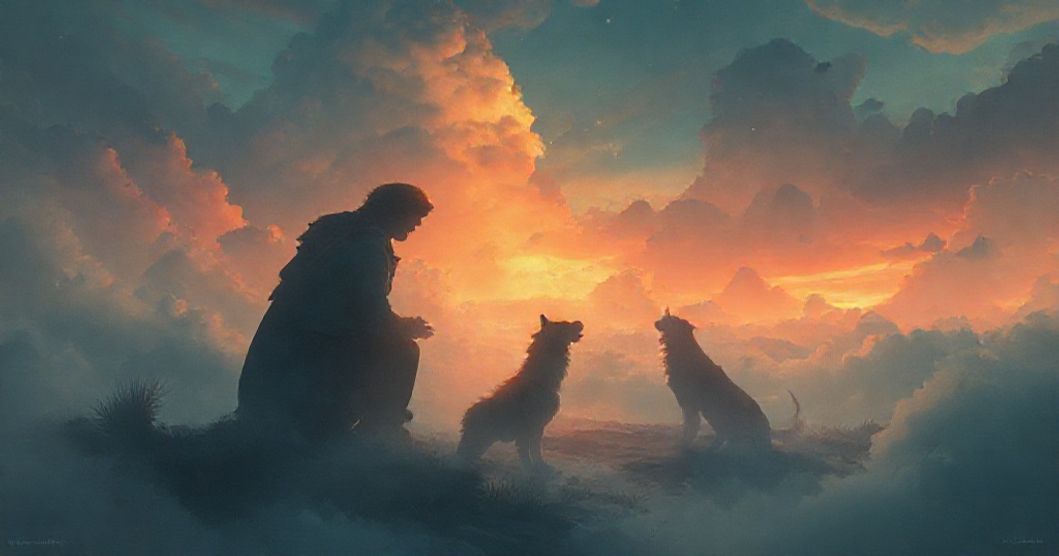
Dreams often arrive as cryptic messengers, and this particular one unfolds like a psychological puzzle, blending visceral fear with unexpected tenderness. As the dreamer recounts, they find themselves trapped in a house with four others, the world outside fractured by an unnatural brightness—a sign of impending danger. The initial panic gives way to a strange, almost schizophrenic urgency: “Yes, yes, yes—get them! Save us!” paired with the overwhelming conviction that the running figures below are not human. This paradox of wanting to protect while fearing humanity itself sets the stage for deeper exploration.
The dream’s narrative unfolds in distinct phases: first, the house as a temporary sanctuary under siege, then the frantic search for protection (the gun), followed by the realization that the “threat” was actually a guardian dog. The black lab’s appearance—suddenly emerging from the shadows to shield the vulnerable boy—represents a critical turning point, where fear transforms into gratitude. The dream concludes with the dreamer’s relief, as the tension dissolves and they praise the dog, a moment of clarity that signals the end of the nightmare.
Part 2: Clinical Analysis
Want a More Personalized Interpretation?
Get your own AI-powered dream analysis tailored specifically to your dream
🔮Try Dream Analysis FreeSymbolic Landscape
The house in this dream functions as a powerful symbol of safety and containment, yet its role shifts dramatically as external threats breach its walls. Jung would likely interpret the house as the dreamer’s ego or sense of self, temporarily overwhelmed by forces beyond their control. The unnatural brightness—bombs or explosions in the sky—represents repressed anxieties or traumatic triggers, manifesting as external chaos. The “non-human” figures running below may symbolize the dreamer’s perception of certain social groups or aspects of themselves as alien, perhaps reflecting fears of losing one’s humanity in the face of collective threats.
The gun, a tool of protection and aggression, appears as a double-edged symbol: it represents the dreamer’s instinct to defend, yet its presence in a context where a child needs safety suggests underlying power struggles or feelings of inadequacy in protecting others. The black lab, by contrast, embodies unconditional love and loyalty—a counterpoint to the dreamer’s initial fear of humanity. Its black fur, often associated with mystery and depth, contrasts with the “bright” danger of the sky, symbolizing the unconscious mind’s capacity to discern true benevolence.
The tree line and leaves add another layer: nature as both protective barrier and hiding place, where the dog’s “attack” on the boy is actually a protective maneuver. This juxtaposition of danger and safety in the natural world mirrors the dreamer’s internal landscape, where perceived threats coexist with unexpected sources of comfort.
Psychological Undercurrents
From a Freudian perspective, the dream may reflect repressed fears of inadequacy in protecting loved ones—a common theme in dreams involving children. The boy’s plea for help could symbolize unresolved childhood anxieties or a desire to shield innocence from harm. The dreamer’s initial misidentification of the dog as a threat aligns with Freudian slip theory, where the unconscious substitutes real fears with distorted imagery to avoid emotional discomfort.
Jungian analysis reveals the house as the “ego” and the external threat as the “shadow”—the repressed parts of the self that feel alien or dangerous. The black lab, as a totem animal, represents the “animus” or “anima”—the masculine or feminine aspects of the self that embody protective, nurturing qualities. The dream’s resolution, where the dreamer praises the dog, suggests the integration of these previously feared shadow elements into a more balanced self.
Neuroscientifically, the dream’s structure aligns with the default mode network’s tendency to process emotional memories during sleep. The rapid shifts between fear and relief mimic the brain’s threat-detection system, where the amygdala initially flags danger, only to be overridden by the prefrontal cortex’s recognition of safety—a process that mirrors the dreamer’s internal journey from panic to compassion.
Emotional & Life Context
The dream likely reflects the dreamer’s waking preoccupations with safety, protection, and discernment. The “non-human” figures may stem from social anxiety or a sense of disconnection from community, where the dreamer feels surrounded by “others” who are not truly seen as human. The gun, a tool of defense, might symbolize the dreamer’s efforts to control or protect themselves in a world that feels unpredictable.
The boy’s age (4–5) suggests vulnerability and innocence, possibly representing a part of the dreamer’s personality that feels unprotected or in need of care. The black lab’s intervention could symbolize the dreamer’s unconscious longing for uncomplicated loyalty—a quality often associated with animals and contrasted with human complexities.
In waking life, this dream may emerge during periods of uncertainty, where the dreamer is navigating new relationships or responsibilities. The house as a sanctuary might represent a temporary phase of stability under threat, while the gun and subsequent realization of the dog’s true nature suggest a desire to protect without resorting to aggression—a balance the dreamer may be seeking in waking life.
Therapeutic Insights
This dream offers valuable clues for self-reflection. The initial panic and fear of “non-human” people may indicate areas where the dreamer feels alienated or misunderstood in waking relationships. The dog’s protective role invites the question: What or who in waking life do I need to protect, and how can I do so without unnecessary aggression?
Practical reflection exercises could include journaling about recent interactions where trust was misplaced or fear was misdirected. Drawing the black lab’s face—its fierce yet gentle expression—might help the dreamer reconnect with their capacity for compassion, even in the face of perceived threats.
For integration, the dreamer might benefit from mindfulness practices that distinguish between perceived danger and actual harm. The shift from fear to gratitude in the dream suggests that slowing down to recognize benevolent intentions can transform anxiety into relief—a skill that can be cultivated in waking life through intentional breathing or grounding techniques.
FAQ Section
Q: Why did the dreamer feel the running figures were non-human?
A: This likely reflects the dreamer’s unconscious perception of certain social groups or aspects of themselves as “other,” possibly stemming from feelings of disconnection or anxiety about fitting in.
Q: What does the black lab symbolize in the context of protection?
A: The black lab represents the dreamer’s inner capacity for unconditional protection and loyalty, qualities they may value but sometimes overlook in favor of more complex human relationships.
Q: How does the dream’s shift from fear to compassion illustrate psychological growth?
A: This shift shows the dreamer’s ability to move from threat-detection to threat-reassessment, suggesting they’re developing discernment between genuine danger and perceived danger—a key step in emotional resilience.