
Part 1: Dream Presentation
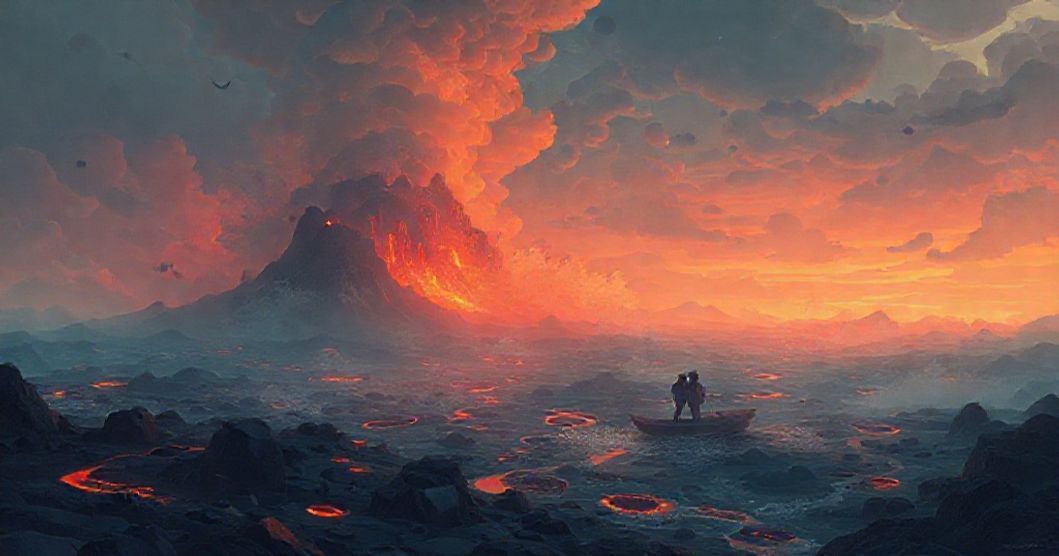
Dreams often manifest our deepest anxieties through surreal landscapes that feel eerily tangible. In this particular dream, the boundaries between safety and catastrophe blur, creating a visceral experience that lingers long after waking. The dream begins in a vast, endless store reminiscent of an IKEA showroom—its corridors stretching infinitely into darkness, the sterile lighting failing to penetrate the oppressive gloom. I stand at the entrance, uncertain of how I arrived here, with a handful of strangers positioned behind me, their faces obscured by the dimness. Their presence feels both comforting and ominous, a reminder that we’re all adrift in the same uncertain space. Without warning, water begins cascading through the open doorways, flooding the pristine floors in a relentless tide. Panic surges as I fumble to close the heavy sliding door, my hands shaking against the cool metal. I manage to secure it, but the water rises relentlessly, pooling at my ankles despite the barrier. Just as I think we might be safe, the liquid beneath my feet transforms—water solidifying into molten lava, its glowing orange surface crackling with heat. The temperature soars, and I realize the door is barely holding back the inferno. The strangers behind me vanish without a trace, leaving me alone to defend this fragile boundary. Outside the store, through the glass panels, I see a stark contrast: a small group of people sitting in a circle, engaged in dhikr, their hands moving rhythmically with tasbih beads. They remain untouched by the lava, shielded by an invisible barrier that seems impervious to the heat. Meanwhile, inside, the air grows thick with suffocating heat, and I can feel the lava’s searing presence through the door. Tears well in my eyes as I recognize my vulnerability, the overwhelming fear of death and the inability to escape. The dream reaches its climax as I’m jolted awake, gasping for breath. My nose bleeds unexpectedly, and my hands tremble uncontrollably. I sit up, heart pounding, and drink water to steady myself, but the dream’s terror clings to me. Even now, as I write this, I feel the same sense of impending doom, convinced that the nightmare might somehow materialize in reality. The emotional weight of the experience is palpable, a reminder of how deeply our unconscious fears can infiltrate our waking lives.
Part 2: Clinical Analysis
Symbolic Landscape: The Dream’s Visual Language
Want a More Personalized Interpretation?
Get your own AI-powered dream analysis tailored specifically to your dream
🔮Try Dream Analysis FreeThe dream’s symbolic elements form a complex tapestry of fear, protection, and cultural identity. The infinite hallway store represents the overwhelming nature of modern life—endless, confusing, and potentially overwhelming. Its darkness symbolizes the unknown depths of the unconscious mind, where our deepest fears reside. The transformation from water to lava is particularly significant: water often signifies emotions and vulnerability, while lava represents intense, transformative energy or destruction. This transition suggests a progression from emotional anxiety to existential terror, a common pattern in dreams where small concerns escalate into catastrophic scenarios.
The door serves as a powerful symbol of protection and control—a barrier between safety and danger. The dreamer’s struggle to secure it reflects an attempt to maintain order in the face of chaos, while the strangers’ disappearance highlights feelings of isolation during times of crisis. Most striking is the contrast between the dreamer’s vulnerability inside and the group outside engaged in dhikr: this spiritual practice, central to Islamic devotion, represents faith, community, and protective rituals. The tasbih beads and rhythmic dhikr create a protective circle, suggesting that spiritual connection and communal support can shield against existential threats.
Psychological Undercurrents: Anxiety and Cultural Identity
From a psychological perspective, this dream reveals several interconnected themes. The lava and water transformation aligns with Jung’s concept of the shadow—the repressed aspects of self that threaten to overwhelm us. The dream’s intensity suggests these shadow elements (anxiety, vulnerability, fear of cultural inadequacy) have become so powerful they feel inescapable. The store, with its sterile, IKEA-like architecture, might symbolize the dreamer’s position as a non-Muslim in an Islamic cultural context—an outsider in a space defined by religious norms, feeling both present and disconnected.
Freudian theory would interpret the dream as a manifestation of repressed anxieties. The water-to-lava transformation could represent unresolved conflicts between emotional safety (water) and the destructive power of cultural or religious differences (lava). The nosebleed upon waking, a physical symptom often linked to stress and emotional strain, reinforces the idea that the dream’s emotional intensity has left a lasting physiological impact.
Neurologically, dreams process emotional memories, and this dream’s vivid sensory details (heat, suffocation, fear) suggest the brain is working through significant emotional material, possibly related to recent stressors or long-standing identity concerns.
Emotional and Life Context: Unpacking the Dreamer’s Experience
The dreamer’s position as a non-Muslim in an Islamic country introduces unique cultural layers. The reference to dhikr and tasbih in the dream likely reflects both the dreamer’s exposure to Islamic practices and underlying questions about cultural belonging. The contrast between the dreamer’s vulnerability and the others’ safety might symbolize the dreamer’s struggle to find spiritual or emotional grounding in a context where religious norms are dominant.
The dream’s timing (morning) and the physical symptoms upon waking suggest it may have been triggered by recent stressors—perhaps work pressure, social anxiety, or uncertainty about cultural identity. The fear of the dream “happening irl” indicates that the dream has touched on a deep-seated fear of loss of control or safety in the face of external threats, whether real or perceived.
Therapeutic Insights: Navigating the Dream’s Messages
This dream offers an opportunity for self-reflection and growth. First, it urges the dreamer to examine their relationship with anxiety and vulnerability. The lava represents transformative energy, and perhaps the dream is suggesting that acknowledging these fears rather than suppressing them can lead to greater resilience.
The protective circle of dhikr in the dream offers a metaphor for creating personal “safe spaces”—whether through spiritual practice, community, or self-care rituals. The dreamer might benefit from exploring what provides them with a sense of safety and connection, whether religious, cultural, or personal.
Reflective exercises could include journaling about moments of feeling “outside” or “inside” cultural spaces, and practicing grounding techniques to manage anxiety. The dream’s emphasis on community (even in the dream’s external group) suggests that reaching out for support—whether spiritual, social, or therapeutic—can reduce feelings of isolation during times of crisis.
FAQ Section: Clarifying the Dream’s Meaning
Q: What does the infinite hallway store symbolize?
A: The endless store represents overwhelming uncertainty or feeling trapped in repetitive, unfulfilling routines, possibly reflecting anxiety about life direction or cultural identity.
Q: Why are the people outside unaffected by lava?
A: Their safety likely symbolizes how faith, community, or spiritual practice can create protective boundaries against existential threats, even when others feel vulnerable.
Q: How does the cultural context influence the dream’s meaning?
A: As a non-Muslim in an Islamic country, the dream may reflect questions about belonging, cultural norms, and how to navigate spaces where one’s identity feels distinct or uncertain.
Keywords: lava transformation, dhikr, tasbih, cultural identity, protective barrier, existential fear, shadow archetype, dream anxiety, Islamic symbolism, vulnerability Entities: infinite store, dhikr circle, lava barrier, nosebleed, spiritual protection, cultural boundary