
Part 1: Dream Presentation
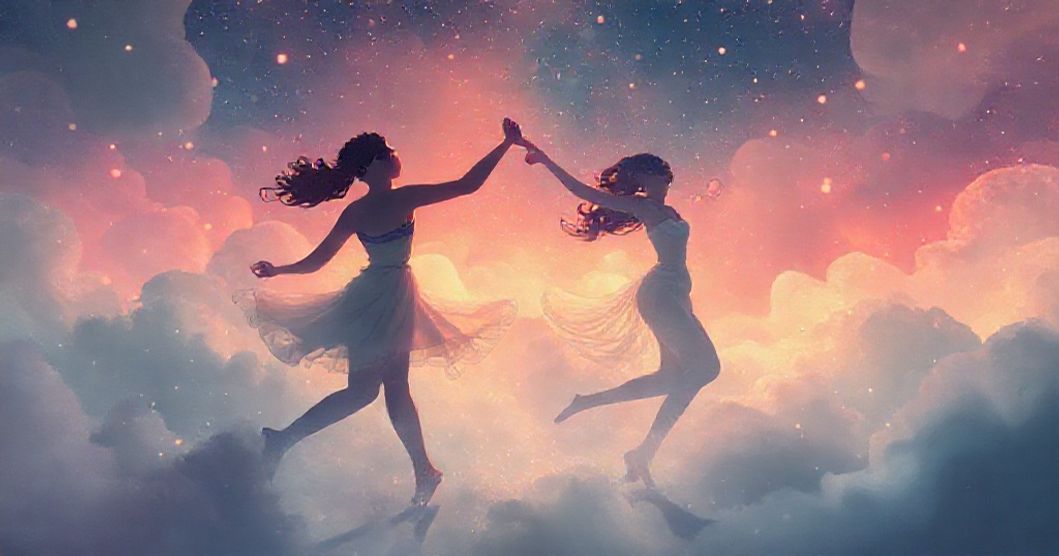
Dreams have a way of dissolving the boundaries between who we think we are and who we might be, and this dream unfolded as a surreal exploration of identity and desire. In the dream, I found myself slow dancing with a man I didn’t recognize, though every fiber of my being felt certain he was the love of my life. He was older, with lush, curly green hair that caught the light like spring foliage, and as we swayed to an unheard melody, his presence felt both familiar and utterly new. What struck me most was how naturally we moved together—no awkwardness, no hesitation, just a deep, wordless connection that transcended words. Around us, the world seemed to dissolve into a supportive blur; strangers smiled, nodded, and offered only warmth as we held each other close. It was as if the very act of two men embracing so tenderly was met with universal acceptance, a rare and beautiful scene that made my heart feel both full and untroubled.
The dream shifted unexpectedly, though the shift felt less like a transition and more like a sudden awakening. A voice, soft yet insistent, called out my name—referring to me as 'she'—and in that instant, everything realigned. I looked down at my hands, my posture, the way the music seemed to slow as my mind caught up: I was a girl. The realization hit like a gentle shockwave, and yet there was no confusion in my initial state of being—only a profound, almost physical awareness that I had been moving through the dream as male, completely unselfconscious.
What followed was a curious emotional dissonance. Despite feeling 'secure' in my identity as a woman in waking life, this dream’s perspective had me momentarily adrift in a male body. But the moment I recognized myself as 'she,' a strange disappointment settled over me. The idea of this man—who I’d thought was the love of my life—being attracted to me as a girl felt… off-putting. It was as if the dream’s initial magic deflated upon the revelation, leaving me with more questions than answers. I’ve never doubted my womanhood, yet this dream’s surreal journey through gender and desire has left me pondering its deeper meaning.
Want a More Personalized Interpretation?
Get your own AI-powered dream analysis tailored specifically to your dream
🔮Try Dream Analysis FreePart 2: Clinical Analysis
Symbolic Landscape: Navigating Identity in Dream Space
The dream’s core symbolism centers on the fluidity of gender presentation and the tension between conscious identity and unconscious desire. The 'green, curly-haired man' represents an archetypal 'love object'—a figure embodying the dreamer’s deepest longing for connection. In dreamwork, such figures often reflect the 'shadow' or unconscious aspects of self, particularly when the dreamer experiences them in a non-waking identity. The unexpected green hair introduces a surreal, almost magical element, suggesting this connection is not merely mundane but deeply significant to the dreamer’s psyche.
The 'slow dance' itself is a powerful symbol of intimacy, vulnerability, and emotional bonding. In dreams, dance often represents how we 'move' through relationships and emotional terrain. The dream’s emphasis on 'surprisingly supportive people' reveals a collective unconscious longing for acceptance—specifically, acceptance of non-conforming relationships or identities. This environment of safety and approval contrasts with the later emotional dissonance, highlighting the dreamer’s internal conflict between different aspects of self.
The pivotal realization—'I am a girl'—represents the dream’s psychological anchor. This moment of clarity disrupts the dreamer’s assumed identity, creating a paradox: she was 'male' in the dream without self-doubt, yet upon waking to her female identity, the connection to the man felt 'off.' This dissonance suggests the dream is not about questioning her current identity but rather exploring the nature of desire and attraction from a different perspective.
Psychological Perspectives: Unpacking the Layers of Self
From a Jungian perspective, this dream may reflect the activation of the animus archetype—the masculine aspect within the female psyche. The animus often emerges to balance feminine qualities, and its projection onto a romantic figure (the green-haired man) suggests the dreamer’s unconscious is integrating aspects of masculinity into her self-concept, even if she identifies as female. Jung’s concept of synchronicity also comes into play, as the dream’s elements (the supportive environment, the unexpected realization) may be signaling the dreamer’s need to explore these unconscious connections.
Freudian analysis might interpret the dream as a manifestation of repressed desires or unresolved conflicts. The dreamer’s confusion about why the realization of being a girl 'turned her off' could indicate unconscious tension between her conscious identity and deeper attractions she hasn’t acknowledged. The 'love of my life' figure might represent a repressed aspect of her psyche that she hasn’t allowed herself to explore, even as a straight woman.
Cognitive dream theory offers another lens: dreams as information processing tools. This dream could be the mind’s way of integrating new experiences or reflecting on recent identity-related events. The dream’s surreal nature suggests it’s not literal but metaphorical, processing how the dreamer experiences attraction, relationships, and gender in her waking life.
Emotional & Life Context: The Unseen Tensions of Identity
The dreamer states she 'never doubted her identity as a girl' and 'was secure in it,' yet the dream’s exploration of male identity reveals an unexpected layer of complexity. This suggests the dream is not about questioning her current identity but rather about exploring the nature of attraction, connection, and perhaps unexamined aspects of her self.
The 'disappointment' in the dream’s final moments is particularly significant. It may reflect a conflict between the dream’s initial fantasy of love and the reality of her waking identity. The man’s attraction to her as a girl 'turned her off'—this could symbolize a resistance to seeing herself through the lens of her current identity, or perhaps a deeper exploration of how attraction functions across different gendered perspectives.
The supportive environment for two men dancing suggests the dreamer’s unconscious longing for acceptance of unconventional relationships or identities. This could be a reflection of her own desire for acceptance in her social circles, or a projection of how she wishes others would view her relationships, even if they are within her current identity.
Therapeutic Insights: Embracing the Dream’s Message
This dream invites the dreamer to approach her identity with curiosity rather than certainty. Even if she feels secure in her female identity, dreams often reveal tensions between conscious and unconscious aspects of self that require exploration. The key insight is that the dream is not a threat to her identity but a mirror reflecting her need to understand the full spectrum of her emotional and relational capacities.
Practical reflection exercises could include journaling about the dream’s emotional tone—particularly the 'surprisingly supportive' environment and the 'disappointing' realization. Asking: What aspects of masculinity feel present in my life that I haven’t acknowledged? How might I create more space for vulnerability and acceptance in my relationships?
For integration, consider exploring the nature of attraction beyond gender labels. The dream’s message might be that attraction is not limited by identity categories but by the depth of connection. This could lead to a more fluid understanding of relationships and self, even while maintaining one’s core identity.
FAQ Section
Q: Why did the dream feel so real if I’m certain of my identity?
A: Dreams often create immersive experiences that bypass conscious defenses. The 'trippy feeling' arises because the dream accesses your unconscious, where identity is not just a label but a fluid, experiential state.
Q: What does it mean that the man felt like 'the love of my life' if I’m straight?
A: This likely reflects your capacity for deep connection, regardless of gender. The dream may be exploring the universal nature of love rather than specific sexual orientation.
Q: How do I reconcile the 'disappointment' with my sense of security in being a girl?
A: This is not about rejecting your identity but about honoring the complexity of attraction and connection. The dream may be inviting you to explore if there are aspects of yourself you’ve boxed in, even unconsciously.