
Part 1: Dream Presentation
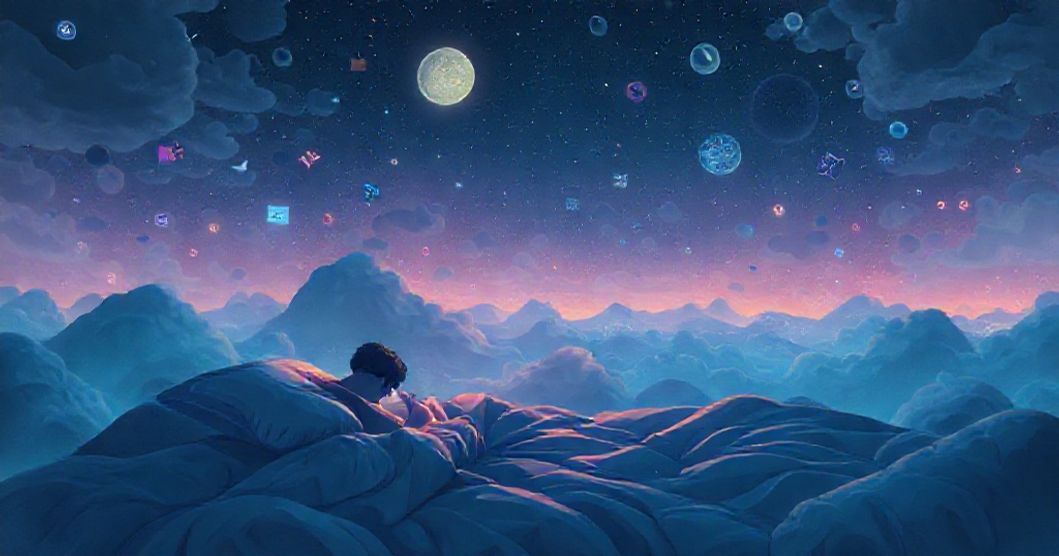
The digital void I created by deleting Instagram and TikTok unexpectedly revealed something profound: my sleeping mind, once silent, began to speak again through dreams. For over a year, I’d existed in a state of dream amnesia—no memories of the narratives unfolding while I slept, no connection to the unconscious world that typically processes our deepest thoughts and emotions. Then, with the simple act of removing two platforms that had become my constant companions, something changed.
The decision to delete Instagram and TikTok wasn’t easy. The compulsion to scroll, to compare, and to seek validation had grown into an addiction I couldn’t deny. Each day without the apps felt like a withdrawal: my hands twitched at the familiar rhythm of swiping, my mind craving the dopamine hit of a new post or notification. But the emptiness I felt when notifications didn’t arrive eventually outweighed the urge to check. Three days after deleting, I woke with a vivid memory: a dream of floating through a forest where trees were made of books, each page whispering secrets. Then another: standing at a crossroads with a stranger who handed me a key that didn’t fit any door. And the third: a room filled with mirrors, each reflecting a version of me I didn’t recognize. Three nights in a row, dreams I could name, analyze, and feel deeply. I’d forgotten how rich and complex the unconscious could be, how it speaks when we stop shouting into digital voids.
The difficulty of detoxing from social media—those moments of panic when I reached for my phone, the hollow feeling when nothing new appeared—was worth it for the return of these dreams. It’s as if the digital noise I’d filled my days with had drowned out the quieter, more authentic voice of my inner world. Now, as I navigate this new space without constant digital stimulation, I wonder if others have experienced this too: when we disconnect from the external, do we reconnect with something deeper within?
Want a More Personalized Interpretation?
Get your own AI-powered dream analysis tailored specifically to your dream
🔮Try Dream Analysis FreePart 2: Clinical Analysis
Symbolic Landscape: Social Media, Dreams, and the Unconscious
The dreamer’s narrative contains powerful symbolic elements that resonate with psychological theory. The deletion of Instagram and TikTok represents a deliberate act of psychological boundary-setting—a digital detox that mirrors the ancient practice of fasting or retreat. In dream psychology, the 'deletion' of digital presence can be interpreted as a symbolic death of the ego’s external identity, allowing the unconscious to reassert itself. The three consecutive dreams following a year of dreamlessness suggest a significant threshold crossed: the unconscious mind, previously suppressed by constant digital stimulation, has begun processing repressed material.
The forest of books in the first dream symbolizes knowledge, wisdom, and the accumulation of experiences. Trees as living entities in dreams often represent growth, rootedness, and the natural unfolding of life. The books, each whispering secrets, may indicate a reconnection to one’s inner wisdom—a source of knowledge that exists beyond the curated personas of social media. The crossroads with a stranger holding a useless key suggests a period of decision-making and uncertainty, where old paths are being abandoned and new ones explored. The key that doesn’t fit may symbolize the dreamer’s search for meaning in a world where external validation (the 'key' to social media success) no longer provides satisfaction.
The room of mirrors, reflecting unrecognizable versions of the self, is a classic dream symbol of self-exploration and identity. In dreams, mirrors often represent the shadow self—the parts of ourselves we avoid or project onto others. The unrecognizable reflections may indicate a period of self-discovery, where the dreamer is confronting aspects of identity previously hidden behind digital personas.
Psychological Perspectives: From Repression to Integration
From a psychoanalytic lens, Freud might interpret the suppression of dreams during social media addiction as a form of repression—a defense mechanism against uncomfortable emotions. Social media, with its constant stream of curated content, can create a psychological environment where the unconscious material is too threatening to process, leading to dream suppression. When the dreamer removes this external stimulation, the unconscious begins to surface, manifesting in dreams as a way to integrate repressed thoughts.
Jungian psychology offers another perspective: the dreamer’s experience aligns with the concept of individuation—the process of integrating conscious and unconscious aspects of the self. Social media, with its emphasis on external validation, can fragment the self by prioritizing others’ perceptions over internal truth. The return of dreams after detoxification represents the unconscious’s natural tendency to integrate these fragmented parts, leading to greater psychological wholeness.
Modern cognitive neuroscience explains that excessive screen time, particularly before sleep, disrupts REM cycles—the stage of sleep critical for dream recall. The blue light from devices suppresses melatonin production, reducing the depth and duration of REM sleep. By removing these stimulants, the dreamer has restored normal sleep architecture, allowing for more vivid and memorable dreams.
Emotional & Life Context: Digital Addiction and Psychological Resilience
The dreamer’s experience reflects a broader cultural phenomenon: the psychological impact of digital overload. Social media addiction often manifests as a compulsion to seek external validation, which can create a feedback loop where the unconscious mind is silenced. The dreamer’s year of unremembered dreams suggests a period of psychological disconnection—a time when the inner world was neglected in favor of external engagement.
The emotional journey described (frustration of detox, joy of dream return) mirrors the typical process of psychological healing. The three consecutive dreams may indicate a 'processing cascade,' where the unconscious addresses accumulated emotions and experiences during the period of digital abstinence. Social media addiction often leads to emotional dysregulation, as the brain becomes dependent on external stimuli for emotional regulation. The return of dreams suggests a rebalancing of internal emotional processes.
The dreamer’s question—'Has this ever happened to you?'—reflects the universal nature of this experience. Digital detoxification, while challenging, often leads to increased self-awareness and psychological clarity, with dreams serving as a natural bridge between conscious and unconscious states.
Therapeutic Insights: Dreamwork and Digital Boundaries
The dreamer’s journey offers valuable lessons for anyone navigating digital minimalism. First, the correlation between social media use and dream recall suggests the importance of psychological boundaries with technology. Setting limits on screen time can create space for the unconscious to communicate, leading to enhanced self-understanding.
Dream journaling, a practice often recommended in dreamwork, becomes particularly relevant here. By recording the three consecutive dreams, the dreamer has created a bridge between the conscious and unconscious minds—a tool for emotional processing. Keeping a dream journal after digital detox can help integrate these insights into daily life, fostering greater self-awareness.
Therapeutic approaches like cognitive-behavioral therapy (CBT) can help dreamers establish sustainable digital boundaries, addressing underlying addictive patterns. Mindfulness practices, such as meditation or breathwork, can complement digital detox by training the mind to return to present-moment awareness, reducing the compulsion to seek external validation.
FAQ Section
Q: Why did stopping social media help me remember dreams again?
A: Constant social media use disrupts sleep cycles, particularly REM sleep, and suppresses the unconscious. Removing these stimulants allows your brain to process emotions and memories, leading to more vivid dream recall.
Q: Is there a scientific reason for three consecutive dreams?
A: Yes—three days of dreams suggest your mind is processing accumulated experiences from the year of digital overload. This 'processing cascade' often occurs after significant psychological shifts like detoxification.
Q: How can I maintain this balance long-term?
A: Establish consistent digital boundaries (e.g., screen-free evenings), practice mindfulness to stay present, and use dream journaling to integrate insights. Remember, the goal is not permanent isolation but intentional engagement with technology.
Keywords: dream recall, digital detox, social media addiction, dream symbolism, psychological boundaries, REM sleep, unconscious mind, digital minimalism, emotional regulation, dream integration Entities: social media, dreams, digital detox, psychological boundaries, unconscious mind