
The Call of the Unseen: Decoding the Recurring Mountain Village Dream
Part 1: Dream Presentation
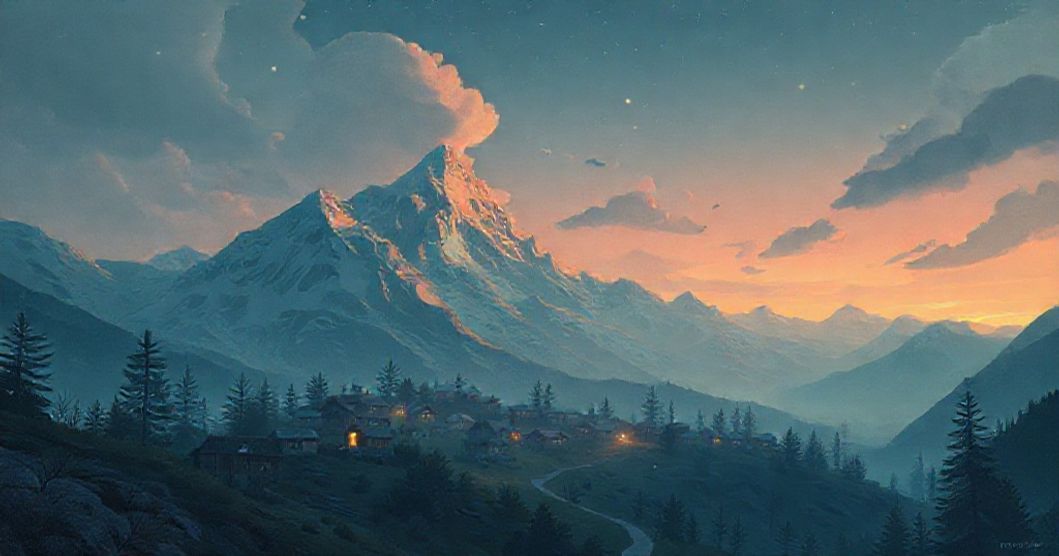
Dreams that repeat like a silent refrain often carry messages from our deepest selves, and this recurring mountain village dream is no exception—a journey that begins in forgetfulness and ends in an urgent, unfinished quest. The dreamer rarely remembers dreams, yet on rare, vivid occasions, they find themselves transported to a mountain village in western Canada, a place they’ve never seen yet recognize as home. The alpine setting contrasts sharply with their waking reality in Oklahoma: crisp air carries the scent of pine, stone buildings glint with snow-dusted roofs, and narrow paths wind through evergreens that whisper secrets only the forest seems to know. There’s an overwhelming sense of urgency, as if time itself is compressed into this dream moment. The dreamer hurries along a specific trail, its stones worn smooth by countless repetitions of this journey, their breath coming in short gasps. This path is their only anchor, leading back to an unknown starting point that remains just out of sight. Each time, the dream ends abruptly, leaving a hollow feeling that something vital has been missed—a task uncompleted, a truth unspoken. Now, these recurring dreams have become the only ones remembered, their persistence a puzzle demanding exploration.
Part 2: Clinical Analysis
Symbolic Landscape of the Mountain Village
Want a More Personalized Interpretation?
Get your own AI-powered dream analysis tailored specifically to your dream
🔮Try Dream Analysis FreeThe recurring mountain village functions as a powerful symbolic container for the dreamer’s unconscious processes. In dreamwork, geographical displacement often reflects psychological dissonance between how we are and how we feel we should be. The contrast between Oklahoma and western Canada—two geographically distinct regions—suggests a tension between the dreamer’s current life and an idealized self or unmet potential. The mountain village itself, a place of stone and snow, evokes the collective unconscious’ archetype of the sacred mountain—a Jungian symbol of spiritual growth, hidden wisdom, and the path toward self-realization. The village’s permanence despite the dreamer’s unfamiliarity mirrors the way our unconscious creates familiar landscapes from fragmented experiences, turning the unknown into a known. The evergreen forest surrounding the village represents the collective unconscious’ vastness, with its winding paths symbolizing the journey of self-discovery. The specific stone buildings, though unnamed, suggest structures of identity or belief systems that anchor the dreamer’s sense of place.
Psychological Undercurrents: The Unfinished Dream
The dream’s unfinished quality is a critical symbolic element. In dream psychology, an abrupt ending often signals unprocessed emotions or incomplete life tasks. The dreamer’s description of 'hurrying through the path' before waking suggests a compulsion to resolve something urgently, yet the dream itself remains unresolved—a paradox that mirrors waking life’s tendency to feel both urgent and incomplete. From a Jungian perspective, this could represent the shadow aspect of the psyche: aspects of self we avoid confronting, yet that persistently call for attention. The path, with its worn stones, indicates a well-trodden psychological pattern—one the unconscious repeats to ensure integration. The urgency may stem from repressed desires or responsibilities: perhaps the dreamer feels called to explore new possibilities (the mountain village) while remaining rooted in Oklahoma’s stability. This tension between the known (Oklahoma) and unknown (mountain village) creates the dream’s core conflict.
Emotional Context: Waking Life and the Call of the Unconscious
The dreamer’s life in Oklahoma provides crucial context for this recurring imagery. Oklahoma, a state of plains and prairies, contrasts with the mountainous, forested terrain of western Canada, suggesting a psychological yearning for something more substantial or elevated. The dream’s repetition—occurring monthly or weekly—reflects how the unconscious prioritizes unresolved issues. The dreamer’s question 'what it all meant' hints at a deeper need for meaning, perhaps in the face of life’s ordinary routines. The geographical dissonance (Oklahoma to western Canada) may symbolize a desire to escape or expand beyond current circumstances, even as the dreamer remains in a stable environment. The 'unfinished' nature of the dream could also reflect the dreamer’s relationship with time: feeling perpetually behind, never catching up to their own potential. The specific path, with its unchanging details, represents the dreamer’s attempt to create order in chaos—a coping mechanism that ultimately feels inadequate.
Therapeutic Insights: Navigating the Unfinished Path
This recurring dream offers an opportunity for self-exploration and integration. The first step is to treat the dream as a dialogue rather than a riddle: ask, What might this mountain village represent to me right now? Journaling about daily experiences can reveal connections. For example, if the dream occurs during periods of uncertainty (career changes, relationship shifts), it may signal a need to embrace change. The 'unfinished' quality suggests the dreamer should identify one small action that feels urgent yet manageable—a step toward completing the unmet task. Creative visualization exercises can help: spend 10 minutes daily imagining walking the path with intention, pausing to notice details (sights, sounds, smells) and reflecting on what each element might symbolize. This practice bridges the gap between the unconscious and conscious mind, allowing integration of repressed aspects of self. The dream also invites reflection on the shadow: what parts of the self feel neglected, yet persistently call for attention? By acknowledging these, the dreamer can transform the 'urgency' into purposeful action.
FAQ Section
Q: Why do I keep dreaming of a place I’ve never visited?
A: Recurring dreams often revisit archetypal landscapes from the collective unconscious, not literal places. The mountain village may symbolize spiritual growth, hidden wisdom, or unmet potential, regardless of physical location.
Q: What does the sense of urgency in the dream mean?
A: Urgency reflects unprocessed emotions or responsibilities. The dreamer may feel called to resolve something important, even if the 'something' remains unclear. This urgency signals a need to prioritize self-exploration.
Q: How can I use this dream for personal growth?
A: Reflect on daily routines and unaddressed desires. Journal about moments of 'urgency' in waking life, then map these to the dream’s path. Small steps toward exploration (e.g., learning about western Canada, hiking local trails) can bridge the psychological gap.