
Part 1: Dream Presentation
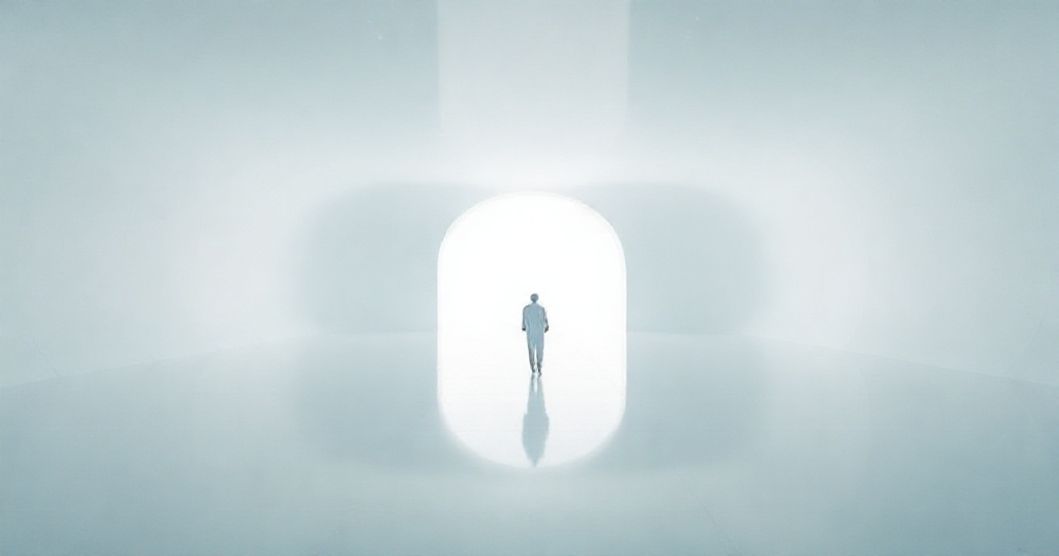
Dreams serve as windows into the unconscious mind, revealing our deepest psychological states through symbolic imagery and emotional resonance. In this particular dream experience, the dreamer navigates a surreal landscape that embodies themes of transition, control, and the nature of reality itself. The dream begins with a moment of consciousness returning to the physical body—a sensation both familiar and unsettling, as if the self is trying to disengage from an inescapable pull. The dreamer’s instinctive jerking to 'miss' the transition suggests a primal fear of losing control or being consumed by an unknown force. When they fall through the floor into an infinite loop, with portals above and below, the dreamer encounters a space that feels simultaneously overwhelming and empty—the infinite white room, a liminal space where boundaries dissolve and perception fractures.
The dreamer’s attempt to 'fix' the glitch by closing and reopening their eyes reflects a metacognitive awareness—a recognition that they are dreaming and an attempt to exert agency within the dream state. This moment of reality testing within the dream mirrors waking life’s attempts to adjust to unexpected challenges. The dream ends with the dreamer waking normally but vowing to try again, indicating a persistent curiosity about these liminal experiences and a desire to understand them better.
Part 2: Clinical Analysis
Want a More Personalized Interpretation?
Get your own AI-powered dream analysis tailored specifically to your dream
🔮Try Dream Analysis FreeSymbolic Landscape: Decoding the Dream’s Imagery
The 'Construct' referenced in the title suggests a symbolic threshold—a place of potential transformation or a boundary between different states of being. In dream symbolism, such thresholds often represent psychological transitions or unresolved conflicts. The infinite white room embodies the collective unconscious or a state of pure potentiality, a space where identity and purpose are still being formed. Its emptiness can signify a fear of the unknown or a yearning for clarity in an uncertain waking life.
Falling through the floor represents a loss of stability, a common dream motif that often reflects anxiety about letting go of old structures or fears of failure. The portals above and below suggest multiple paths or states of consciousness, inviting the dreamer to explore different possibilities. The 'glitch' itself is a powerful symbol of reality testing—a moment where the dreamer becomes aware of the constructed nature of their experience, a key element in lucid dreaming and self-awareness.
Psychological Perspectives: Understanding the Dreamer’s Internal Landscape
From a Freudian perspective, the dream might reflect repressed desires to escape waking reality or fears of losing control. The 'Construct' could symbolize a repressed memory or a goal the dreamer feels on the verge of achieving but is uncertain about. The infinite white room, with its overwhelming purity, might represent the id’s raw, undifferentiated energy, a space where the dreamer’s unconscious urges are unfiltered.
Jungian analysis reveals the infinite white room as a manifestation of the collective unconscious—a space where archetypal images and universal experiences reside. The portals could represent the dreamer’s shadow self or the many aspects of the self they are exploring. The act of falling through the floor might symbolize the dissolution of the ego’s sense of self, a necessary step toward individuation. The dreamer’s attempt to 'fix' the glitch reflects the animus/animus archetype’s desire to integrate conscious and unconscious elements.
Cognitively, the dream demonstrates the brain’s reality-testing mechanisms during REM sleep. The 'glitch' is a moment of metacognition—a recognition that the dream is not reality—while the attempt to control the dream (closing and reopening eyes) shows the developing ability to exert agency within the dream state. This aligns with recent neuroscience research suggesting dreams involve active processing of memory and emotion, with the dreamer’s 'glitch' representing a moment of self-referential processing.
Emotional & Life Context: Unpacking the Dreamer’s Inner State
The dream’s themes of 'almost making it' to the Construct suggest the dreamer is in a period of transition—perhaps facing a major life change, career shift, or identity exploration. The 'almost' implies a near-miss, a feeling of being on the cusp of something significant but uncertain about how to proceed. The falling through the floor and infinite loop might reflect anxiety about letting go of the past or fears of what lies ahead.
The emotional tone of the dream—urgent, desperate, yet determined—aligns with the dreamer’s waking life stressors. The resolution to 'try again' in future dreams suggests resilience and a desire to master a challenging internal landscape. The dreamer may be experiencing a period of uncertainty, questioning their sense of direction, and seeking clarity about their path forward.
Therapeutic Insights: Integrating the Dreamer’s Experience
This dream offers several therapeutic insights. First, the 'Construct' as a threshold invites the dreamer to reflect on what they are 'almost' achieving in waking life—perhaps a career goal, relationship, or personal growth. The dream’s emphasis on reality testing suggests the importance of developing awareness of one’s internal states, both in dreams and waking life.
Reflection exercises could include keeping a dream journal to track recurring themes of falling and portals, identifying patterns in waking life that might trigger these feelings. The dreamer might benefit from exploring their relationship with uncertainty and control, practicing mindfulness to ground themselves during transitions. Visualization techniques, such as mentally 'stepping through' portals in waking life, could help build confidence in navigating new experiences.
FAQ Section
Q: What does the infinite white room symbolize in dreams?
A: The infinite white room often represents the collective unconscious, a space of purity and potential, or a feeling of existential emptiness. It can signify a need for clarity or a fear of the unknown, reflecting the dreamer’s internal state of uncertainty.
Q: Why do portals appear in dreams?
A: Portals symbolize transitions, choices, and different states of consciousness. They may represent paths the dreamer is considering or unresolved aspects of the self waiting to be explored.
Q: How can I use this dream to improve my waking life?
A: Reflect on what you’re 'almost achieving' in waking life, practice reality testing (questioning your perceptions), and embrace uncertainty as a natural part of growth. The dream’s resolution to 'try again' suggests persistence and resilience in the face of challenges.