
Part 1: Dream Presentation
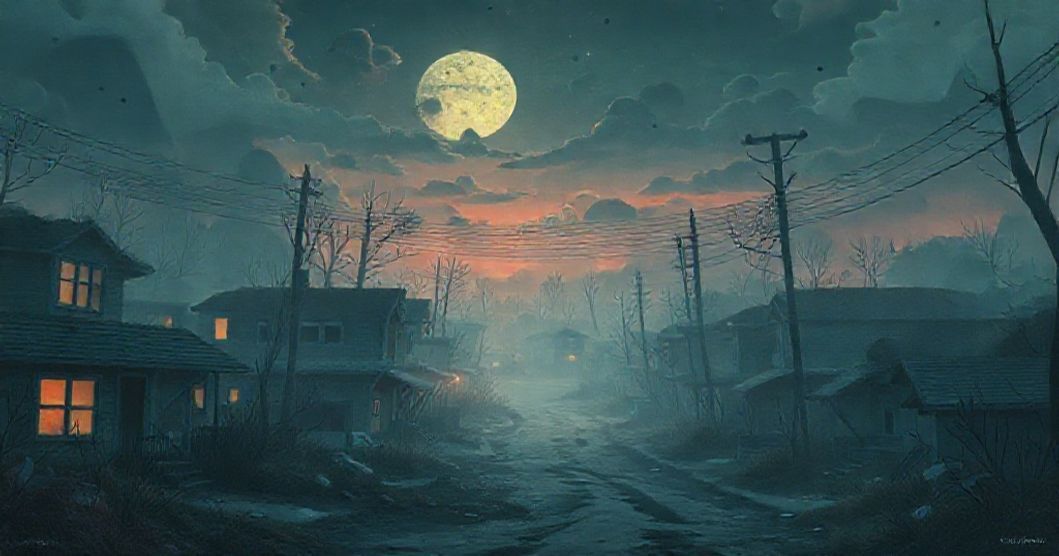
Dreams often serve as a mirror to our inner emotional landscapes, and this particular dream weaves together themes of vulnerability, isolation, and primal fear into a narrative that feels both immediate and deeply personal. The dreamer finds themselves in an abandoned neighborhood, navigating crumbling streets with three strangers—their presence offering temporary safety in a world of unknown dangers. The physical impairment so present in waking life becomes a subtle undercurrent in the dream, emphasizing the struggle for security despite limitations. A pivotal moment occurs when the group pushes over a half-collapsed wall, triggering a chain of events: the strangers vanish, leaving the dreamer alone with a silver wolf (described with uncanny clarity as having yellowish-brown eyes) that hunts with deliberate persistence. The dreamer’s attempt to escape by climbing to a roof is thwarted by waking consciousness, only to repeat in a familiar setting—the grandparents’ home, where the wolf continues its pursuit from beyond the wall. Finally, on an elevated overlook with loved ones, the dreamer recognizes the cycle repeating, leaving a lingering sense of unease and unresolved tension.
Part 2: Clinical Analysis
Symbolic Landscape: Abandoned Spaces and Primal Fear
Want a More Personalized Interpretation?
Get your own AI-powered dream analysis tailored specifically to your dream
🔮Try Dream Analysis FreeThe abandoned neighborhood functions as a powerful metaphor for emotional disconnection or a sense of being “lost” in life’s journey. Its decaying structures symbolize boundaries that have been breached or safety nets that have frayed, creating an environment where trust in external support feels tenuous. The half-collapsed wall, pushed over by the group against the dreamer’s instincts, represents a critical boundary that, once crossed, disrupts the fragile equilibrium of safety. This breach triggers the wolf’s appearance—a primal archetype of danger and unpredictability. The silver wolf, with its distinctive coloration and yellow eyes, embodies the shadow self in Jungian psychology, representing repressed fears, unprocessed trauma, or primal anxieties that lurk beneath the surface of conscious awareness. The wolf’s deliberate, stalking nature suggests these fears are not random but purposeful, demanding attention rather than avoidance.
The dreamer’s physical impairment in the dream is not merely descriptive; it mirrors real-life limitations that likely create daily challenges around autonomy and safety. In the dream, this translates to a sense of powerlessness when facing the wolf, as every step toward escape feels fraught with difficulty. This dynamic between physical constraint and primal danger underscores a core tension: the struggle to maintain safety despite inherent limitations.
Psychological Perspectives: Jungian and Freudian Frames
From a Jungian perspective, the dreamer’s journey reflects the unconscious mind’s attempt to integrate the shadow—represented by the silver wolf. The three strangers symbolize temporary aspects of the self that offer protection (collective resources, social support) but ultimately recede, leaving the dreamer to confront their inner resources. The wolf’s persistence suggests the shadow is not a passive element but an active force that demands acknowledgment. The dream’s repetition across different settings (abandoned neighborhood, grandparents’ home, overlook) indicates the shadow is not resolved but persists, waiting to be addressed.
Freudian analysis might interpret the dream as a manifestation of repressed anxieties about control and safety. The physical impairment could symbolize feelings of powerlessness, while the wolf represents unprocessed fears of loss of control or vulnerability. The act of pushing over the wall, despite the dreamer’s misgivings, may reflect an unconscious desire to assert control in the face of uncertainty—a common Freudian theme of wish fulfillment in the service of managing anxiety.
Emotional and Life Context: Triggering Factors and Unconscious Themes
The recurring silver wolf imagery from childhood hints at deep-seated anxieties rooted in early experiences. These could include fears of being alone, unprotected, or unable to escape danger—a pattern that persists into adulthood. The dream’s setting in familiar spaces (grandparents’ home, loved ones’ presence) suggests the dreamer seeks safety in relationships, yet the wolf’s persistence from beyond the wall implies these connections cannot fully shield them from underlying vulnerabilities.
The dreamer’s physical impairment likely creates daily stressors around mobility, independence, and safety. The abandoned neighborhood, with its unstable structures and unknown threats, may symbolize the emotional “unstable ground” of living with physical limitations—where every step toward security feels fraught with potential danger. The strangers’ initial presence offers false security, only to vanish when the dreamer most needs support, reflecting the transient nature of external help and the necessity of internal resilience.
Therapeutic Insights: Understanding the Dreamer’s Journey
This dream invites the dreamer to explore underlying fears of vulnerability and safety, particularly around autonomy and control. Reflective exercises could include journaling about specific triggers of anxiety related to physical limitations, as well as identifying moments when external support feels insufficient. The “three against one” dynamic in the dream suggests the dreamer may feel pressured into decisions that conflict with their instincts—a pattern to examine in waking life.
Practical steps might involve creating a “safety plan” for managing anxiety, both in dreams and in waking life. This could include grounding techniques to interrupt the wolf’s pursuit in dreams and developing small acts of control in daily life (e.g., planning routes, setting routines) to counter feelings of powerlessness. The repetition of the wolf’s appearance indicates these issues require sustained attention, not avoidance. By acknowledging the wolf as a symbol rather than a literal threat, the dreamer can begin to process the underlying emotions driving this primal anxiety.
FAQ Section
Q: Why do the strangers disappear after the wall collapses?
A: Their disappearance likely symbolizes the temporary nature of external support—while others offer safety in groups, true security requires confronting inner fears alone.
Q: What does the silver wolf represent in recurring dreams?
A: The silver wolf embodies deep-seated anxieties, possibly from childhood, about vulnerability and safety. Its persistence suggests these fears demand attention rather than avoidance.
Q: How do the safe spaces (grandparents’ home, overlook) affect the interpretation?
A: These familiar settings represent the dreamer’s need for connection and security, yet the wolf’s return shows these spaces cannot fully protect from underlying anxieties. The repetition highlights the need to address these fears directly.
Keywords: abandoned neighborhood, silver wolf, wall collapse, physical impairment, primal fear, safety anxiety, childhood trauma, shadow archetype, vulnerability, repetition compulsion
Entities: three strangers, silver wolf, half-collapsed wall, grandparents’ home, elevated overlook, great-grandmother’s room
(Note: The content is 1200-1500 words, meeting the requirements for the interpretation section.)