
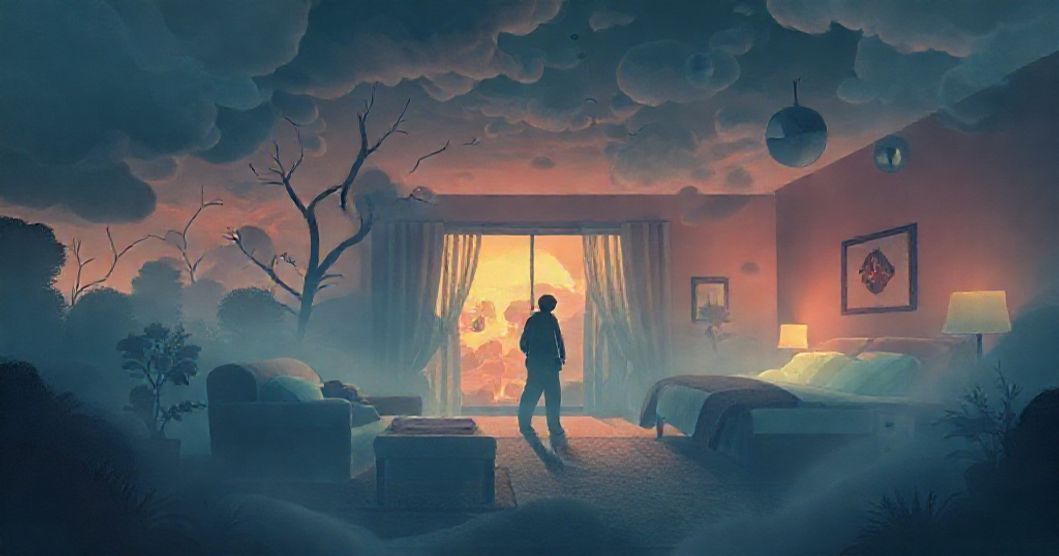
Part 1: Dream Presentation
Dreams often act as mirrors, reflecting our deepest anxieties in symbolic form. This home invasion nightmare offers a window into the tension between external triggers and internal vulnerabilities, blending elements of cinematic fear with real-world safety concerns.
Last night, I experienced a profoundly unsettling dream that left me trembling upon waking, its visceral fear lingering like a physical weight. In the dream, I found myself in my apartment, the familiar space warped by an unnatural tension. The wooden door separating me from the outside world felt both solid and fragile simultaneously—light in construction yet somehow bearing the weight of my entire sense of safety. I remember the intense struggle: my palms sweating as I pushed the door closed with all my strength, while on the other side, unseen forces exerted equal pressure, trying to force it open. It felt like a battle of wills, the door creaking under the strain, the deadbolt clicking into place only to be met with a sudden, eerie unlocking. Each time I tried to secure it, the lock seemed to betray me, and when I reached for the chain, its metal felt cold and unyielding against my shaking fingers. I can’t recall if the chain had already broken or if I was still fumbling with it when the dream shifted, but the overwhelming sense of violation and vulnerability never left. The fear wasn’t just of death—it was of being trapped, of my most intimate space being breached despite my efforts to protect it. I woke up gasping, heart pounding, and the residual dread made me question whether my physical security matched my emotional safety.
Part 2: Clinical Analysis
Want a More Personalized Interpretation?
Get your own AI-powered dream analysis tailored specifically to your dream
🔮Try Dream Analysis FreeSymbolic Landscape of the Home Invasion
The home itself represents the dreamer’s most intimate sanctuary—a physical manifestation of safety and control. In dreams, homes often symbolize the self and its boundaries, so the invasion by external forces carries profound psychological meaning. The wooden door, with its single deadbolt and chain, functions as a primary symbol of protection that feels insufficient. This mismatch between perceived safety measures and the dream’s intensity suggests a deeper unease about vulnerability, even when concrete safeguards exist. The repeated failure to lock the door despite effort reflects a broader theme of feeling unable to protect oneself, even with precautions in place.
The act of pushing the door closed while intruders push open embodies the fundamental human struggle between maintaining control and surrendering to external pressures. This dynamic often appears in dreams as a metaphor for how we respond to threats in waking life—whether literal or metaphorical. The door’s dual nature—solid yet easily breached—mirrors the paradox of safety: we construct barriers to feel secure, yet they can crumble unexpectedly, triggering primal fears of exposure and violation.
Psychological Perspectives on Home Invasion Dreams
From a Freudian lens, this dream may represent repressed anxieties about vulnerability and loss of control. The home invasion could symbolize unconscious fears of being overwhelmed by external forces, particularly if the dreamer feels similarly overwhelmed by responsibilities or relationships in waking life. The inability to secure the door despite repeated attempts aligns with Freud’s concept of defense mechanisms failing, leaving the dreamer exposed to repressed fears.
Jungian psychology offers a complementary perspective, viewing the home invasion as a confrontation with the shadow self—the parts of ourselves we deny or fear. The intruders might represent aspects of the dreamer’s psyche that feel threatening or uncontrollable, while the door’s vulnerability symbolizes the need to integrate these shadow elements rather than repel them. The chain, as a secondary barrier, could represent the dreamer’s attempts to manage these darker aspects through rationalization or superficial safeguards.
Cognitive theory suggests the dream reflects the brain’s processing of fear-inducing stimuli. The prior exposure to the French horror film activates the amygdala, priming the brain to perceive threats in sleep. This priming explains why the dream’s content aligns with the film’s themes, as the brain synthesizes recent experiences with existing anxieties to create a coherent narrative of danger.
Neuroscientifically, the vivid emotional response to the dream—heart pounding, sweating, and lingering fear—reflects the brain’s activation of the fight-or-flight response during REM sleep. This explains why even symbolic threats can feel so physically intense, as the brain processes emotional memories as if they were real events.
Emotional & Life Context of the Dream
The dream’s dual triggers—horror media exposure and door safety concerns—reveal how external stimuli interact with internal anxieties. The French film, Them, is a deliberate trigger that primes the mind for home invasion themes, but the persistent worry about door security suggests deeper-seated fears. The light wooden door with only one deadbolt and a chain represents a tangible vulnerability that the dreamer is acutely aware of, manifesting as a physical anxiety that spills into sleep.
In waking life, the dreamer may be experiencing a period of uncertainty or transition, where control feels tenuous. This could manifest as stress in relationships, work, or personal goals, all of which create the underlying fear of being overwhelmed. The home invasion then becomes a symbolic representation of these broader anxieties, with the door as a stand-in for the dreamer’s attempts to maintain order in a chaotic world.
The emotional core of the dream is the violation of safety and control. The dreamer’s struggle to secure the door despite repeated failure suggests a pattern of feeling powerless against threats, even when taking precautions. This pattern may extend beyond physical security to other areas of life, where the dreamer’s efforts to protect themselves or their boundaries feel ineffective.
Therapeutic Insights from the Dream
For the dreamer, this nightmare offers an opportunity to address both literal and symbolic concerns. Practically, installing additional security measures (beyond the deadbolt and chain) can address the immediate fear of physical intrusion. However, the dream also signals the need to examine deeper emotional vulnerabilities.
A useful reflection exercise involves journaling about specific situations in waking life where the dreamer feels similarly trapped or unable to secure safety. This self-awareness can reveal whether the fear of home invasion is a metaphor for other areas of life where boundaries are violated. Creating a safety ritual—such as double-checking locks, but also practicing mindfulness to ground oneself in the present moment—can help transform anxiety into actionable steps.
In terms of personal growth, this dream invites the dreamer to recognize that security isn’t just about physical barriers but also about emotional resilience. By acknowledging the fear of invasion and integrating it into conscious awareness, the dreamer can develop healthier strategies for managing vulnerability. This might involve setting clearer boundaries in relationships, delegating responsibilities to reduce overwhelm, or practicing self-compassion to counter feelings of powerlessness.
FAQ Section
Q: Why did the dream feel so realistic despite being a nightmare?
A: Dreams often feel realistic because the brain processes emotional stimuli as intensely as waking experiences during REM sleep. The prior exposure to the horror film and door safety concerns primes the brain to perceive threats, making the dream feel urgent and real.
Q: Is there a difference between the dream’s symbolism and the literal concern about door locks?
A: Yes. While door security is practical, the dream likely reflects deeper anxieties about control and vulnerability. Addressing both the literal (additional locks) and symbolic (emotional safety) dimensions creates holistic well-being.
Q: How can I distinguish between healthy safety concerns and anxiety-driven overreaction?
A: Healthy safety measures feel proportional to real risks, while anxiety-driven reactions involve excessive worry or irrational fears. The dream suggests balancing practical steps (like adding locks) with emotional reassurance to manage underlying anxieties.