
Part 1: Dream Presentation
Dreams often serve as psychological mirrors, reflecting our deepest anxieties and unprocessed emotions through surreal imagery and distorted reality. This particular dream arrives at a vulnerable moment: a 26-year-old male, sleep-deprived and emotionally invested in someone he cannot have, experiences a reality-bending nightmare that feels both intensely personal and universally relatable. The dream begins with the weight of sleeplessness, a condition that blurs the boundaries between waking and sleeping states, making the unconscious’s messages feel shockingly real. As he drifts into sleep, his final conscious thought—an alternate universe where his crush’s boyfriend does not exist—plants the seed for a dream that becomes a psychological labyrinth of desire, fear, and existential confusion.
The dream unfolds in distinct phases: first, a mid-sleep awakening marked by panic and screams, followed by a series of reality shifts triggered by controlled breathing. Each deep inhale becomes a gateway to another layer of reality, yet the dreamer remains trapped in a state of psychological imprisonment. The recurring theme of 'layers'—evoking Christopher Nolan’s Inception—suggests a complex unconscious processing of romantic rejection, where each reality shift represents a deeper dive into emotional conflict. The dream culminates in a station scene where the crush explicitly prefers the dreamer’s friend, a betrayal that shatters the emotional facade of the alternate universe. Waking up with the clarity of realizing reality, yet carrying the lingering fear of the dream’s authenticity, reveals the profound impact of repressed emotions on sleep architecture.
Part 2: Clinical Analysis
Want a More Personalized Interpretation?
Get your own AI-powered dream analysis tailored specifically to your dream
🔮Try Dream Analysis FreeSymbolic Landscape: The Prison of Unfulfilled Desires
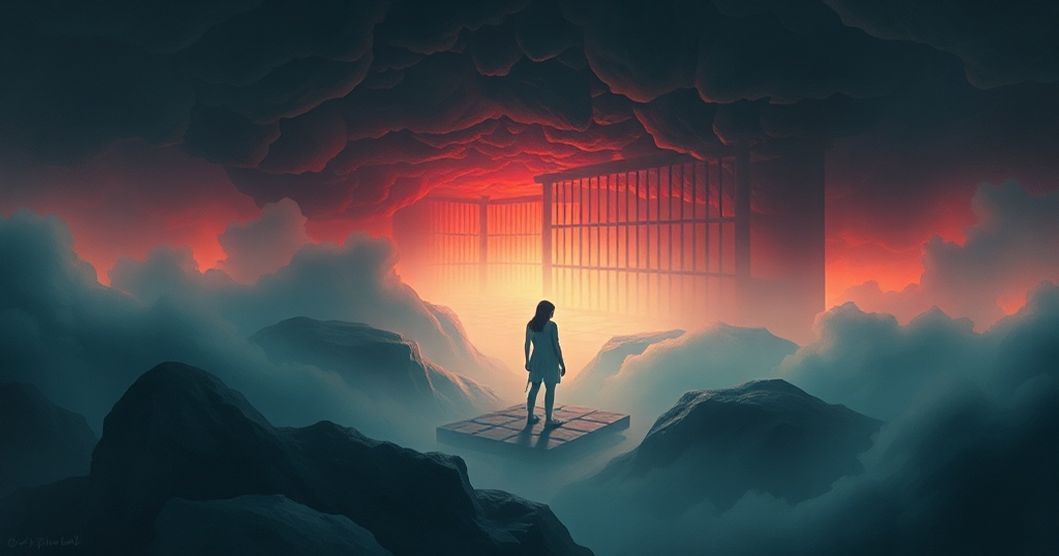
The dream’s symbolic elements form a cohesive narrative of emotional entrapment. The 'prison' imagery represents the dreamer’s psychological state: despite intellectual knowledge that the crush’s affection may not be reciprocated, the unconscious mind refuses to accept this reality, creating a literalized sense of imprisonment. Sleep deprivation amplifies this effect, as the brain’s default mode network becomes hyperactive, processing unprocessed emotions through distorted reality. The 'layers' of reality in the dream mirror Jungian concepts of the 'collective unconscious,' where each shift represents a deeper exploration of the shadow self—the parts of the psyche that fear rejection and crave validation.
The station setting, a liminal space between departure and arrival, symbolizes transition and uncertainty. The presence of the friend introduces a secondary relationship dynamic, suggesting the dreamer’s unconscious comparison of himself to others in romantic contexts. The crush’s preference for the friend over the dreamer is not merely a romantic rejection but a reflection of deeper self-doubt: the fear that one’s worth is conditional on another’s approval. The 'alternate universe' fantasy, a common dream motif, represents the wish to rewrite reality to fit our desires—a psychological defense mechanism against emotional pain.
Psychological Currents: Sleep Deprivation and the Unconscious
Freud’s theory of dreams as wish-fulfillment gains resonance here, as the dreamer’s unconscious constructs an alternate reality where his romantic obstacles disappear. However, the nightmare quality arises from the conflict between the conscious desire (alternate universe) and the unconscious fear (rejection). Cognitive neuroscience explains how sleep deprivation disrupts REM cycles, increasing emotional intensity in dreams. During REM sleep, the prefrontal cortex—the area responsible for rational thought—remains suppressed, allowing emotional processing to occur without logical constraints. This explains why the dream felt so 'real' and overwhelming: the brain was processing emotional data in a state of heightened vulnerability.
Jungian psychology offers another lens, particularly the concept of 'active imagination,' where the dreamer’s shadow self (the unacknowledged fear of rejection) confronts him in the dream. The 'multiple layers' of reality correspond to the 'four levels of the psyche' in Jungian theory: conscious, personal unconscious, collective unconscious, and beyond. Here, each reality shift represents a deeper dive into the personal unconscious, where repressed feelings of inadequacy and unrequited love reside. The 'prison' metaphorically represents the shadow’s power to restrict movement and freedom until integrated.
Emotional & Life Context: Love, Loss, and Self-Validation
The dreamer’s context—26 years old, sleep-deprived, and emotionally invested in someone who does not reciprocate his feelings—provides critical insight into the emotional triggers. The two days of five hours’ sleep each night created a physiological vulnerability, but the true catalyst lies in the emotional state: disappointment over unrequited love. When we experience emotional distress, our dreams often intensify, using the safety of sleep to process these feelings. The dream’s intensity is not merely about the crush’s rejection but about the fear of being trapped in a cycle of unfulfilled desires.
The contrast between the conscious mind’s 'relief' upon waking and the lingering fear suggests a conflict between rational acceptance and emotional resistance. The dreamer’s usual pattern of nightmares during sadness aligns with this, as emotional pain seeks expression through the symbolic language of dreams. The 'inception' reference highlights the dream’s meta-quality: the dreamer is both the protagonist and observer, experiencing reality as a series of nested illusions—each layer revealing a deeper truth about self-worth and emotional boundaries.
Therapeutic Insights: Processing the Unconscious
The dream offers several therapeutic lessons. First, it urges the dreamer to examine the relationship between sleep quality and emotional regulation. Sleep deprivation disrupts emotional processing, so prioritizing sleep hygiene becomes a practical step. Second, the dream’s 'prison' imagery invites reflection on how the unconscious holds onto unprocessed emotions, creating psychological barriers to emotional freedom. Journaling exercises could help unpack the specific fears: What does 'being imprisoned' symbolize beyond romantic rejection? How might the dreamer reframe the 'alternate universe' wish into actionable self-care?
Cognitive reframing techniques, such as challenging the belief that one’s worth depends on another’s affection, can help integrate the dream’s emotional lessons. The dream’s intensity also suggests the need for self-compassion: unrequited love is a universal experience, and the mind’s attempt to process it through such vivid imagery is a sign of resilience, not weakness. By acknowledging these feelings without judgment, the dreamer can begin to transform the 'prison' into a space of self-discovery and growth.
FAQ Section
Q: Why did the dream feel more intense than typical nightmares?
A: Sleep deprivation amplifies emotional processing, while the dream’s multi-layered structure reflects deeper unconscious conflict. The brain’s prefrontal cortex, which normally moderates dreams, remains less active during REM sleep, intensifying emotional responses.
Q: How does the 'alternate universe' fantasy connect to waking life?
A: This represents the unconscious desire to rewrite reality to avoid pain, a common defense mechanism. The dream urges examination of whether such fantasies help or hinder emotional healing.
Q: What practical steps can I take to process this dream’s emotions?
A: Prioritize sleep hygiene, journal about the dream’s emotional impact, and practice cognitive reframing to challenge conditional self-worth beliefs. Consider talking to a trusted friend about the crush’s feelings.