
Part 1: Dream Presentation
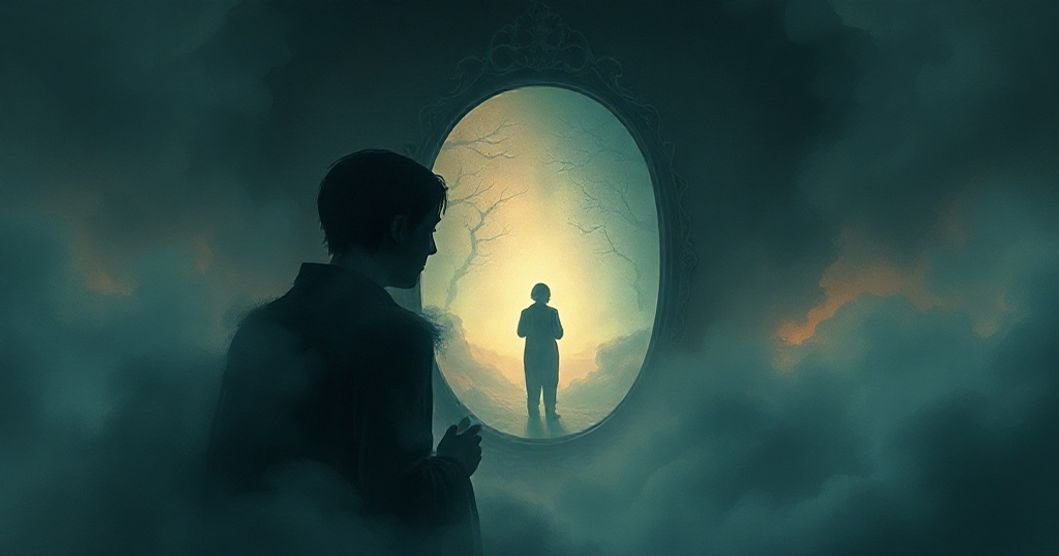
Dreams often serve as windows into our unconscious, revealing truths we avoid in waking life through symbolic imagery. This dream unfolds as a visceral exploration of self-confrontation, where a seemingly haunted mirror becomes a threshold to psychological discovery. After a year without a reflective surface, the dreamer’s impulsive purchase of a full-length mirror becomes a catalyst for confronting deeper emotional landscapes. The narrative progresses through escalating encounters with a malevolent reflection, culminating in a cat’s instinctive reaction that underscores the dream’s underlying emotional urgency. The dreamer’s escalating fear—from seeing the 'evil me' to waking in terror, then finally recognizing the mirror’s role as a trigger for inner conflict—reveals a profound psychological process at work.
The dream begins with the acquisition of a mirror after a year’s absence, symbolizing a reconnection with self. The first two nights introduce a 'shadow self'—a malevolent version of the dreamer within the mirror. On the first night, the shadow hurls a lamp through the mirror, shattering the illusion of safety and breaking the barrier between self and other. This action suggests a disruption of self-protective boundaries, as the shadow breaches the dreamer’s psychological defenses. The lamp, an object of illumination, becomes a weapon in the hands of the shadow, representing how repressed aspects of ourselves can twist even our most essential tools of self-awareness. The shadow’s physical emergence through the mirror—literally crossing into the dreamer’s space—mirrors the process of shadow integration, where previously repressed parts of ourselves demand attention.
The second night’s dream intensifies this confrontation: the shadow now moves toward the dreamer, smiling creepily and extending a hand through the glass. This physical reaching embodies the shadow’s attempt to claim the dreamer’s identity, as the shadow seeks to merge or dominate the conscious self. The dreamer’s scream upon waking reflects the terror of losing control to these repressed aspects. The third night introduces a crucial shift: the dreamer avoids eye contact with the shadow, immediately waking and flipping the mirror. This action represents an attempt to regain control by severing the connection, a primal response to protect against psychological intrusion. The cat’s reaction—hissing, fur standing, fleeing—adds another layer: the animal’s instinctive awareness of the shadow’s presence suggests that intuition (often overlooked in waking life) can sense when our psychological boundaries are being challenged.
Want a More Personalized Interpretation?
Get your own AI-powered dream analysis tailored specifically to your dream
🔮Try Dream Analysis FreePart 2: Clinical Analysis
Symbolic Landscape: The Mirror as Self-Interface
The mirror in this dream functions as a powerful symbol of self-reflection and identity. In Jungian psychology, mirrors represent the conscious and unconscious self, with the reflection symbolizing the shadow—the repressed, often feared aspects of personality that we project outward. The 'evil me' embodies the shadow: a distorted version of the dreamer that has been pushed into the unconscious. This aligns with Jung’s concept of individuation, where confronting the shadow is essential for psychological wholeness. The mirror’s role as a threshold between self and shadow is reinforced by the shadow’s ability to pass through it, symbolizing the permeability of our psychological boundaries when we avoid self-reflection.
The lamp, another key symbol, represents illumination and awareness. When the shadow hurls it through the mirror, it suggests that the shadow is attacking the dreamer’s capacity for self-understanding. Lamps traditionally symbolize guidance, so this inversion—turning a light source into a weapon—reflects how our self-awareness tools can be corrupted by shadow aspects. The stairs, where the shadow appears at the bottom, symbolize transition and life’s journey. Their presence suggests that the shadow emerges at moments of psychological transition, as the dreamer moves through a period of change (reconnecting with the mirror after a year’s absence).
The cat’s behavior is particularly significant. In dream analysis, cats often represent intuition and emotional sensitivity. The cat’s hissing at the mirror—without looking at its own reflection—indicates it senses something beyond the surface: the shadow’s presence. Cats are attuned to energy and emotional shifts, and their reaction underscores the dreamer’s own intuition, which may be suppressed in waking life. The cat’s physical response—fur standing, shaking, fleeing—mirrors the dreamer’s visceral fear, suggesting that the shadow’s presence is not just psychological but also has an emotional impact on the dreamer’s entire being.
Psychological Undercurrents: Shadow Integration and Repression
From a psychoanalytic perspective, Freud would view the 'evil me' as a manifestation of repressed desires or forbidden impulses. The shadow’s malevolence could represent aspects of the dreamer that have been rejected due to societal norms or personal shame—qualities deemed 'bad' or unacceptable that the unconscious retains. The dreamer’s fear of the shadow 'taking her body' reflects a primal fear of losing identity, control, or autonomy to these repressed aspects.
Jungian theory expands this by framing the shadow as a necessary counterpart to the conscious self. The dream’s progression—from seeing the shadow to the shadow attacking—suggests the dreamer is in a phase of shadow integration. The third night’s avoidance of eye contact and immediate action (flipping the mirror) indicates a shift toward confrontation rather than avoidance. This aligns with Jung’s assertion that psychological health requires integrating both conscious and unconscious aspects.
Cognitive dream theory offers another lens, suggesting dreams process emotional memories and unresolved conflicts. The recurring mirror imagery may represent the dreamer’s attempts to process a significant change in her life (the year without a mirror, followed by its reintroduction). The mirror becomes a trigger for deeper emotional patterns, with the shadow self emerging as a symbol of these patterns.
Emotional and Life Context: Unresolved Inner Conflict
The dream likely reflects a period of psychological transition in the dreamer’s life. The year without a mirror could symbolize avoiding self-reflection during a challenging time, perhaps a period of stress, change, or self-doubt. The reintroduction of the mirror—both literally and symbolically—forces the dreamer to confront these avoided aspects.
The shadow’s malevolence suggests the dreamer may be struggling with self-criticism, guilt, or shame. The 'evil me' could represent parts of herself she judges harshly, projecting these judgments onto an external reflection. The recurring nature of the dream across multiple nights indicates that these themes are unresolved and demand attention.
The cat’s reaction adds another layer: the dreamer’s intuition is signaling that the shadow’s presence is real and significant. The cat, as a symbol of intuition, is reacting to the same psychological undercurrents the dreamer is experiencing but through a more primal, non-conscious channel. This suggests the dreamer may be ignoring her inner wisdom in waking life, which the dream is now amplifying.
Therapeutic Insights: Confronting the Shadow with Compassion
The dream offers a profound opportunity for self-discovery and integration. Instead of removing the mirror (the external symbol), the dreamer is encouraged to engage with the shadow aspects represented within it. The first step is recognizing that the 'evil me' is not an external threat but a reflection of internalized conflict.
A practical exercise would involve journaling about the shadow’s appearance and behavior in the dream. What qualities did the shadow embody? What emotions did it trigger? These reflections can reveal which parts of the self are being rejected or suppressed. The dreamer can then ask: 'What aspects of myself am I afraid to acknowledge?' This question opens the door to shadow integration.
Another exercise is to create a 'shadow dialogue'—writing a letter to the shadow self, acknowledging its presence without judgment. This practice helps externalize the shadow, making it easier to understand and integrate. The dreamer can also explore the symbolism of the lamp: what does it represent in her waking life? Is it a source of illumination she’s currently avoiding, or a tool she needs to reclaim?
The cat’s reaction suggests the dreamer should trust her intuition more. In daily life, she might practice mindfulness to attune to her inner wisdom, noting when she feels fear or discomfort that could signal shadow activity. This awareness can transform the dream’s terror into a tool for growth.
FAQ Section
Q: What does it mean when the 'evil me' in the mirror represents?
A: The 'evil me' symbolizes the shadow self—repressed aspects of identity, including fears, anger, or judgments we’ve rejected. It urges you to confront these parts with curiosity rather than fear.
Q: Why did the cat react so strongly to the mirror?
A: Cats sense energy and emotional shifts. Your cat’s reaction reflects your intuition: the mirror triggers an emotional response you may be suppressing in waking life, signaling unresolved inner conflict.
Q: Should I get rid of the mirror or work through this differently?
A: Removing the mirror avoids the issue. Instead, use it as a tool: practice self-compassion, journal about the shadow’s traits, and explore which parts of yourself need integration. The mirror’s message is about self-understanding, not rejection.