
Part 1: Dream Presentation
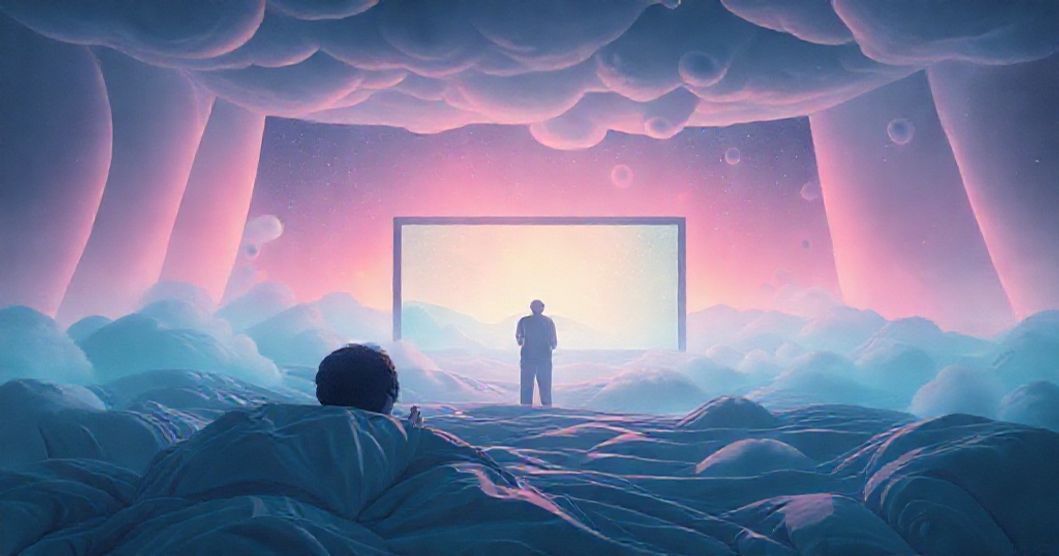
Dreams that dissolve the boundaries between self and perception offer profound windows into the unconscious mind’s inner landscape. In this particular dream experience, the dreamer describes a reality where consciousness itself becomes the medium for a visual experience that defies conventional dream structures. Rather than observing a scene from an external perspective, the dreamer becomes the very vessel through which the video unfolds—a paradoxical state where they are simultaneously the viewer, the viewed, and the technology enabling the experience.
The dream begins with the absence of a physical body, a common theme in dreams that explore identity and self-perception. The floating eyes symbolize an unanchored awareness, detached from the usual bodily references that ground our waking sense of self. The dreamer’s description of 'being the video player' rather than watching a video introduces a powerful metaphor for consciousness as both content and container—a concept that echoes philosophical inquiries into the nature of perception and selfhood. The 'injection' of the video into their awareness suggests a direct, almost invasive form of information processing, bypassing the usual filters of physical senses or environmental context. The void-like environment, stripped of all physical boundaries or background, represents the dreamer’s unconscious mind, uncluttered by the concerns and structures of waking life. This dream’s unique quality lies in its refusal to conform to traditional dream narratives, instead creating a surreal scenario where the act of perceiving becomes indistinguishable from the dream itself.
Part 2: Clinical Analysis
Want a More Personalized Interpretation?
Get your own AI-powered dream analysis tailored specifically to your dream
🔮Try Dream Analysis FreeSymbolic Landscape: Unpacking the Visual Metaphors
The dream’s central symbol—the video as both medium and experience—represents the mind’s tendency to process information through narrative structures. In waking life, we often 'watch' experiences as external events, but here the dreamer merges the subject and object of perception, creating a self-referential loop. The floating eyes, unanchored in space, embody the dreamer’s detachment from bodily identity—a phenomenon sometimes seen in dreams of disembodiment, which can signal psychological detachment from one’s sense of self or current life circumstances. The 'injection' of the video into awareness suggests a direct, almost involuntary absorption of information, possibly reflecting the dreamer’s recent exposure to overwhelming visual stimuli or an internal need to process complex ideas through narrative frameworks.
The void environment, stripped of all physical context, serves as a powerful symbol of the unconscious mind’s raw, unstructured nature. In Carl Jung’s analytical psychology, the void often represents the collective unconscious—a repository of universal archetypes and repressed memories. The dreamer’s lack of physical form and movement further emphasizes this unstructured state, where the usual anchors of identity and physicality have dissolved. This dream’s visual simplicity belies its complexity: the absence of background isn’t random; it’s the dreamer’s mind temporarily removing the filters of waking consciousness to reveal the core of their internal processing.
Psychological Currents: Theoretical Perspectives on Self and Perception
From a Freudian perspective, this dream might represent the id’s attempt to express repressed desires or memories through unconventional channels. The dreamer’s role as 'video player' could symbolize the unconscious mind’s need to process fragmented experiences, much like how we piece together memories into coherent narratives. However, unlike traditional Freudian dreams, this one lacks the typical manifest content of repressed wishes, suggesting a more Jungian focus on the collective unconscious or the self’s integration of disparate elements.
Jung’s concept of the 'self' as the unifying principle of consciousness and unconsciousness finds resonance here. The dreamer’s experience of being both viewer and viewed aligns with Jung’s idea of synchronicity, where events and perceptions intersect in meaningful ways. The dream’s refusal to conform to conventional structure also reflects Jung’s concept of the 'anima' or 'animus'—the unconscious feminine or masculine aspects that sometimes manifest in dreams as surreal, boundary-defying experiences. The floating eyes, in particular, evoke the 'all-seeing eye' archetype—a symbol of both omniscience and vulnerability, suggesting the dreamer’s unconscious awareness of their own capacity for insight and potential exposure.
Neuroscientifically, this dream might reflect the brain’s default mode network, which activates during wakeful rest and daydreaming. The default mode network is associated with self-referential thinking and mind-wandering, and the dreamer’s experience of being 'in' the dream rather than observing it could indicate heightened activity in this network during sleep. The lack of physical movement aligns with REM sleep’s characteristic muscle atonia (paralysis), where the brain disconnects from the body while maintaining vivid mental activity. This dream’s unusual structure suggests the brain is experimenting with non-linear, non-embodied forms of processing information during sleep.
Emotional & Life Context: Disconnection and Integration
The dream’s emotional tone—curious rather than terrifying—suggests the dreamer is in a period of psychological exploration or transition. The disconnection from physical form might reflect a temporary sense of identity fluidity, perhaps related to recent life changes, career shifts, or relationship adjustments. In modern life, we often experience ourselves as 'watching' our lives unfold externally, but this dream flips the script, making the dreamer the active medium of their internal experience. This could signal a growing awareness of how much of our identity is constructed through narrative and perception, rather than physical presence.
The 'injection' of the video into awareness might represent the dreamer’s attempt to process overwhelming information—perhaps from media consumption, work demands, or emotional experiences. In a world saturated with visual content, the mind might create a dream where the act of seeing becomes indistinguishable from the content itself—a commentary on how technology and media shape our perception of reality. The dream’s surreal quality could also indicate the dreamer’s need to step outside conventional thinking patterns, exploring new ways of understanding their relationship to information and experience.
Therapeutic Insights: Navigating the Boundaries of Self and Experience
This dream invites the dreamer to explore their relationship with self-perception and identity. The disembodied experience suggests a need to examine areas of life where they feel detached or unanchored. Journaling exercises that connect the dream’s elements to waking life could help identify patterns of disconnection. For example, asking: When do I feel most like a 'video player' rather than an active participant in my life? This reflection might reveal areas where the dreamer feels passive or objectified in their daily experiences.
Mindfulness practices focused on body awareness could counteract the dream’s sense of disembodiment. By grounding attention in physical sensations during waking hours, the dreamer might strengthen their connection to bodily identity. Additionally, exploring the narrative structures in their life—how they 'edit' experiences like a video—could reveal how they filter and process information, potentially leading to greater authenticity in their self-expression.
The dream’s emphasis on direct, unmediated perception suggests the dreamer might benefit from practices that foster present-moment awareness. Activities like guided visualization or sensory grounding can help bridge the gap between the dream’s surreal experience and waking reality, allowing for a more integrated sense of self.
FAQ Section
Q: What does it mean to be 'the video player' in a dream?
A: This metaphor suggests the dreamer identifies with both the content and the process of perception, reflecting a fluid relationship with self and experience. It may indicate heightened metacognitive awareness or a need to examine how you process information.
Q: Why does the dream lack physical form and background?
A: The void and disembodiment represent the unconscious mind’s unstructured nature, free from waking concerns. This can signal psychological detachment or a need to address unprocessed emotions without the usual filters of physical identity.
Q: How can this dream help with personal growth?
A: By exploring the dream’s themes of self-perception and identity, you can identify areas of life where you feel detached or objectified. Practices like mindfulness and narrative awareness can foster greater integration of mind and body.