
Navigating the Tower of Dreams: A Journey Through Liminal Spaces and Symbolic Realms
Part 1: Dream Presentation
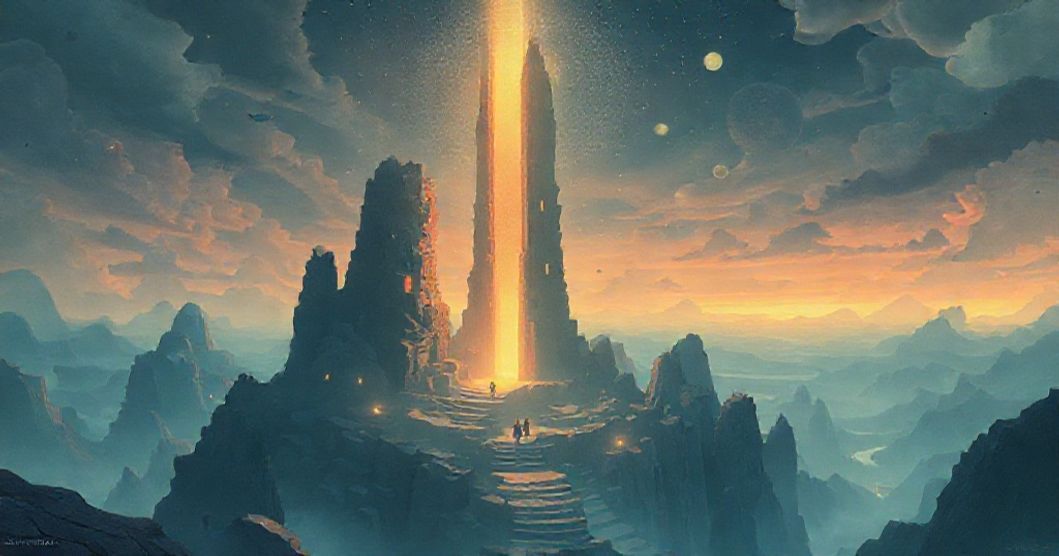
Dreams often serve as portals into the unconscious mind, revealing truths we cannot articulate while awake. This particular dream unfolds as a journey through a towering structure that transcends ordinary reality, each floor opening into distinct dreamscapes. I found myself standing at the base of an immensity beyond comprehension—a tower so colossal it seemed to pierce the very heavens. Its stone walls glowed faintly, as if infused with ancient light, and every surface hummed with an energy I couldn’t quite name. Before me, two figures materialized: beings whose heads were crowned with intricate golden headpieces that shimmered like liquid sunlight. They communicated not through words but through a direct, telepathic transmission: 'Every floor in this tower is a different place.' Their voices resonated in my mind without sound, clear and authoritative yet kind. I felt both awestruck and compelled to explore. On the floor where I stood, two guardians blocked a doorway leading deeper into the structure. One was a biomechanical humanoid, its body a sleek fusion of metal and organic tissue, eyes glowing with an otherworldly intelligence. The second was a towering centaur, twelve feet tall with muscular limbs and a face that seemed carved from ancient oak, its eyes wise and watchful. Beyond them, the tower opened to a vast central platform, suspended over an abyss so deep I could see only swirling white mist far below—an endless void that seemed to stretch infinitely downward. With no hesitation, I stepped forward, and the guardians parted, allowing me access to a narrow elevator at the platform’s edge. As the elevator descended, the world outside warped and transformed. When the doors opened, I found myself in a place instantly recognizable yet deeply unsettling: Mall World. This was no ordinary mall—it was a persistent liminal space, a dream realm shared by countless others, where identical experiences played out in identical corridors. The same flickering fluorescent lights, the same echoing silence between stores, the same faces with vacant expressions—all familiar yet dreamlike. I stood there, realizing this was just one floor of the tower, and the journey had only just begun.
Part 2: Clinical Analysis
Symbolic Landscape: The Tower as a Metaphor for the Psyche
Want a More Personalized Interpretation?
Get your own AI-powered dream analysis tailored specifically to your dream
🔮Try Dream Analysis FreeThe tower in this dream emerges as a powerful symbol of the human psyche itself—a structure representing the multifaceted nature of consciousness, with each floor corresponding to different aspects of mental life. In dreamwork, towers often signify aspirations, challenges, or the self as a complex entity. The golden headpieces worn by the advanced beings suggest a connection to higher knowledge or spiritual awakening, as golden elements frequently symbolize enlightenment, divine guidance, or transcendent understanding in dream symbolism. Their telepathic communication bypasses verbal language, indicating a direct, intuitive form of knowing—the dreamer’s unconscious conveying messages that transcend rational thought.
The two guardians embody archetypal forces that shape our journey of self-discovery. The biomechanical humanoid merges technology and humanity, representing the tension between rationality and intuition in our waking lives. Its metallic form might signify the mechanical, analytical aspects of the mind, while the organic components suggest the enduring human essence. The twelve-foot centaur, a mythological hybrid of human and horse, draws from classical imagery of wisdom, centaurs often symbolizing the balance between the intellectual and instinctual parts of the psyche. In dreams, centaurs frequently appear as guides who bridge the gap between the conscious and unconscious mind, urging the dreamer to integrate seemingly disparate aspects of self.
The bottomless pit beneath the central platform represents the unconscious mind—the vast, mysterious realm of repressed thoughts, emotions, and memories. The swirling white mist obscuring its depths symbolizes the unknown nature of the unconscious, where our deepest fears and desires reside. This liminal space between the conscious tower and the unconscious abyss creates a tension central to the dream narrative: the allure of exploration versus the fear of confronting the unknown.
Psychological Currents: Theoretical Frameworks at Play
From a Jungian perspective, the tower represents the Self—a unifying force that organizes the psyche’s various components. The different floors as distinct dream worlds reflect the multiplicity of the unconscious, each offering unique perspectives on the dreamer’s inner landscape. The Mall World, a recurring liminal space for many dreamers, aligns with Jung’s concept of the 'shadow'—the repressed aspects of self that manifest in familiar yet uncanny environments. In Jungian terms, the mall as a modern liminal space mirrors our collective relationship with consumerism, nostalgia, and the emptiness of modern existence.
Freudian analysis would likely interpret the tower as a phallic symbol of ambition and the guardians as obstacles to be overcome on the path to self-realization. The telepathic communication could represent the dreamer’s superego speaking directly, urging them to explore deeper aspects of their psyche. The descent into the elevator and subsequent Mall World might symbolize regression into childhood or past experiences, as malls often evoke nostalgic memories of consumer culture.
Contemporary cognitive dream theory frames dreams as information-processing tools, where the tower structure represents the brain’s attempt to organize complex emotional data. The Mall World, experienced similarly by many people, suggests a shared collective unconscious element—the dreamer’s mind drawing on cultural archetypes of modern life. This aligns with the 'shared dream' phenomenon, where common dream imagery reflects universal human experiences and anxieties.
Emotional & Life Context: Navigating Modern Liminality
This dream likely arises from the dreamer’s current life circumstances, particularly if they’re navigating significant transitions or facing uncertainty. The tower’s endless floors and the Mall World’s persistent, almost surreal quality suggest a preoccupation with modern life’s overwhelming complexity. The Mall World, a place of endless repetition and consumerism, may reflect feelings of being trapped in routine or disconnected from authentic experiences—a common theme in contemporary dreams as people grapple with digital overload and transient relationships.
The guardians’ presence hints at internalized challenges or protective mechanisms the dreamer must confront. The biomechanical humanoid could represent the pressure to conform to societal expectations, while the centaur symbolizes the need to honor instinctual wisdom. The bottomless pit beneath the tower speaks to the fear of losing oneself in the vastness of modern existence, where individual identity can feel lost amid technological and social forces.
Therapeutic Insights: Integrating Dream Wisdom
This dream invites the dreamer to recognize their inner journey of self-discovery. The tower as a metaphor for the psyche suggests that growth requires exploring all aspects of self, even those that feel unfamiliar or intimidating. Reflective practices such as journaling each floor of the tower as a different aspect of daily life could help the dreamer map their unconscious themes.
The Mall World, a shared liminal space, offers an opportunity to explore collective anxieties. By examining how consumer culture influences identity, the dreamer can begin to reclaim agency over their values and choices. The guardians, as guides, remind us that challenges and obstacles are necessary for growth—they don’t need to be conquered but understood and integrated.
FAQ Section
Q: What does the tower symbolize in dreams?
A: The tower typically represents the self as a complex structure of consciousness, with each floor symbolizing different aspects of mental, emotional, or spiritual development. It can also reflect life’s challenges and the journey of self-discovery.
Q: Why do different people experience similar 'Mall World' dreams?
A: Shared dream imagery like Mall World often reflects collective unconscious themes—cultural symbols of modern life, consumerism, and nostalgia that resonate universally. This suggests a common human experience of navigating modern liminality.
Q: How can I use this dream insight in my waking life?
A: Reflect on which 'floors' of your life feel most challenging or rewarding, and consider if you’re avoiding the unknown. The dream encourages embracing exploration of your inner landscape while honoring both rational and instinctual aspects of self.