
Part 1: Dream Presentation
Dreams often arrive unannounced, carrying symbolic messages from our deeper consciousness. Consider this vivid dream experience: a childhood encounter with a figure from religious tradition, occurring despite a lifetime of atheist upbringing. The dreamer’s memory of this event—Jesus offering guidance to blink three times to wake from nightmares—resonates with psychological truths about the unconscious mind’s ability to bridge spiritual themes with personal belief systems.
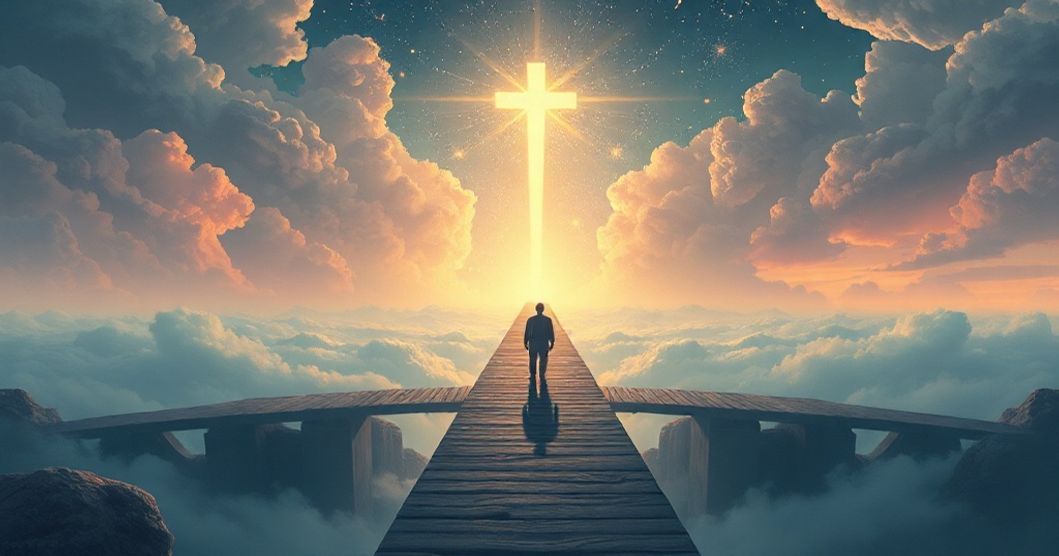
I recall this dream with remarkable clarity, as if the moment were yesterday despite occurring decades ago. I must have been around seven or eight, though time in dreams warps so easily. The setting felt both familiar and otherworldly—like a sunlit meadow I’d never seen but somehow knew, bathed in a soft, golden light that didn’t cast shadows. In the center stood a figure whose presence radiated warmth and authority, yet felt strangely comforting despite my young age. It was Jesus, though I didn’t recognize the title then; he wore flowing robes that shimmered like starlight, and his face held a gentle yet wise expression I can still visualize with uncanny precision. His voice was deep but kind, not the stern judgment I’d later associate with some depictions of him, but a tone that felt like a trusted elder speaking from experience.
He addressed me directly, his words carrying a weight that felt both serious and reassuring. ‘I’ve come to give you something important,’ he said, and I remember my heart racing, not with fear but with a curious awe. ‘When you find yourself in a nightmare and you want to wake up,’ he continued, ‘all you need to do is blink three times. Each blink is a step toward consciousness.’ His eyes locked with mine, and there was a knowing in them that suggested this was a secret code only for me. I nodded, though I didn’t fully understand why this advice mattered. Then the dream shifted—a sudden jolt, and I found myself back in my childhood bedroom, the covers tangled around me, the memory of his words still echoing.
As an adult now, I’m struck by how vivid this dream remains. At the time, raised in a household where religion was dismissed as irrelevant, the appearance of Jesus felt jarring, even comical. I’d grown up hearing jokes about religious figures, never taking them seriously, so his presence in my subconscious felt like a playful intrusion. Now, at 23, everything has changed. I’ve begun exploring spirituality beyond my upbringing, drawn to Catholicism’s rich traditions and Sikhism’s emphasis on meditation and service. This childhood dream now feels less like a random fantasy and more like a prescient glimpse into my current journey. The idea of Jesus offering guidance—even in a dream—was absurd then, but now it stirs questions about why my unconscious would conjure such a figure. Did it represent a deeper need for meaning, even before I knew I needed it? I wonder if others have experienced similar encounters with figures from faith traditions while holding different beliefs. It’s a strange, wonderful puzzle, and I’m grateful for the reminder that sometimes the most profound messages come from the most unexpected places.
Want a More Personalized Interpretation?
Get your own AI-powered dream analysis tailored specifically to your dream
🔮Try Dream Analysis FreePart 2: Clinical Analysis
Symbolic Landscape: Decoding the Dream’s Imagery
The dream’s central symbols reveal layers of psychological meaning that transcend its surface content. The figure of Jesus, a universal religious archetype, appears in a sunlit meadow—a space traditionally associated with purity, divinity, and spiritual awakening in many mythologies. The golden light suggests a sacred atmosphere, while the absence of shadows hints at an idealized, non-judgmental vision of spirituality. For an atheist, encountering Jesus in a dream is not literal but symbolic: the unconscious mind often synthesizes cultural narratives and personal experiences into recognizable figures, even when the conscious self rejects formal religion.
The ‘blink three times’ instruction is particularly significant. Blinking is a mundane, automatic action, yet here it’s framed as a deliberate, three-step process to escape nightmares. This ritualistic quality suggests the dreamer’s subconscious desire for control over overwhelming experiences—a common theme in dreams, especially during childhood when external factors feel uncontrollable. The number three holds cultural and psychological weight: it represents wholeness (trinity), completion, and the past-present-future axis. By specifying three blinks, the dream may be encoding a process of intentional awakening, a metaphor for moving from confusion to clarity.
Psychological Currents: Theoretical Perspectives
From a psychoanalytic lens (Freud), this dream could represent wish fulfillment—the unconscious satisfying a desire for guidance that the conscious mind had yet to articulate. The dreamer’s current interest in religion (Catholicism, Sikhism) may have planted seeds in the unconscious, manifesting as Jesus’ appearance. Freud might interpret this as the ‘return of the repressed’—religious imagery, though rejected consciously, persists in the mind and surfaces in dreams.
Jungian psychology offers another framework, emphasizing the collective unconscious and archetypes. The figure of Jesus is not just a religious symbol but an archetype of the ‘wise old man’ or ‘savior,’ present in all cultures across time. Jung would argue this archetype emerged because the dreamer’s psyche needed a symbol of guidance, wisdom, and meaning—universal human needs that transcend personal belief systems. The dream’s setting in a meadow aligns with the ‘anima/animus’ archetype, a feminine/masculine principle of wholeness, suggesting the dreamer’s unconscious sought balance through spiritual imagery.
Neuroscientifically, the default mode network (DMN)—active during rest and daydreaming—may have processed recent waking experiences (exploring religion) and integrated them with childhood memories. The DMN connects disparate neural networks, explaining why the dreamer, raised atheist, now encounters religious figures: the brain is naturally wired to make meaning, even when formal beliefs are absent.
Emotional & Life Context: Unconscious Processing of Spiritual Exploration
The dream occurred during early childhood, a period of rapid identity formation when children absorb cultural narratives without critical analysis. The dreamer’s parents dismissed religion, creating a cognitive dissonance: the child’s mind encountered religious imagery in media, family stories, or cultural references, yet consciously rejected it. This dissonance may have forced the unconscious to store religious themes as ‘taboo’ material, which then emerged in dreams as symbolic figures.
In adulthood, the dreamer’s renewed interest in religion suggests a shift in the relationship with spirituality. The dream’s timing—occurring years before this exploration—implies the unconscious was preparing for this journey. The ‘Jesus’ figure may represent the dreamer’s evolving relationship with authority, meaning-making, and the sacred. The advice to ‘blink three times’ could symbolize the three steps of spiritual exploration: questioning, learning, and integration, even when the path feels unclear.
Therapeutic Insights: Practical Applications of Dream Work
For the dreamer, this dream invites reflection on the intersection of conscious belief and unconscious needs. The recurring figure of Jesus suggests that spirituality, while not organized religion, is a natural part of human experience—a universal search for meaning that transcends dogma. Journaling exercises could help unpack this: writing about how the dream made you feel, what emotions arose, and what themes in your current life might connect to the ‘blinking’ advice (e.g., three steps toward clarity).
Practical integration involves recognizing that dreams reflect psychological needs, not literal truths. The dream’s message may be to embrace curiosity about spirituality without judgment, allowing the unconscious to guide exploration in its own time. The three blinks could serve as a mindfulness trigger: in waking life, when facing uncertainty, pause and take three intentional breaths, symbolizing the same ‘waking up’ process.
Finally, this dream highlights the importance of honoring both conscious beliefs and unconscious wisdom. The atheist upbringing and current spiritual exploration are not contradictory but complementary: the mind’s capacity for meaning-making persists, even when formal structures are absent. By acknowledging these symbolic encounters, the dreamer can cultivate a more integrated sense of self.
FAQ Section
Q: Why would an atheist have a religious dream?
A: Dreams reflect the unconscious, which synthesizes cultural narratives, emotional needs, and unresolved themes—even if conscious beliefs differ. Religious figures often represent universal human needs for guidance, meaning, or wholeness.
Q: What does the ‘blink three times’ symbolize?
A: Three blinks represent intentionality and completion—steps toward waking from confusion. It may mirror the dreamer’s journey from atheist certainty to spiritual curiosity, requiring three phases of exploration.
Q: How can I interpret my own religious dreams?
A: Reflect on emotions during the dream, recurring symbols, and current life themes. Ask: What needs does this figure or action address? Journaling helps connect dream imagery to waking experiences, revealing deeper truths.