
Part 1: Dream Presentation
Dreams often serve as psychological mirrors, reflecting our unconscious tensions through symbolic narratives. In this case, a dreamer’s subconscious wove together childhood imagery, cinematic references, and archetypal conflict to create a vivid tableau of identity and purpose. The dream begins in an elementary school playground, where the familiar setting of a child’s space collides with the unexpected presence of bees, wasps, and termites—each element charged with symbolic meaning.
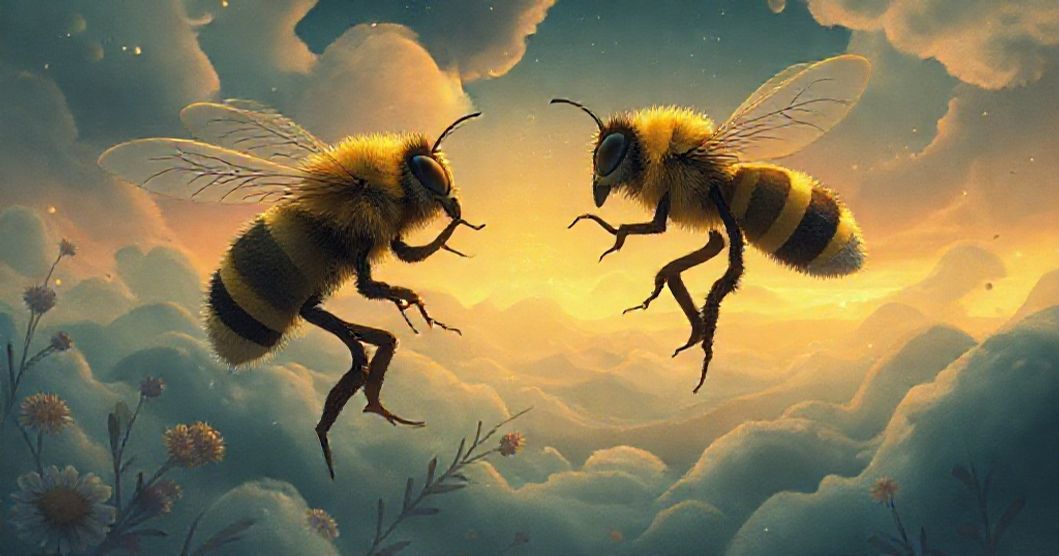
The rewritten dream unfolds as follows: In a late-afternoon elementary school playground, the air hums with bees, but these are no ordinary insects. A Girl Bee, marked by her black-and-yellow stripes, navigates a world where wasps have turned human perception against bees, falsely claiming to be “just like bees” to incite fear and hatred. The Girl Bee, sensing the danger, leaves the hive to find a solution, stumbling upon a child’s sandbox where she meets an African termite colony. A human boy attempts to destroy them, heightening the Girl Bee’s sense of precariousness. She then encounters the Boy Bee from a prior narrative—once bullied and driven from the hive—and urges him to return, taking his place as a “wild bee” herself. The dream ends ambiguously, leaving the dreamer with a sense of unresolved purpose.
Part 2: Clinical Analysis
Want a More Personalized Interpretation?
Get your own AI-powered dream analysis tailored specifically to your dream
🔮Try Dream Analysis FreeSymbolic Landscape: The Language of Bees, Wasps, and Termites
The dream’s symbolic elements function as psychological metaphors for the dreamer’s internal landscape. Bees, traditionally symbols of community, productivity, and collective purpose, here represent the dreamer’s relationship to social structures—perhaps feeling both part of a group and constrained by its expectations. The Girl Bee’s protagonist role suggests an emerging sense of agency and self-determination, while the wasps embody disruptive forces or repressed anger. Their false claim to be “just like bees” mirrors the dreamer’s experience of others misinterpreting or misrepresenting their identity.
The African termite colony in the sandbox introduces complexity. Termites, often overlooked in ecological narratives, symbolize overlooked voices or “invisible” aspects of the self that may hold unexpected power. The human boy’s attempt to destroy them reflects external threats to these vulnerable parts of the psyche—the dreamer’s fear of being silenced or destroyed by external forces. The termites’ presence also hints at the dreamer’s need to ally with unconventional or marginalized perspectives.
Psychological Undercurrents: Archetypes and Unfinished Business
From a Jungian perspective, this dream activates the “shadow” archetype through the wasp’s role as a disruptive force, representing repressed anger or conflict the dreamer struggles to acknowledge. The wasps’ false identity claim aligns with Jung’s concept of the shadow—elements of the self we project onto others, fearing their destructive potential. The Boy Bee, a figure from the “first movie” (a reference to a prior, possibly unresolved narrative), embodies the “anima/animus” archetype, representing the dreamer’s internalized sense of self that was once dismissed or silenced.
Freudian analysis might interpret this dream as a manifestation of childhood conflicts. The elementary school setting evokes vulnerability and nostalgia for simpler times, while the Boy Bee’s departure due to bullying reflects repressed memories of feeling ostracized or silenced—a common theme in dreams processing unaddressed childhood hurts. The sandbox, a child’s domain, symbolizes the dreamer’s desire to reclaim agency in spaces once marked by vulnerability.
Emotional and Life Context: Unpacking the Dreamer’s Unconscious Triggers
The dream likely reflects the dreamer’s current emotional state, particularly around identity and belonging. The wasp conflict mirrors real-world experiences of misrepresentation or feeling “othered” in social contexts. The Boy Bee’s bullying echoes experiences of being silenced, marginalized, or pressured to conform—a common trigger for dreams that reprocess these tensions. The “wild bee” role reversal suggests a desire to reject societal expectations and embrace authenticity over collective pressure.
The termite colony in the sandbox hints at the dreamer’s need to integrate overlooked aspects of self—parts of identity that feel invisible or unworthy of attention. The human boy’s attempt to destroy the termites reflects fears of external threats to these vulnerable parts of the psyche, while the Girl Bee’s determination to protect them signals an emerging protective instinct toward one’s authentic self.
Therapeutic Insights: Reclaiming Voice and Purpose
This dream offers rich therapeutic potential, encouraging the dreamer to explore three key areas: acknowledging past hurts, embracing role flexibility, and integrating overlooked aspects of self. The Girl Bee’s journey from hive member to “wild bee” represents the therapeutic value of reclaiming agency in spaces once felt constraining. The Boy Bee’s return to the hive, paired with the Girl Bee’s self-assumed role, suggests the importance of both honoring past experiences and forging new paths.
Therapeutic reflection might involve journaling to identify real-world parallels: When have you felt like the “Girl Bee,” defending an identity under attack? How do you respond when marginalized voices (like termites) need protection? The dream’s ambiguous ending invites the dreamer to consider what “wild bee” role they might claim in waking life—one that balances authenticity with connection.
FAQ: Navigating the Dream’s Symbolism
Q: What does the African termite colony symbolize in the dream?
A: Termites, often overlooked, represent overlooked aspects of self or marginalized voices. Their presence in the sandbox suggests the dreamer’s need to recognize and protect these “invisible” parts of identity that may hold untapped power.
Q: Why was the Boy Bee bullied in the original (dreamed) first movie?
A: The Boy Bee’s departure likely reflects the dreamer’s experience of feeling silenced or rejected for being different—a common trigger for dreams processing unaddressed childhood hurts or social exclusion.
Q: What does “taking his place as a wild bee” signify in terms of identity?
A: This role reversal symbolizes the dreamer’s desire to embrace authenticity over societal expectations, reclaiming agency and purpose outside traditional roles or “hive” constraints.