
Part 1: Dream Presentation
Dreams often serve as psychological theaters where our unconscious mind enacts symbolic dramas, and this particular dream presents a vivid clash between opposing forces. The narrative unfolds through a surreal landscape where a disturbing cult ceremony collides with an unexpected resistance led by diminutive, determined beings. Let’s explore the dream’s key elements and their psychological resonance.
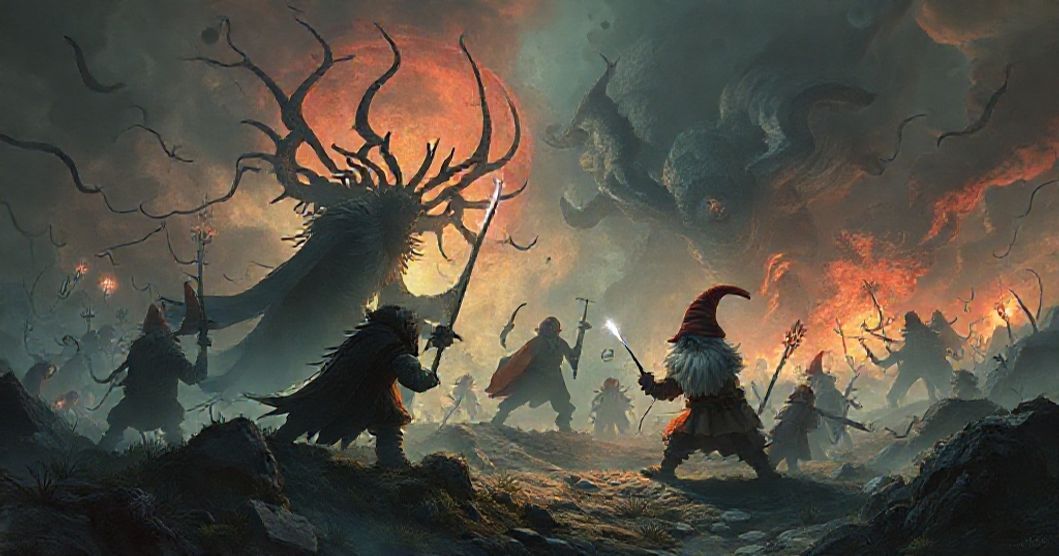
I found myself in a surreal dreamscape where a disturbing cult ceremony unfolded. A group of wealthy individuals gathered in a dimly lit hall, their faces twisted in a mixture of devotion and mania as they worshipped a glowing, all-seeing eye—though they referred to it by a derisively trivial name that escaped my memory. Their rituals were far from harmless: I witnessed them consuming the flesh of ceremony participants, their actions a stark contrast to their ostentatious displays of wealth. The air hummed with tension and the metallic tang of blood, making the scene both repugnant and mesmerizing in its malevolence. Suddenly, the atmosphere shifted dramatically. From the shadows emerged a band of diminutive beings—gnomes and dwarves, each roughly half my height—their presence brimming with unexpected authority. Their leader stood out: clad in vivid red medieval armor and a battered helm that cast deep shadows over his face, he barked orders with a gravelly urgency, organizing others into a makeshift resistance. I felt myself caught up in their cause, yet I wasn’t the same person I knew in waking life. My body had transformed—taller, more robust, and most uncannily, I possessed an extra arm, as if my limbs had multiplied to meet the challenge. The conflict escalated as I confronted a towering acolyte, now over eight feet tall and radiating menace. His skin was leathery and cracked, his eyes completely obscured by a growth of flesh that seemed to pulse with malevolence. Bat-like teeth jutted from his mouth, and when he hissed at me, his voice carried a serpentine quality: “I can no longer die.” The words struck fear, yet something in me recognized a vulnerability. I countered with a calm certainty: “The gnomes have already found a solution.” At these words, his posture faltered, and his hissing dissolved into panicked stammering. The dream’s tension crackled in the air as the acolyte’s confidence crumbled before the gnomes’ ingenuity.
Part 2: Clinical Analysis
Want a More Personalized Interpretation?
Get your own AI-powered dream analysis tailored specifically to your dream
🔮Try Dream Analysis FreeSymbolic Landscape: The Archetypal Clash
The all-seeing eye, a recurring symbol of surveillance, control, and secret power structures, serves as the cult’s central obsession. In Jungian psychology, this imagery often represents the collective unconscious’s watchful nature—the “eye” that observes our deepest motivations and vulnerabilities. The cult’s cannibalistic rituals, while grotesque, symbolize a different kind of consumption: devouring others’ essence to maintain power. This could reflect fears of being drained by controlling relationships or systems in waking life. The gnomes and dwarves, though diminutive in stature, embody the archetype of the overlooked yet powerful. In folklore, these creatures often represent earthy wisdom, resilience, and the ability to navigate hidden realms—qualities that suggest the dreamer’s unconscious recognizing inner resources previously dismissed as insignificant.
The dreamer’s transformation into a multi-armed figure is particularly significant. Multiple limbs in dreams typically signify expanded capability, adaptability, or a need to manage multiple responsibilities simultaneously. This physical metamorphosis suggests the dreamer’s unconscious asserting a sense of empowerment, perhaps in response to feeling disempowered in waking life. The acolyte’s appearance—leathery skin, bat-like teeth, and eyes obscured by flesh—evokes fear and the uncanny valley effect, symbolizing a distorted, predatory aspect of the self or external forces that feel invasive and inescapable. His claim of “no longer dying” hints at existential anxieties about vulnerability, permanence, or the fear of being trapped in self-destructive patterns.
Psychological Perspectives
From a Jungian lens, the cult represents the shadow archetype—repressed aspects of the psyche that crave control and dominance. The all-seeing eye embodies the shadow’s desire to observe and manipulate, while the cannibalism symbolizes the shadow’s tendency to devour vitality. The gnomes, as the dreamer’s inner allies, represent the animus archetype (for women) or animus/collective unconscious (for men)—the masculine principle of action, reason, and resistance. Their organization and leadership mirror the dreamer’s unconscious seeking to assert order against chaos.
Freudian analysis might interpret the cult’s rituals as manifestations of repressed aggression and power fantasies. The acolyte’s immortality claim could stem from unresolved guilt or a fear of death, while the gnomes’ resistance represents the ego’s attempt to counter these dark impulses. Cognitive dream theory, meanwhile, frames dreams as problem-solving mechanisms, where the gnomes’ “solution” to the acolyte’s supposed immortality reflects the unconscious mind processing real-world challenges by envisioning creative resolutions.
Neuroscientifically, the dream’s rapid shifts between horror and empowerment align with REM sleep’s emotional processing. The brain’s default mode network, active during dreaming, integrates disparate memories and emotions—explaining why the dreamer’s waking concerns about control, vulnerability, and resistance might manifest as this symbolic battle.
Emotional & Life Context
The dream likely reflects underlying tensions between feeling controlled by external forces and the desire to resist them. The cult’s wealth and ritualistic cannibalism suggest a fear of being consumed by systems of power—corporate, social, or familial—that demand obedience at the cost of autonomy. The gnomes’ unexpected leadership hints at the dreamer’s unconscious recognizing overlooked strengths, perhaps in response to recent stressors or decisions that feel overwhelming.
The acolyte’s “immortality” claim may symbolize a waking fear of something unchangeable: a toxic relationship, a self-defeating habit, or a career path that feels inescapable. The panic he experiences when told “the gnomes have a solution” reveals the unconscious belief that even the most seemingly invincible challenges can be overcome with insight and collective action. This suggests the dreamer is processing a situation where they’ve felt trapped, yet their inner resources (the gnomes) are being recognized as viable solutions.
Therapeutic Insights
This dream invites reflection on areas of waking life where the dreamer feels controlled or disempowered. The cult represents systems or relationships that demand conformity, while the gnomes symbolize untapped inner wisdom and resilience. Journaling exercises could help identify specific “cult-like” patterns in waking life—whether in work, relationships, or self-perception—and map how the dreamer’s unconscious is responding by seeking creative solutions.
A practical exercise might involve visualizing the gnomes as allies in daily life, asking: “What small, overlooked actions could I take to reclaim agency?” This aligns with the dream’s message that even the most intimidating challenges yield to collective insight and organized resistance.
For deeper integration, the dreamer might explore the acolyte’s “immortality” fear by examining what feels permanent in their life. Is there a relationship or habit they’ve accepted as unchangeable? The dream suggests that by acknowledging these “invincible” forces, the unconscious can find solutions—perhaps by dismantling the illusion of permanence through small, consistent actions.
FAQ Section
Q: What does the all-seeing eye symbolize in this dream?
A: The all-seeing eye represents surveillance, control, or shadow aspects of power that feel invasive. It may reflect concerns about being watched, manipulated, or consumed by external forces.
Q: Why did the dreamer become multi-armed?
A: Multiple arms symbolize expanded capability, adaptability, or the need to manage complex challenges. This transformation suggests the dreamer’s unconscious asserting empowerment and resourcefulness.
Q: What does the acolyte’s “no longer dying” claim signify?
A: This likely reflects fears of vulnerability, permanence, or being trapped in self-destructive patterns. The panic when the “solution” is revealed suggests the unconscious recognizing these fears as surmountable with insight.
Q: Why do gnomes lead the resistance?
A: Gnomes symbolize overlooked wisdom and resilience. Their leadership reflects the dreamer’s unconscious acknowledging inner resources previously dismissed as insignificant but now recognized as powerful allies.