
Part 1: Dream Presentation
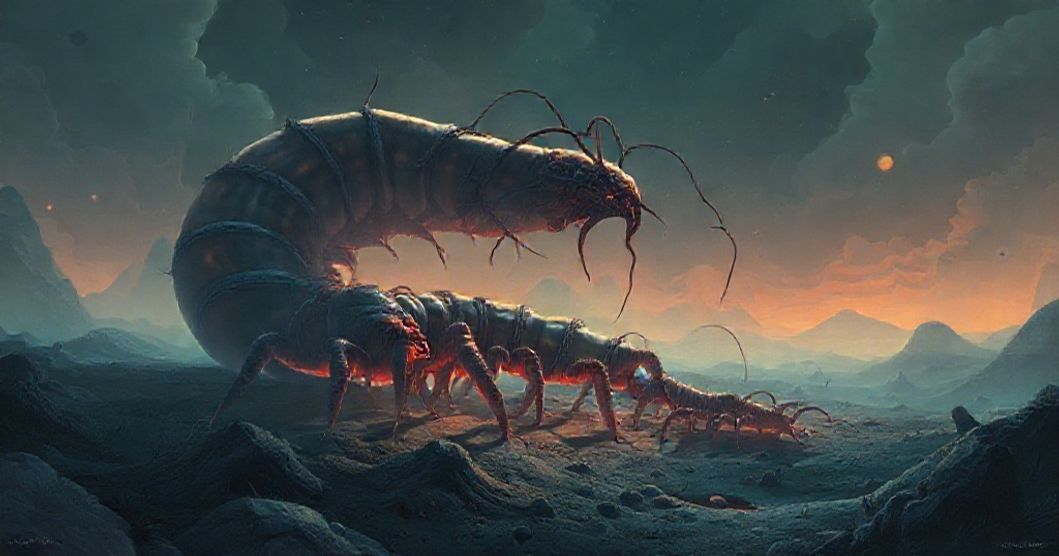
Dreams often serve as mirrors to our inner landscapes, reflecting emotions and experiences we may not fully acknowledge while awake. This particular dream unfolds in a familiar yet unsettling setting: the old house, a space that evokes comfort through its familiarity but also harbors the unexpected presence of tiny, crawling creatures. The narrative begins with a clear identification of the millipede as the source of the house centipedes, a projection that bridges the dream world and waking reality. The millipede’s size—three feet long, juicy, and glistening—amplifies its symbolic weight, representing something outsized and inescapable in the dreamer’s psyche. The visceral reaction to its descent, described as “goopy” and “dripping,” introduces a layer of disgust that transforms into determination to kill it—a primal urge to control the uncontrollable. The failed attempt to destroy the creature, ending with it hiding in a box, leaves the dreamer with an unsettling sense of unfinished business, echoing the tension between confronting and avoiding discomfort.
The dream narrative, as presented, follows a clear emotional arc: from recognition (“You’re why there’s so many house centipedes here!”) to revulsion, action (stomping), and frustration (partial success, incomplete victory). The old house functions as both a literal setting and a metaphor for the dreamer’s internal landscape—the familiar containing the unfamiliar, the known harboring the unknown. The millipede’s ability to drop from the ceiling and hide suggests an ability to evade direct confrontation, mirroring how certain fears or emotions can feel elusive in waking life.
Part 2: Clinical Analysis
Want a More Personalized Interpretation?
Get your own AI-powered dream analysis tailored specifically to your dream
🔮Try Dream Analysis FreeSymbolic Landscape: The Millipede as Archetype
The giant millipede in this dream is not merely an insect but a complex symbol rich with psychological meaning. In dreamwork, insects often represent small, persistent concerns that feel overwhelming when amplified—like the house centipedes that the dreamer acknowledges as “good to keep around” because they control other pests. The millipede’s size—three feet long—exaggerates this concern, transforming a minor irritation into a monumental threat. Its “juicy” texture and “goopy” descent add a layer of physical repulsion, symbolizing something that feels invasive, unclean, or emotionally “ick” (as the dreamer describes).
The millipede’s association with the house centipedes introduces a key symbolic connection: the dreamer’s projection that the millipede is the cause of the centipedes. This projection suggests a desire to identify and confront the source of discomfort, even if that source is not literal. In Jungian terms, this could represent the shadow archetype—the part of the self we reject or fear. The house, as a familiar space, becomes a metaphor for the dreamer’s psyche, where the “giant” millipede symbolizes an aspect of self or environment that feels out of control.
The millipede’s movement—crawling on the ceiling, dropping down, and hiding—adds spatial symbolism. Ceilings in dreams often represent aspirations, thoughts, or the “higher” self, while the act of dropping from the ceiling suggests a descent into the unconscious or a confrontation with repressed material. The millipede’s ability to hide in a box (a container for memories or unfinished tasks) reinforces the idea of unresolved issues, with the “unfinished” task of killing it symbolizing an incomplete process of emotional or psychological work.
Psychological Perspectives: Understanding the Layers of Fear
From a Freudian lens, the millipede could represent repressed fears or desires. The dreamer’s visceral reaction to the millipede—“I need to kill this thing immediately”—reflects an attempt to control an aspect of self that feels threatening. In Freud’s theory of dream symbolism, insects often symbolize sexual anxieties or contamination fears, but here the centipedes and millipedes serve a different purpose: they represent the dreamer’s relationship with discomfort. The dreamer’s waking practice of killing centipedes while generally coexisting with them suggests a pattern of confronting minor nuisances but avoiding deeper issues. The millipede’s size amplifies this pattern, turning a manageable problem into an unmanageable one.
Jungian psychology offers a complementary perspective, where the millipede may represent the “shadow” of the dreamer’s relationship with the natural world. The house, a place of comfort, becomes a microcosm of the dreamer’s internal garden, where the millipede symbolizes an aspect of the self that has been neglected or feared. In Jung’s work, the “unconscious” is not just a repository of repressed material but a source of wisdom and integration. The millipede’s presence, then, might be inviting the dreamer to integrate rather than destroy—a process that requires acknowledging and working with rather than eliminating what feels threatening.
Cognitive theory provides another framework, suggesting that dreams function as threat simulation during sleep, helping us process real-life stressors. The dreamer’s waking experience with centipedes—“I attract centipedes and millipedes”—could be a source of stress, and the dream amplifies this into a giant millipede to process the feeling of being overwhelmed. The brain’s default mode network, active during sleep, may be synthesizing these real-life experiences into a narrative that helps the dreamer understand their relationship with control and discomfort.
Emotional & Life Context: The Tension Between Control and Surrender
The dreamer’s relationship with house centipedes and millipedes is complex: they are “good to keep around” because they control other pests, yet the dreamer kills them when they feel too close. This duality mirrors the tension between acceptance and action in the dreamer’s life. The old house, a space with which the dreamer feels a deep connection, becomes a stage for this tension—familiarity and comfort coexisting with the unexpected and unsettling.
The emotional journey of the dream—from identification to disgust to determination to frustration—reflects the dreamer’s internal processing of boundaries. The “ick” factor, described as a visceral reaction, suggests a boundary violation: the millipede invades the safe space of the house, triggering a defensive response. This aligns with the dreamer’s waking pattern of killing centipedes when they cross a threshold of comfort, revealing a desire for order and control in an otherwise chaotic world. The fact that the millipede is not fully killed (only half-stomped) suggests that the dreamer’s attempts to control discomfort may be incomplete—a common theme in dreams about unfinished tasks.
The house itself, described as “not the home I’m in now” but still regarded as home, introduces themes of nostalgia and the persistence of past experiences. The house might symbolize the dreamer’s core self or identity, with the millipede representing an aspect of that identity that feels alien or threatening. The act of telling someone “You won’t believe what’s in this house” reflects a desire to externalize the internal experience, to share the burden of the “unseen” aspects of self with another person—a natural human impulse to seek validation and understanding.
Therapeutic Insights: Working with the Unseen
This dream offers several therapeutic insights for the dreamer. First, it reveals the power of projection: the dreamer identifies the millipede as the cause of centipedes, which may be a way of externalizing internal anxiety. By recognizing this projection, the dreamer can begin to look inward for the source of discomfort rather than externalizing it onto the environment or other people. The millipede, in this sense, is not the problem itself but a symbol of how the dreamer processes and manages discomfort.
The “unfinished task” of killing the millipede—stomping but only partially succeeding—suggests that the dreamer may need to embrace a different approach to problems. Instead of trying to eliminate what feels threatening, the dream invites the dreamer to sit with discomfort, explore it, and find integration. This aligns with mindfulness practices, where the goal is not to eliminate unpleasant thoughts but to observe them without judgment.
The relationship with centipedes and millipedes also offers a metaphor for self-compassion. The dreamer kills them when necessary but generally lets them be, recognizing their value in controlling pests. This balance between action and acceptance can be applied to other areas of life: knowing when to take decisive action and when to allow things to unfold naturally. The millipede’s persistence in hiding after partial destruction suggests that avoiding problems does not make them disappear, but rather delays confronting them—an insight that encourages the dreamer to address issues directly rather than pushing them aside.
FAQ Section
Q: What does a giant millipede symbolize in dreams?
A: A giant millipede in dreams often represents overwhelming forces, repressed emotions, or aspects of self that feel out of control. Its size amplifies the intensity of these feelings, while its “goopy” texture adds layers of disgust or contamination, reflecting discomfort with the unknown or unclean aspects of life.
Q: Why did the dreamer’s relationship with centipedes influence the millipede symbolism?
A: The connection between centipedes and millipedes in the dream reflects the dreamer’s waking experience with these creatures. The dreamer’s coexistence with centipedes while killing them when necessary mirrors the internal tension between acceptance and action. The millipede, as a larger, more threatening version, symbolizes the escalation of these feelings into something unmanageable.
Q: How does the “unfinished task” of killing the millipede relate to real-life psychological work?
A: The partial destruction of the millipede symbolizes incomplete emotional processing. It suggests that avoiding or incompletely addressing issues—whether in relationships, work, or self-perception—can lead to unresolved tension. The dream invites the dreamer to embrace the discomfort of unfinished business and work through it rather than leaving it to hide in the “box” of the unconscious.