
Part 1: Dream Presentation
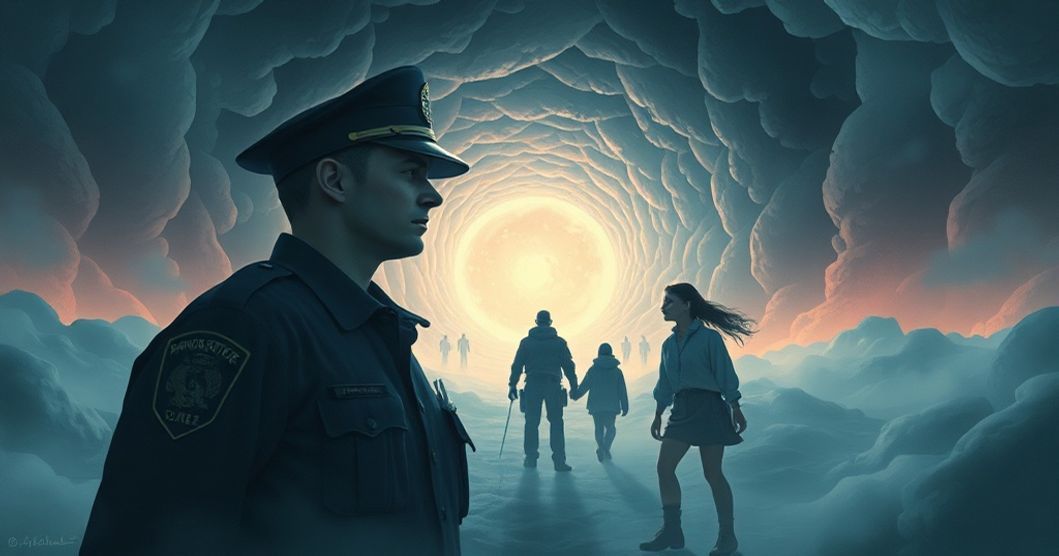
Dreams often serve as mirrors to our unconscious, reflecting tensions we may not fully articulate in waking life. In this vivid dream, the familiar contours of American society have warped into a dystopian landscape where control manifests through arbitrary rules, family bonds fray in the face of the unknown, and the search for loved ones becomes a metaphor for navigating life’s unexpected transitions. The dream begins with a mundane setting—driving home from church with family—before rapidly descending into surreal chaos, where the boundaries between reality and nightmare blur. The rewritten dream narrative, with its sensory details and emotional beats, captures the dreamer’s journey through a world of symbolic constraints and unresolved relationships.
[Insert rewritten dream narrative here]
Part 2: Clinical Analysis
Want a More Personalized Interpretation?
Get your own AI-powered dream analysis tailored specifically to your dream
🔮Try Dream Analysis FreeSymbolic Landscape: The Police State and Arbitrary Rules
The police state imagery in this dream serves as a powerful symbol of perceived loss of freedom and societal control. In dream psychology, such authoritarian imagery often reflects internal anxieties about external pressures—whether political, social, or familial—where the self feels constrained by rigid structures. The specific rule mandating a Mormon population below 4% introduces religious and cultural dimensions. This could symbolize fears of religious influence over community dynamics, or perhaps anxiety about maintaining personal values in the face of majority rule. Mormonism, with its emphasis on family and tradition, might represent the dreamer’s connection to heritage or a desire to preserve cultural identity, while the 4% cap suggests a fear of being overwhelmed by external forces that could dilute one’s sense of belonging.
The clothing rule—requiring two different outfits daily—stands in stark contrast to the religious mandate. Clothing in dreams typically symbolizes identity, self-expression, and how we present ourselves to the world. Requiring two distinct outfits could represent internal conflict about multiple aspects of self: perhaps different roles (daughter, sister, employee), or conflicting values that demand outward expression. The strict enforcement of this rule, even without specific details, highlights the dreamer’s perception of societal pressure to conform to arbitrary standards of identity. The young man’s arrest for non-compliance underscores the punitive nature of these rules, suggesting a fear of judgment for not meeting expectations.
Psychological Currents: Family, Wormholes, and Unresolved Search
The “wormhole” through which the parents disappear is a fascinating dream element. In Jungian psychology, wormholes or portals often symbolize unconscious transitions—moments of profound change or the unknown. Here, the parents’ sudden disappearance into Idaho (a state known for its rugged, independent identity) might reflect the dreamer’s perception of their parents as a source of stability, now suddenly lost or transformed. The “wormhole” could represent how family relationships evolve or shift unexpectedly, even when we least expect it. The dreamer’s determination to find them despite the chaos mirrors the subconscious drive to resolve emotional conflicts or reconnect with a sense of safety.
The inclusion of coworkers in the journey adds another layer: in waking life, coworkers often represent professional identity and social roles. Their presence alongside family suggests the dreamer’s struggle to integrate different aspects of self—personal and professional—within a world that feels increasingly hostile. The movie theater scene with Paul Rudd and David Cross introduces an unexpected normalcy within the surreal setting. Celebrities in dreams typically symbolize the desire for recognition or connection, yet their presence here feels oddly detached, as if even moments of comfort cannot escape the dream’s underlying tension. This could reflect the dreamer’s awareness that despite external appearances of normalcy, deeper anxieties persist.
Emotional Context: Identity, Compliance, and Uncertainty
The dream’s emotional core centers on family separation and the search for meaning in a controlled environment. The dreamer’s parents represent security and stability, while the police state symbolizes external pressures to conform. The inability to find parents in Idaho suggests unresolved feelings about family relationships—perhaps a desire for connection that feels blocked by societal or personal barriers. The dream’s emphasis on rule-following (and violations) may stem from waking life experiences where the dreamer feels constrained by expectations, whether from work, family, or social norms.
The Mormon population rule could also reflect cultural anxieties about diversity or homogeneity. The dreamer may be grappling with questions of identity in a world that feels increasingly divided, where certain groups are pressured to conform or be marginalized. The clothing rule, meanwhile, speaks to the struggle between expressing one’s true self and adhering to societal expectations. This tension between authenticity and compliance is a universal human experience, often amplified during periods of personal transition or uncertainty.
Therapeutic Insights: Navigating Control and Finding Connection
This dream offers several avenues for self-reflection. First, it invites the dreamer to examine areas of their life where they feel constrained by external rules or expectations. Journaling about specific rules in waking life—whether at work, in relationships, or within family dynamics—could reveal patterns of compliance that may no longer serve them. The dream’s emphasis on the wormhole and lost parents suggests the need to reconnect with one’s sense of safety and stability, perhaps by exploring family relationships or core values.
Second, the dream’s focus on arbitrary rules and punishment can be interpreted as a call to question societal norms that feel oppressive. The dreamer might benefit from distinguishing between necessary boundaries and those that restrict freedom. Practices like mindfulness meditation could help discern when external pressures are genuine needs versus arbitrary constraints.
Third, the movie theater scene with celebrities highlights the allure of escape. While temporary relief is natural, the dream suggests that true resolution requires facing rather than avoiding the underlying issues. The dreamer could explore creative outlets or social connections that feel authentic, rather than performative.
FAQ Section
Q: What does the police state symbolize in dreams?
A: A police state in dreams often represents internal feelings of being controlled, restricted, or overwhelmed by external pressures, reflecting anxieties about freedom, authority, or societal expectations.
Q: Why would a dream include a Mormon population rule?
A: This could symbolize fears of religious or cultural influence, concerns about community boundaries, or personal struggles with maintaining identity in a changing world, depending on the dreamer’s waking experiences.
Q: What does the “wormhole” represent in dreams?
A: A wormhole typically symbolizes transitions, the unknown, or unconscious shifts—often reflecting the dreamer’s need to navigate change or reconnect with lost aspects of self or relationships.