
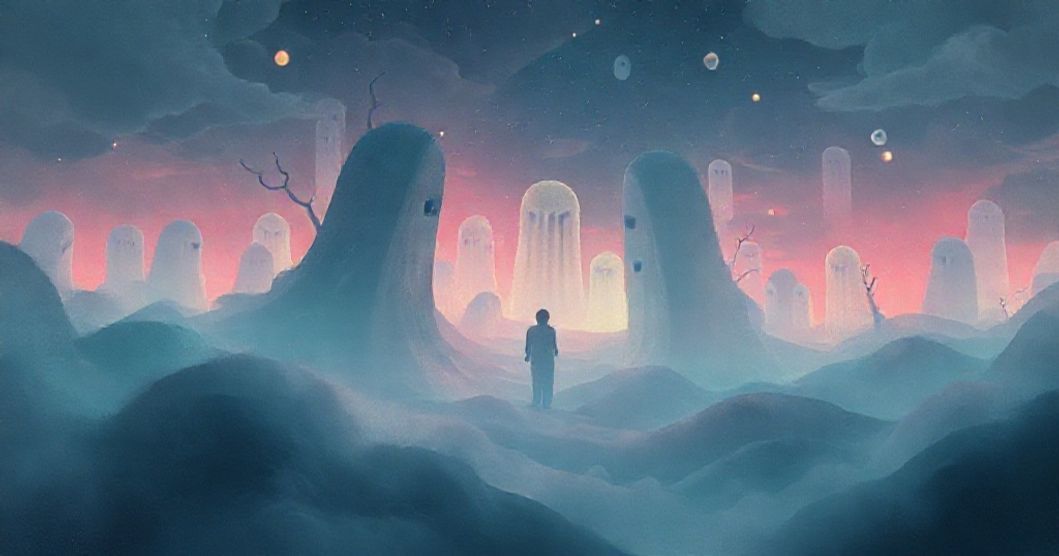
Part 1: Dream Presentation
Dreams often present us with paradoxes that mirror the complexity of waking life—moments where we feel both intimate and alienated, connected yet adrift. In this dream, the dreamer navigates a landscape of familiar strangers and known unknowns, a psychological terrain where the unconscious seems to whisper memories it has yet to share with consciousness. The narrative unfolds through three distinct emotional phases: the initial comfort of recognition, the disorienting realization of unknowing, and the profound sense of loss that lingers like an open wound.
The dream begins with the dreamer surrounded by people who feel viscerally familiar, yet whose identities remain elusive—a powerful metaphor for relationships or aspects of self that exist in our lives but evade conscious awareness. The setting similarly evokes déjà vu, with locations that trigger memory without providing context, creating a liminal space where past and present overlap. This liminality is crucial: the dreamer moves through a world that should be recognizable, yet cannot be fully named or claimed, culminating in a sense of loss that suggests the unconscious is attempting to communicate something vital about what has been forgotten.
Part 2: Clinical Analysis
Want a More Personalized Interpretation?
Get your own AI-powered dream analysis tailored specifically to your dream
🔮Try Dream Analysis FreeSymbolic Landscape of Familiarity and Loss
The dream’s core symbols—the familiar yet unidentifiable people, the recognizable yet unplaceable locations, and the emotional residue of loss—speak to a fundamental human experience: the tension between conscious memory and the deeper, often forgotten wisdom of the unconscious. In Jungian psychology, these unidentified familiar figures can represent archetypal aspects of the self or relationships with others that exist in the collective unconscious, even when our personal memories do not. The dream’s locations, similarly, may symbolize psychological spaces we’ve inhabited but neglected to explore, such as repressed emotions or unfulfilled relationships.
The