
Part 1: Dream Presentation
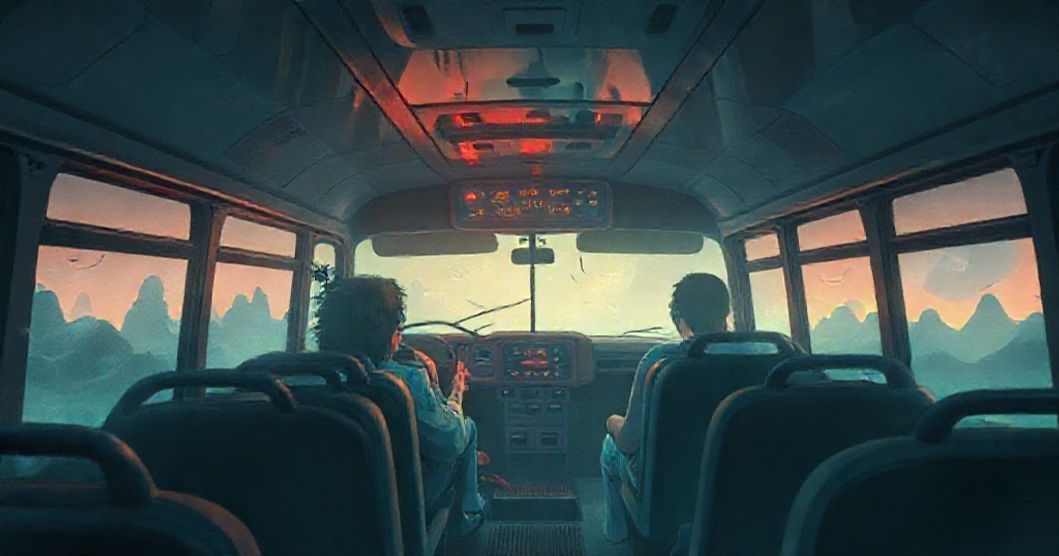
Dreams often serve as the unconscious mind’s cryptic messenger, delivering fragmented truths through symbolic landscapes that can feel both deeply personal and universally recognizable. This particular nightmare unfolds as a visceral exploration of emotional turbulence, where the safety of familiarity collides with unsettling distortions. The dream begins in a mundane setting—a nap, a moment of rest—before dissolving into a waking nightmare, the dreamer already embedded within the narrative rather than observing it. The scene shifts to a hometown streetscape, a place of comfort and memory, yet rendered alien by the dream’s logic. The bus, a symbol of transition and shared journey, becomes the central stage for psychological conflict.
The dreamer chases the bus, a primal urge to catch up to something essential or avoid something feared, only to find safety in its presence. The boyfriend, driving and smiling, represents emotional security—a familiar source of comfort and connection. Yet this safety is quickly disrupted by the grotesque figures filling the bus behind them. Their distorted faces and contorted bodies, reminiscent of the Smiling Friends episode’s surreal horror, embody the uncanny valley effect: figures that should be human yet feel profoundly inhuman, their movements violating physical laws. This distortion signals psychological unease, where the dreamer’s sense of reality frays at the edges.
The dizziness that overtakes the dreamer upon noticing the commotion is not merely physical; it’s a metaphor for the disorientation that accompanies confronting repressed emotions. The boyfriend’s transformation from driver to backseat passenger—his blank stare and detachment—suggests a shift in relationship dynamics or emotional availability, where the once-familiar becomes unrecognizable. The driver, initially a threat, then normalizes as she applies lipstick, a mundane act that contrasts sharply with her earlier distortion, symbolizing how external appearances can mask deeper turmoil. The bus’s eventual emptiness, the final loss of the boyfriend, and the transition to a new, less overtly terrifying yet still disorienting scene, mirror the dreamer’s struggle to process overwhelming emotions without resolution.
Want a More Personalized Interpretation?
Get your own AI-powered dream analysis tailored specifically to your dream
🔮Try Dream Analysis FreePart 2: Clinical Analysis
Symbolic Landscape: Unpacking the Dream’s Visual Language
The bus itself emerges as a central symbol of transition and containment—a vessel for both safety and threat. In dreamwork, buses often represent life’s journey, with passengers symbolizing relationships, responsibilities, or aspects of the self. Here, the bus transforms from a vehicle of connection (boyfriend driving) to one of psychological unease (filled with distorted figures), suggesting a fear that the dreamer’s life journey has become corrupted or that relationships have lost their true nature. The distorted faces and bodies, with their contorted features and impossible movements, embody the uncanny valley—a phenomenon where something familiar feels deeply unfamiliar, triggering primal fear. This visual distortion likely reflects the dreamer’s internal conflict between safety and danger, where loved ones or familiar environments have become sources of anxiety.
The boyfriend’s dual role—first as the comforting driver, then as a detached observer—represents the tension between emotional security and vulnerability. His transformation mirrors how relationships can shift unexpectedly, leaving the dreamer feeling adrift. The driver’s shifting reality (normal then distorted then normal again) symbolizes the unpredictability of authority figures or external control, where stability and chaos alternate in ways that feel arbitrary and threatening. The dizziness experienced in the dream is not merely a physical sensation; it’s a manifestation of the dreamer’s inability to maintain equilibrium in the face of emotional upheaval, a common theme in nightmares about loss of control.
Psychological Perspectives: Multiple Lenses on Unconscious Conflict
From a Jungian perspective, the bus could represent the collective unconscious as a journey, with the distorted figures embodying the shadow—repressed aspects of the self that have become fragmented or distorted. The dreamer’s inability to recognize the boyfriend or engage with the driver suggests a disconnection from core aspects of identity or relationships. Jung might interpret this as a call to integrate these shadow elements rather than repressing them, as they continue to intrude in dreams.
Freudian analysis would likely focus on unconscious conflicts manifesting as threats. The bus, a public space, could symbolize social judgment or the pressure to conform, while the distorted figures represent repressed fears of rejection or loss of identity. The boyfriend’s detachment might reflect unresolved issues in the relationship, such as unmet emotional needs or fears of abandonment.
Cognitive neuroscience offers another framework: dreams as threat simulation, where the brain rehearses responses to potential dangers. The recurring nightmare could be the mind’s attempt to process anxiety or trauma by replaying it in controlled environments. The dizziness and disorientation align with the brain’s simulation of physiological threat responses, activating the amygdala’s fear circuitry while the prefrontal cortex attempts to make sense of the chaos.
Emotional & Life Context: Unraveling the Dream’s Personal Threads
This dream likely reflects the dreamer’s current emotional state—perhaps feeling adrift in life, struggling with transitions, or navigating relationship challenges. The hometown setting suggests a connection to familiar environments that now feel threatening, indicating a possible crisis of identity or purpose. The boyfriend’s role as both driver (leader, protector) and backseat passenger (detached observer) hints at relationship anxieties: maybe fears of losing autonomy, feeling unseen, or uncertainty about the future of the relationship.
The recurring nature of the nightmare—especially the continuation of the dream upon re-sleep—suggests these issues are unresolved and persistently intruding. The dreamer’s fear of returning to sleep indicates that the unconscious is actively working through these issues, even if the waking mind resists. The Smiling Friends reference, while initially seeming trivial, reveals how pop culture imagery can seep into dreams, reflecting societal anxieties about digital distortion, performative happiness, or the uncanny valley of modern life.
Therapeutic Insights: Integrating the Dream’s Message
For someone experiencing recurring nightmares, journaling about the dream’s details and emotions can help externalize the conflict. Keeping a dream log noting patterns in recurring elements (like the bus, distorted figures, or dizziness) can reveal underlying themes. Grounding exercises before sleep—such as deep breathing or visualization of safe spaces—might interrupt the nightmare cycle by signaling to the brain that it’s time to rest rather than confront threats.
Therapeutic work should explore the dreamer’s relationship with control: Do they feel powerless in waking life? Are there aspects of relationships or responsibilities that feel like “buses” they’re chasing but can’t catch? The boyfriend’s transformation invites reflection on how emotional availability shifts in the dreamer’s relationships—are there moments of disconnection that need acknowledgment?
FAQ Section
Q: Why did the dreamer feel so disoriented on the bus?
A: Dizziness in dreams often symbolizes loss of control or emotional overwhelm. It may reflect waking anxiety about navigating life transitions or relationships, where the dreamer feels adrift in unfamiliar emotional territory.
Q: What does the distorted bus driver represent?
A: The shifting driver embodies unpredictability and the fear of authority figures or external control. Her changing appearance mirrors the dreamer’s internal uncertainty about stability in relationships or life circumstances.
Q: How can the dreamer stop these recurring nightmares?
A: Establishing a calming pre-sleep routine, journaling to process emotions, and discussing relationship or life anxieties with a therapist can help. The dream’s recurring nature suggests unresolved issues; addressing these directly may reduce its power to intrude into sleep.