
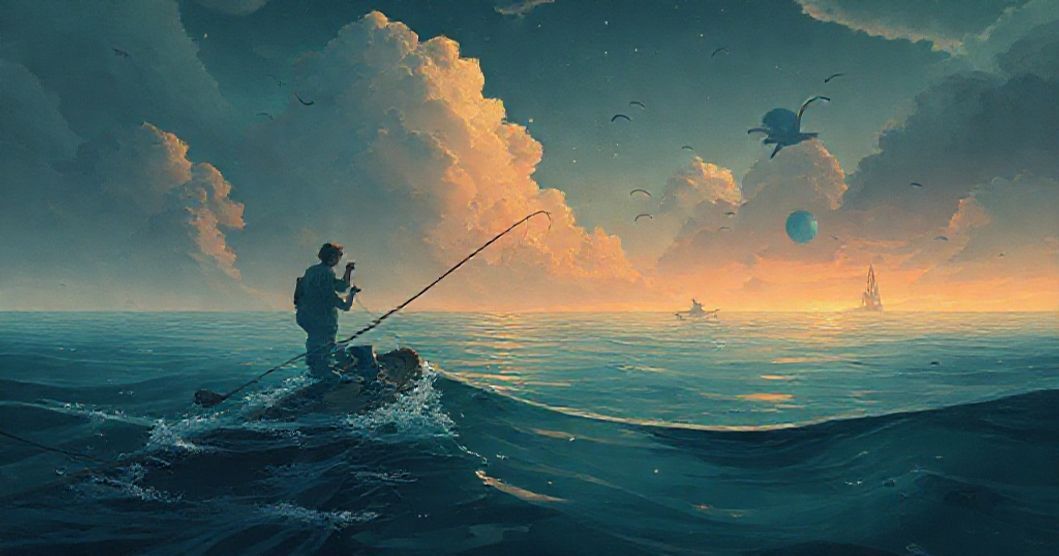
Part 1: Dream Presentation
Dreams often serve as mirrors to our inner lives, reflecting the tensions we carry in waking hours. In this narrative, the dreamer navigates a surreal landscape where fishing, work instruction, and unexpected conflict collide, creating a rich psychological tableau. The dream begins with dual activities—fishing and teaching—a metaphor for balancing professional responsibilities with personal pursuits. As the dream unfolds, a white jeep’s intrusion disrupts this equilibrium, triggering a chase that reveals deeper themes of control, accountability, and unmet expectations.
I found myself in a small boat on a creek, engaged in what seemed like dual activities—fishing and instructing an apprentice on pipe work. As we hung light racks above the water, I corrected my trainee’s technique, explaining how to properly execute a pipe run, my hands moving through precise motions as if guiding an invisible wire. With four fishing poles secured alongside, I demonstrated how to anchor them in the light racks, ensuring they wouldn’t drift. When we reached our campsite, the scene shifted to a rustic clearing where campfires crackled and activities unfolded normally. I roasted a hot dog over an open flame, the scent of charred meat mingling with pine smoke, while one pole remained cast into the water, its line taut in a rod holder. Suddenly, a white jeep appeared, careening down the bank and snatching my fishing line. The vehicle dragged my pole behind it, its tires kicking up dust as it fled. I sprinted after it, realizing too late how densely populated the campsite had become—others milling about, oblivious to my pursuit. How foolish to leave my line so exposed, I thought, frustration mounting. When I finally cornered the jeep, its driver nonchalantly claimed they’d ‘hardly heard a thing.’ Anger flared as I called them ‘dumb asses,’ cutting the line and demanding they clean up the mess. Their defiance was palpable—they smirked, offering only a meaningless area code (300s) and letters associated with a local news station, as if mocking my concern. In my frustration, I nearly abandoned my pole—a classic ADHD moment, where focus slips unexpectedly. But I turned just in time to see them deliberately run over my equipment, laughter echoing from their open windows. I retrieved the bent pole, calling them ‘punks,’ and trudged back to camp. Along the way, a tiny bait shack materialized—a cramped space where the fridge barely opened, leaving no room to maneuver. Inside, I spotted shad and cheese in a cooler, then impulsively grabbed a cosmic brownie, slipping it into my pocket. When the owner asked for exact change for a Hershey bar and a Christmas tree cake, I had none. ‘I’ll bring it back tomorrow,’ I lied, pocketing the treats without intention of returning. As I walked away, the creek spread before me like a silver ribbon, and then I woke, heart still racing from the unresolved tension of the chase and the unkept promise to pay.
Part 2: Clinical Analysis
Want a More Personalized Interpretation?
Get your own AI-powered dream analysis tailored specifically to your dream
🔮Try Dream Analysis FreeSymbolic Landscape: The Language of Dream Elements
The dream’s central symbols form a cohesive system reflecting the dreamer’s internal landscape. The fishing activity embodies themes of focus and control—the line represents personal boundaries and the delicate balance between engagement and vulnerability. The light racks, though initially associated with the boat, likely symbolize the dreamer’s professional identity (echoing the title’s mention of ‘electrician work’), as pipe runs and electrical installations require precision and structure. The white jeep, a stark intrusion into the natural setting, represents external forces that disrupt personal space and boundaries. Its deliberate theft of the fishing line mirrors how the dreamer may perceive others as violating their priorities or work ethic.
The ADHD moment—where focus temporarily lapses—reveals the dreamer’s struggle with executive function and follow-through. The bait shack, a confined space with limited maneuverability, symbolizes emotional constraints or opportunities that feel restrictive. The cosmic brownie and forbidden treats (Hershey’s, Christmas tree cake) represent indulgence and impulse control, while the unreturned payment underscores the tension between immediate gratification and responsibility.
Psychological Undercurrents: Jungian and Freudian Perspectives
From a Jungian lens, this dream contains several archetypal elements: the trickster (the jeep drivers, embodying disruption and defiance), the shadow (the dreamer’s anger and frustration), and the wise mentor (the apprentice, representing professional guidance). The dual activities of teaching pipe work and fishing suggest the dreamer’s internal dialogue between structured work and recreational release—a tension Jung might call the ‘integration of opposites.’ The unresolved chase and unreturned payment reflect the shadow’s persistence, as these elements remain unfinished business in the dream narrative.
Freud would likely interpret the dream through the lens of repressed anger and unmet needs. The jeep’s intrusion could symbolize repressed rage toward authority figures or work pressures, while the fishing line—once secure, then violated—represents the dreamer’s need for control over their professional and personal domains. The ADHD moment aligns with the ‘ego’s struggle with impulse,’ where the dreamer’s inner self battles between immediate action and delayed consequences.
Neurologically, the dream’s rapid shifts between activities (fishing to teaching to conflict to camp life) mirror the brain’s default mode network during REM sleep, where disparate thoughts and memories connect unexpectedly, reflecting waking concerns about time management and multitasking.
Emotional & Life Context: Unpacking the Dreamer’s Internal Landscape
The dream’s narrative likely reflects the dreamer’s waking tensions between professional responsibilities and personal time. The pipe work instruction hints at a need to ‘teach’ or ‘correct’—perhaps frustration with work processes or the desire to impart expertise. The camp setting, a space of relaxation, becomes invaded by the jeep, suggesting that boundaries between work and play are being violated. The dreamer’s difficulty with exact change and the unkept promise to return money may reflect real-life anxiety about financial responsibility or social obligations.
The ADHD moment—where focus slips—could represent the dreamer’s struggle with attention in daily life, particularly in contexts requiring sustained effort. The bait shack’s cramped quarters might symbolize feeling boxed in by limited opportunities or resources, while the cosmic brownie (a treat often associated with childhood or indulgence) suggests a longing for simpler pleasures amidst adult pressures.
Therapeutic Insights: From Dream to Self-Awareness
This dream offers several opportunities for self-reflection. The unresolved chase and unreturned payment highlight the need to address unfinished business—whether in relationships, work projects, or personal commitments. The dreamer might benefit from implementing a ‘boundary check’ practice: before engaging in activities that could be intruded upon, ask, ‘Is this space truly mine to protect?’ and set clear limits.
For the ADHD-related moments, mindfulness exercises could help bridge the gap between impulse and follow-through. Journaling the dream’s sequence and noting when focus lapses during waking hours might reveal patterns. The bait shack, with its limited space, suggests creating intentional ‘breathing room’ in daily routines—scheduling short breaks or creating physical boundaries to prevent feeling overwhelmed.
Finally, the cosmic brownie and unreturned payment invite reflection on the trade-offs between immediate gratification and long-term integrity. The dreamer might explore whether their impulsivity stems from fear of missing out or a genuine inability to delay gratification, and develop strategies to honor commitments while still allowing for occasional indulgence.
FAQ Section: Addressing Key Questions
Q: What does the white jeep symbolize in this dream?
A: The white jeep represents external forces or people who disrupt the dreamer’s sense of control, likely reflecting real-life intrusions into personal or professional boundaries.
Q: Why was the dreamer teaching an apprentice while fishing?
A: This dual activity symbolizes the dreamer’s internal dialogue between structured work (pipe runs) and recreational pursuits, revealing tension between professional identity and personal time.
Q: How does the ADHD moment reflect the dreamer’s psychological state?
A: The ADHD moment highlights challenges with focus and follow-through, suggesting real-life struggles with executive function and the balance between immediate action and delayed consequences.