
Part 1: Dream Presentation
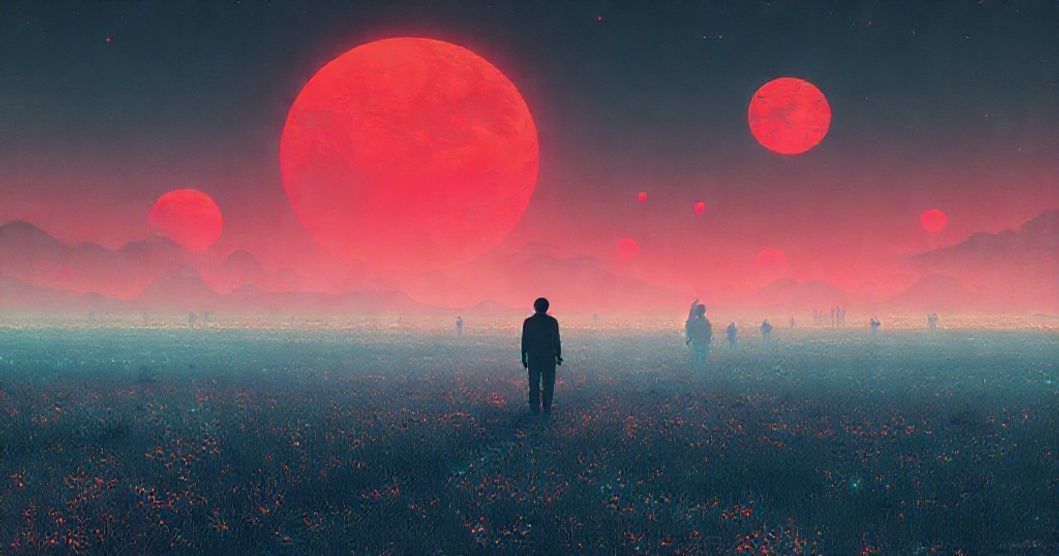
Dreams often serve as portals to the unconscious, revealing landscapes we rarely traverse while awake. This dreamer’s nocturnal journey through shifting celestial imagery and liminal spaces offers a rich tapestry of symbols that invite exploration. As the dream unfolds, we encounter a sky ablaze with red-orange moons, their phases blending seamlessly into one another like a celestial ballet. In the distance, a storm brews in the same eerie crimson hue, creating a cohesive visual theme that defies rational explanation. Rather than evoking fear, the scene stirs a curious acceptance—a feeling of normalcy in the face of the surreal. This is followed by a field where fluorescent lights emerge from the earth, a stark contrast to the natural world, and a recurring man whose presence shifts across dream stages. The dreamer also shares their ongoing experiences with sleep paralysis (described as 'torture') and lucid dreaming, elements that deepen the psychological complexity of this nocturnal narrative.
Part 2: Clinical Analysis
Symbolic Landscape: The Language of Color and Form
Want a More Personalized Interpretation?
Get your own AI-powered dream analysis tailored specifically to your dream
🔮Try Dream Analysis FreeThe red-orange moons represent cyclical energy and emotional intensity, their shifting phases suggesting themes of transition, integration, or unresolved patterns. In dreams, color symbolism often reflects emotional states—red here might signify passion, anxiety, or transformation, while orange evokes warmth, creativity, or spiritual awakening. The storm in the same hue introduces tension or emotional turbulence, yet the dreamer’s 'normal' reaction hints at psychological resilience or an attempt to process these emotions without fear. The fluorescent field symbolizes artificial illumination in the unconscious, perhaps representing external pressures, awareness, or the 'light' we bring to our shadow selves. Its unnatural growth from the earth suggests something out of place, a disruption of natural order that may mirror waking life’s sense of dissonance.
The recurring man embodies the shadow archetype—a Jungian concept representing the parts of ourselves we repress or project onto others. His shifting forms across dream stages indicate a dynamic relationship with this aspect of the self, perhaps a journey toward integration or recognition of hidden qualities. The 'liminal' quality of the scenes—neither fully dream nor reality, neither waking nor sleeping—reflects the threshold between consciousness and the unconscious, a space of uncertainty and potential transformation.
Psychological Perspectives: Understanding the Dreamer’s Inner World
From a Jungian lens, the red-orange moons could represent the lunar archetype, symbolizing intuition, emotional depth, and the feminine principle. The dreamer’s ability to 'see' these phases suggests a heightened awareness of internal cycles, possibly related to emotional processing or life transitions. The recurring man aligns with the anima/animus archetype—a universal masculine/feminine counterpart within the collective unconscious—indicating a search for wholeness or integration of conflicting aspects of self.
Freudian theory might interpret the surreal imagery as a manifestation of repressed desires or anxieties. The 'normalcy' despite the eerie red-orange world could represent the ego’s attempt to rationalize unconscious material, while the storm might symbolize repressed aggression or turmoil. The sleep paralysis and lucid dreaming add layers: sleep paralysis often occurs during REM sleep, a period of emotional processing, suggesting the dreamer’s mind is actively working through unresolved emotions. Lucid dreaming, a state of self-awareness within dreams, indicates a strong ego function, capable of navigating the unconscious with intention—a sign of psychological resilience.
Emotional & Life Context: Unpacking the Dreamer’s Experience
The dreamer’s note that sleep paralysis is 'torture at times' suggests a period of emotional overwhelm or chronic stress, where the mind and body feel disconnected. This dissonance aligns with the liminal quality of the dream scenes—spaces of transition often arise during periods of uncertainty in waking life. The recurring man could symbolize a figure from the dreamer’s past or a part of themselves they’re struggling to recognize, while the fluorescent field might represent an attempt to 'illuminate' or make sense of something unclear. The dreamer’s statement that they 'remember a lot of dreams' and have 'super weird but kind of cool' experiences suggests a deep engagement with their inner world, possibly as a way to process external stressors or seek meaning.
Therapeutic Insights: Practical Reflections and Integration
For the dreamer, exploring the emotional undercurrents of the red-orange color could reveal themes of passion vs. anxiety. Journaling about the color’s emotional resonance might clarify which aspects of life feel intense or overwhelming. The recurring man invites self-reflection: Who is this figure, and what qualities does he represent? Journaling exercises to identify traits associated with him could foster self-awareness.
To manage sleep paralysis, grounding techniques like focusing on breath or sensory anchors (feeling the texture of a blanket) during episodes might reduce the 'torture' aspect. Lucid dreaming, while sometimes 'cool,' can also feel disorienting. Guided visualization or reality-checking exercises during waking hours can help the dreamer distinguish between dream and reality, enhancing control.
FAQ Section
Q: Why do my dreams feel so liminal and surreal?
A: Liminal dreams often occur during periods of transition, reflecting uncertainty or inner exploration. Your brain processes change by creating boundary-defying imagery, helping you integrate new experiences.
Q: How can I understand the recurring man in my dreams?
A: The recurring figure likely represents a shadow aspect or unresolved issue. Reflect on traits associated with him and journal how they might connect to waking life challenges.
Q: Is there a way to turn sleep paralysis into a more manageable experience?
A: Yes—practice grounding techniques (e.g., focusing on five senses) and relaxation before bed. Lucid dreaming skills can also help you 'wake up' from paralysis by recognizing the dream state.