
Part 1: Dream Presentation
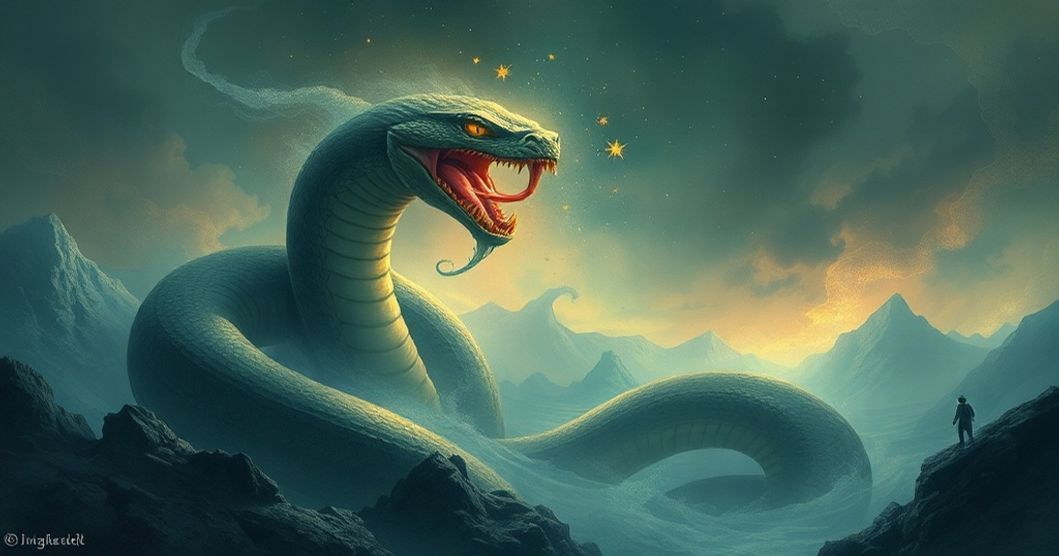
Dreams often serve as mirrors to our inner lives, reflecting unconscious currents beneath the surface of waking awareness. In this nocturnal journey, the dreamer traverses a liminal landscape—a forest in late autumn, its trees ablaze with the final hues of seasonal change—toward a river whose waters hold ancient secrets. Accompanied by two indistinct companions, the dreamer encounters a creature of primal mystery: a serpentine form as thick as a tree trunk, its endless body disappearing into the river’s depths. This moment of recognition triggers a shift: a smaller water snake emerges, slipping into the current, while the larger serpent recedes from view. The dreamer’s instinct to retreat contrasts with the friends’ apparent peace, culminating in a final image of the serpent’s shed skin—a symbol of transformation and adaptation. Through these elements, the dream navigates themes of fear, mystery, and the integration of hidden aspects of self.
The rewritten dream narrative: I found myself in a forested landscape during late autumn, the air crisp with the scent of fallen leaves and damp earth. Two friends accompanied me, though their faces remained indistinct—strangers yet somehow familiar in the dream’s liminal space. We approached a river whose surface rippled with an otherworldly stillness, its waters reflecting the muted golds and oranges of the surrounding trees. As I neared the water’s edge, I gazed into its depths and was confronted by a creature unlike anything I’d ever seen: a serpentine form as thick as a tree trunk, its sinuous body disappearing into both directions, endless and enigmatic. My breath caught as I recognized its serpentine nature, and in that moment of recognition, a smaller, more delicate water snake emerged from a rock where my companions seemed to rest, gliding into the river’s current. The ripples it left behind obscured its path, yet when the disturbance subsided, the massive serpent had subtly slipped from view, as if retreating into the river’s embrace. I felt an instinctive urge to withdraw, a primal fear of the unknown stirring within me, yet my friends appeared perfectly at ease, their composure unshaken by the spectacle. As I turned back toward them, I noticed a fragment of the serpent’s shed skin glinting nearby—a reminder of transformation and the shedding of old selves—and I smiled to myself, realizing the larger creature must now be more comfortable in its domain, having shed its outer layer of protection.
Part 2: Clinical Analysis
Want a More Personalized Interpretation?
Get your own AI-powered dream analysis tailored specifically to your dream
🔮Try Dream Analysis FreeThe Symbolic Landscape: Unpacking the Dream’s Key Elements
The river in this dream serves as a powerful symbol of the unconscious mind—a fluid, ever-changing realm where hidden truths flow beneath the surface. Its late autumn setting introduces themes of transition and endings, as the forest’s vibrant colors suggest both decay and renewal. The serpent, a creature of ancient myth, embodies multiple symbolic layers: in Jungian psychology, serpents often represent the shadow archetype—the repressed, untamed aspects of self that we may fear or avoid. The serpent’s massive size, as thick as a tree trunk, suggests the dreamer’s encounter with a significant, possibly overwhelming part of themselves or life situation. Its endless, formless body (neither beginning nor end) hints at the cyclical nature of unconscious processes, where problems or emotions may feel boundless until we find clarity.
The smaller water snake, emerging from the rock where the friends rest, introduces contrast: while the serpent represents the overwhelming, the snake embodies agility, adaptability, and the ability to navigate confined spaces. Its movement into the river mirrors the serpent’s retreat, suggesting a pattern of transformation or adaptation. The “river stix” reference in the title (likely a typo or misremembered detail) may hint at a deeper personal meaning or a misperception of the river’s nature, adding a layer of individual significance to the water element.
Psychological Perspectives: Jungian, Freudian, and Modern Frameworks
From a Jungian perspective, the serpent and river form a mandala-like structure, where the dreamer is drawn into a process of individuation—the journey toward self-integration. The two friends, indistinct yet present, may represent the dreamer’s need for connection with different aspects of self or relationships with others who embody complementary energies. Their calm demeanor in the face of the serpent contrasts with the dreamer’s fear, suggesting the possibility of accepting uncertainty rather than fleeing from it.
Freudian analysis might interpret the serpent as a manifestation of repressed sexual energy or primal fears, while the snake’s smaller form could represent a more manageable aspect of these instincts. However, the dream’s emphasis on the serpent’s retreat rather than confrontation suggests a more nuanced relationship with these forces—perhaps a recognition that some aspects of self require gentle integration rather than suppression.
Modern dream psychology, rooted in cognitive neuroscience, views dreams as the brain’s attempt to process emotional information and consolidate memories. The serpent’s appearance during late autumn aligns with seasonal affective changes, where the unconscious may amplify themes of change, loss, or new beginnings. The dream’s emotional arc—from fear to acceptance—reflects the brain’s natural tendency to process unresolved emotions through symbolic imagery.
Emotional & Life Context: Unconscious Currents in Waking Life
The dream likely reflects the dreamer’s relationship with uncertainty, possibly in a period of transition or change. The late autumn setting suggests endings or seasonal shifts, while the forest (a place of both mystery and protection) may represent a space where the dreamer is exploring new territory. The friends’ indistinct nature hints at relationships that feel both familiar and distant—perhaps colleagues, family members, or aspects of self that have become overlooked.
The serpent’s shedding of skin introduces themes of transformation and letting go. In waking life, this might correspond to a period of personal growth where old habits or self-perceptions are being shed, even if the process feels uncomfortable. The dreamer’s smile at the end, recognizing the serpent’s comfort, suggests an emerging acceptance of these changes, even if the underlying fear remains.
Therapeutic Insights: Navigating the Unconscious Journey
This dream invites the dreamer to explore the tension between fear and curiosity in their relationship with the unknown. The serpent, though initially terrifying, reveals itself through gradual, subtle movements—a reminder that confronting fears often involves patience and observation rather than immediate action. The friends’ calm presence suggests the possibility of finding stability in uncertainty, even when parts of life feel overwhelming.
Reflective exercises might include journaling about recent changes or fears, mapping the “serpentine” aspects of current life situations, and practicing mindfulness to observe rather than react to overwhelming emotions. Short-term integration could involve creating a “dream altar” with river stones or serpent imagery to anchor the dream’s themes in daily life. Long-term work might focus on exploring the shadow self through journaling, therapy, or creative expression, recognizing that the serpentine aspects of self—though initially fearsome—offer wisdom and transformation.
FAQ Section
Q: What does the serpent symbolize in this dream?
A: The serpent represents the shadow archetype—the repressed, powerful aspects of self that may feel overwhelming. Its endless form suggests cyclical, unconscious processes, while its retreat hints at the possibility of integrating these forces rather than fearing them.
Q: Why did the friends remain calm?
A: The friends’ indistinct nature and calm demeanor may symbolize the dreamer’s ability to access stability in uncertainty, or relationships that embody acceptance rather than fear. They represent the dreamer’s capacity for trust in life’s mysteries.
Q: How does the serpent’s shed skin affect the interpretation?
A: The shed skin symbolizes transformation and letting go—an invitation to release old patterns, embrace change, and recognize that growth often requires shedding what no longer serves us, even if it feels uncomfortable.