
Part 1: Dream Presentation
Dreams often serve as mirrors to our subconscious, reflecting not just our waking thoughts but the deeper currents of our emotional and spiritual lives. This particular dream, though unsettling in its details, offers a fascinating window into the dreamer’s inner landscape, especially given their strong Christian faith.
In the dream, the dreamer finds themselves in a trailer kitchen alongside a friend and her family—her mother, sister, and herself. The setting, a trailer, suggests a familiar, intimate space, while the kitchen embodies domesticity and community. The three women represent a trio of spiritual attempts: the mother’s prayer, the sister’s ritual, and the friend’s use of sacred objects, all ultimately failing to banish the demon.
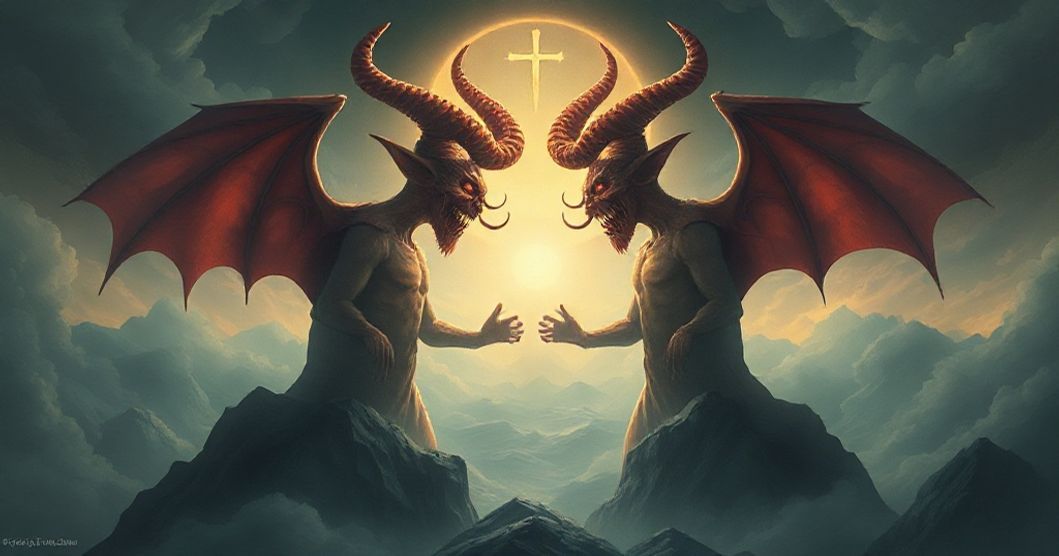
When the dreamer takes up the Bible and casts out the demon in Jesus’ name, a transformation occurs. The demon itself—described as a two-headed beast with the features of a mutating dog and horns—symbolizes a complex spiritual adversary. Its red, hungry appearance and mutating form suggest a multifaceted threat, while the two heads may represent conflicting spiritual forces or internal struggles. The dreamer’s declaration, “In the name of Jesus Christ,” serves as a pivotal moment of empowerment, breaking the cycle of failure and invoking divine authority. The sudden shift from calm to terror as the demon lunges, followed by the scream and cat-scaring aftermath, underscores the emotional intensity of this spiritual encounter.
Want a More Personalized Interpretation?
Get your own AI-powered dream analysis tailored specifically to your dream
🔮Try Dream Analysis FreePart 2: Clinical Analysis
Symbolic Landscape: The Demon, Bible, and Sacred Space
The trailer kitchen functions as a liminal space—a threshold between the ordinary and the extraordinary. This domestic setting contrasts sharply with the demonic intrusion, creating tension between the familiar and the feared. The kitchen, a place of sustenance and community, becomes a battlefield of spiritual forces, reflecting how the dreamer’s faith intersects with everyday life.
The two-headed demon is a powerful symbol of spiritual duality. In religious iconography, multi-headed creatures often represent conflicting forces or demonic manifestations of internal conflict. Here, the “mutating dog” form may reflect the dreamer’s perception of spiritual threats as evolving or multifaceted—perhaps representing anxieties about moral decay, spiritual doubt, or external pressures. The red coloration and hunger suggest a predatory, consuming force, while the horns signify spiritual rebellion against divine authority.
The Bible, a central element, embodies the dreamer’s source of spiritual power. Its worn pages and the act of holding it in the dream reflect the dreamer’s deep connection to religious texts as a tool of protection and empowerment. The specific invocation of “Jesus Christ” is not merely symbolic but represents a direct appeal to divine authority—a powerful affirmation of faith in the face of fear.
Psychological Currents: Faith, Fear, and Spiritual Identity
From a psychological perspective, this dream can be interpreted through multiple lenses. For a Christian dreamer, the encounter with demonic imagery often reflects internal spiritual struggles rather than literal supernatural threats. The mother, sister, and friend’s failure to banish the demon may symbolize the dreamer’s perception of past spiritual efforts as insufficient—a common theme in faith-based psychological work, where believers sometimes question their own spiritual efficacy.
Jungian psychology might frame the demon as a shadow archetype—an aspect of the self that feels threatening or unintegrated. The dreamer’s calm demeanor before invoking Jesus’ name suggests a recognition of this shadow, followed by an attempt to assert conscious control through faith. The scream upon waking, “In the name of Jesus Christ,” could represent a reaffirmation of spiritual identity in the face of unconscious fear.
Freudian analysis might explore repressed anxieties about spiritual judgment or guilt. The dream’s emphasis on “casting out” could reflect a desire to expunge moral or spiritual impurities, while the two-headed beast might symbolize conflicting aspects of the dreamer’s psyche—perhaps a struggle between faith and doubt, or between perceived weakness and spiritual strength.
Emotional & Life Context: Spiritual Warfare and Personal Challenges
The dream likely arises from the dreamer’s ongoing spiritual journey. The Christian faith often involves practices of prayer, fasting, and spiritual discernment, and the dream may reflect the tension between these practices and the reality of spiritual “attacks.” The women’s collective failure to cast out the demon could symbolize feelings of inadequacy in personal spiritual efforts—a common emotional trigger for believers facing doubt or uncertainty.
The trailer kitchen setting, with its intimate, enclosed space, suggests a focus on relationships and family dynamics. The friend and her family represent a support system, yet their inability to overcome the demon may reflect the dreamer’s perception that external support alone isn’t sufficient for spiritual victory. This could parallel real-life challenges, such as relationships where spiritual values conflict, or life circumstances that feel overwhelming despite faith.
The dreamer’s scream, “In the name of Jesus Christ,” upon waking suggests a primal, instinctual response to fear—a reflection of how deeply religious identity shapes emotional reactions. The cat’s reaction to the scream highlights the visceral impact of this spiritual-emotional experience, underscoring the dream’s power to evoke strong, real-world emotions.
Therapeutic Insights: Reconciling Fear and Faith
For the dreamer, this dream offers an opportunity to reconcile spiritual beliefs with emotional reality. The act of “casting out” in the dream, though symbolic, can be translated into waking life as a commitment to deeper spiritual practices—such as daily prayer, meditation, or scripture study—to strengthen faith in the face of uncertainty.
Reflective exercises might include journaling about spiritual experiences, identifying patterns of spiritual doubt, and creating a practice of intentional affirmation. The dream’s emphasis on collective failure followed by individual success suggests that spiritual growth often involves both community support and personal spiritual agency—a reminder that faith thrives in both shared practice and private connection with the divine.
Therapeutic integration could involve exploring the dream’s emotional triggers: What real-life situations feel “unconquerable” in the dreamer’s life? How does the dream reflect fears of spiritual inadequacy? By unpacking these questions, the dreamer can transform fear into a catalyst for deeper faith and resilience.
FAQ Section
Q: Why did the demon have two heads?
A: Two-headed creatures often symbolize conflicting forces—perhaps internal spiritual struggles, moral dilemmas, or external pressures. It may reflect the dreamer’s perception of spiritual threats as multifaceted.
Q: Is the dream suggesting I need more faith?
A: No—faith is often tested in dreams, not diminished. The dream highlights the importance of active faith (prayer, scripture) as a tool for spiritual empowerment, not just passive belief.
Q: Why did I wake up screaming?
A: The scream represents a primal reaffirmation of faith in the face of fear—a physical and emotional release of spiritual conviction. It underscores how deeply religious identity shapes emotional responses to life’s challenges.