
Part 1: Dream Presentation
Dreams often serve as mirrors reflecting our unconscious landscapes, and these recurring snake visions offer a compelling psychological portrait of the dreamer’s inner world. Here is the dreamer’s narrative of their serpentine encounters:
For several consecutive days, I’ve been haunted by recurring dreams of snakes—a phenomenon that has left me both perplexed and intrigued. In one vivid sequence, I found myself sleeping in a vast, open field during what felt like late autumn. As I turned my head to look around, I noticed a snake coiled beside me, seemingly asleep in the cool grass. When I scanned the landscape more carefully, I realized I was surrounded by dozens of these serpents, all quietly resting in the stillness of the field. The air felt crisp, and the grass beneath me had a slightly damp texture from recent dew. There was no immediate sense of danger, only an overwhelming sense of being surrounded by these creatures.
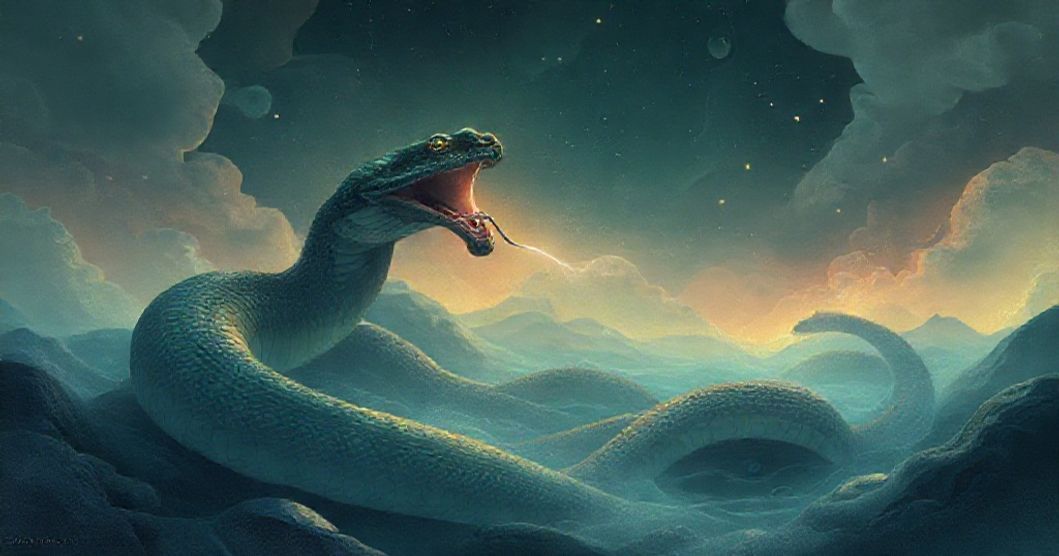
Another dream transported me to a different setting, where a massive black snake emerged from the shadows. Its scales glistened in the dim light, and its eyes seemed to fixate on me as it began to chase. My heart raced with primal fear, and I ran as fast as I could, but the snake was relentless. Just as it was about to strike, it paused, and its head came to rest gently against my forehead. The sensation was both terrifying and strangely intimate, and I woke abruptly, my breath still ragged from the adrenaline of the chase.
Want a More Personalized Interpretation?
Get your own AI-powered dream analysis tailored specifically to your dream
🔮Try Dream Analysis FreeLast night’s dream carried a different twist: I was again being pursued by a snake, my terror palpable as I felt its cold, slithering form closing in. However, when I met its gaze and recognized my fear, the snake suddenly halted its pursuit. It turned around and transformed—slowly, almost reluctantly—into a stone statue, its body rigid and still. The shift felt jarring, and I was left with a strange mix of relief and confusion.
What strikes me most about these dreams is the emotional tone of the serpents themselves. In each instance, they do not appear overtly hostile. Instead, there’s an undercurrent of disappointment when I react with fear. It’s as if they expected something different from me, something less terrified. I’ve also been reflecting on a real-life event: a month ago, during winter, a snake surprisingly entered our house—a rare occurrence, as snakes typically hibernate this time of year. Perhaps seeing that snake and fixating on it afterward has blurred the line between waking thought and sleep imagery.
These recurring dreams feel like a puzzle I’m desperate to solve, and I’m curious about what deeper meaning they might hold.
Part 2: Clinical Analysis
Symbolic Landscape: The Multifaceted Serpent
Snakes in dream imagery universally represent transformation, but their specific manifestations carry nuanced meanings. In the dreamer’s experience, the field scene where snakes sleep symbolizes a state of restful awareness—these serpents are not aggressive but rather dormant, suggesting a period of introspection or potential transformation. The snake’s presence in the field could represent the dreamer’s connection to their own unconscious mind, which is quietly processing deeper themes while the conscious self remains unaware.
The massive black snake chasing the dreamer introduces a more threatening element, yet its unusual action of touching the forehead adds complexity. In dreamwork, the forehead often relates to intuition, spiritual awareness, or the 'third eye'—the seat of perception beyond the physical. The black color of the snake might signify the shadow aspects of the self, those hidden fears or repressed emotions the dreamer is confronting. The snake’s gentle contact with the forehead could symbolize an attempt to bridge the conscious and unconscious, inviting deeper insight despite the fear.
The final transformation into a statue is particularly significant. A statue represents permanence, yet it also suggests rigidity or lack of movement. When the snake becomes still, it mirrors the dreamer’s momentary shift from fear to acceptance. The snake’s 'disappointment' when the dreamer reacts with terror hints at a theme of unmet expectations—perhaps the dreamer has unconsciously set a standard for how they should respond to fear, and the serpent is reflecting this gap between expectation and reality.
Psychological Undercurrents: Jungian, Freudian, and Cognitive Perspectives
From a Jungian lens, the recurring snake dreams represent the animus or anima archetype—the masculine or feminine aspects of the self. The serpent’s dual nature (both threatening and seemingly benevolent) could symbolize the shadow integration process, where the dreamer is confronting parts of themselves they’ve avoided. The black snake touching the forehead aligns with the 'shadow encounter,' where the unconscious attempts to integrate these hidden aspects.
Freud might interpret the snake dreams as manifestations of repressed sexual energy or aggressive instincts. The chase could represent the dreamer’s attempt to avoid confronting these primal urges, while the snake’s transformation into a statue might symbolize the temporary resolution of these tensions. However, Freud’s focus on literal interpretations might oversimplify the nuanced emotional tone of disappointment rather than pure fear.
Cognitive dream theory offers another framework: the dreams could be processing the recent real-life event of the winter snake intrusion. Our brains often replay significant experiences in dreams, especially when we’re fixating on them. The recurring snake imagery might be the mind’s way of working through this unusual event, creating a narrative that explores the fear of intrusion, both physical and psychological.
Emotional & Life Context: Fear, Expectation, and Transformation
The winter snake entering the house during a season when snakes typically hibernate introduces an element of disruption and unexpectedness. This rare event likely triggered both fear and fascination, which the mind has processed through repeated dream imagery. The dreamer’s observation that the snake in the dream 'doesn’t seem to want to harm me' despite the chase suggests a deeper emotional conflict: the dreamer is simultaneously afraid of something that might actually be trying to help or guide them.
The recurring nature of the dreams indicates that the dreamer is in a period of psychological transition. The winter setting (a time of dormancy and preparation for spring) aligns with the snake’s hibernation, suggesting a season of internal preparation. The dreamer might be avoiding a necessary change or transformation, as indicated by the snake’s disappointment when the dreamer reacts with fear. This could relate to career changes, relationship shifts, or personal growth they’ve been contemplating but delaying.
Therapeutic Insights: Embracing the Serpent’s Message
The dream offers several invitations for self-reflection. First, the dreamer might benefit from exploring their relationship with fear and how they respond to unexpected challenges. The snake’s disappointment could be a signal to examine unspoken expectations—perhaps the dreamer expects themselves to be fearless, but the serpent is inviting them to honor their emotions rather than suppress them.
Journaling exercises could help unpack these themes: writing about the emotions experienced in each dream scene, particularly the 'disappointed' snake, and connecting these to waking life situations where the dreamer feels they’ve reacted with fear when they might have been capable of more nuanced responses. Creating a 'dream log' to track the progression of the snake’s behavior (from field to statue) can reveal patterns in how the dreamer processes fear.
The statue transformation suggests that acceptance, not fear, leads to resolution. The dreamer might need to practice 'stillness' in the face of fear—allowing themselves to be present with anxiety rather than immediately fleeing from it. This could involve mindfulness practices or meditation, where the breath becomes the anchor during moments of fear.
FAQ Section: Navigating Snake Dream Confusion
Q: Why do I keep dreaming about snakes despite not having a phobia?
A: Recurring snake dreams often reflect psychological themes rather than literal fears. They may process a significant life change, unmet expectations, or hidden aspects of yourself you’re integrating.
Q: What does the snake’s 'disappointment' mean when I react with fear?
A: This suggests a disconnect between how you expect to respond to fear and how you actually do. The snake may represent an aspect of yourself that wants collaboration, not conflict—inviting you to meet fear with curiosity rather than immediate avoidance.
Q: How can I use the statue transformation in my waking life?
A: The statue symbolizes stillness and acceptance. Practice pausing during moments of fear to observe your reaction without judgment, then choosing action based on presence rather than panic.
Closing Reflections
These snake dreams are not warnings but invitations to explore the deeper layers of self. The recurring serpents represent the dreamer’s capacity for transformation, even in the face of fear. By embracing the serpent’s message of integration and acceptance, the dreamer can navigate their psychological landscape with greater awareness, turning moments of fear into opportunities for growth.