
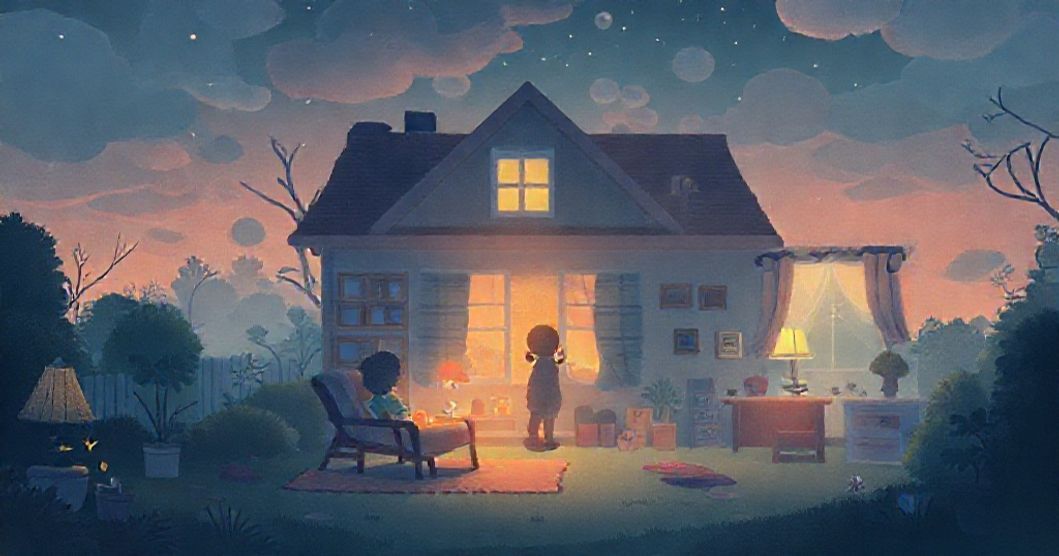
Part 1: Dream Presentation
Dreams often serve as bridges between our conscious awareness and the deeper recesses of our psyche, and for this dreamer, the recurring childhood home manifests as a persistent threshold between past and present. This vivid, lifelong dreamscape reveals profound connections to identity, loss, and unresolved emotions that continue to shape waking life despite physical separation from the location. The dreamer’s nightly return to a house sold years ago—after their father’s passing—highlights how psychological attachment transcends physical absence, creating a symbolic landscape that remains emotionally alive.
The rewritten dream narrative, as presented above, captures the dreamer’s experience of returning to this childhood home in various emotional states: peaceful moments with loved ones, somber reflections on loss, and disorienting transitions between spaces that once defined their identity. The house itself becomes a character in the dream, shifting between comfort and unease, familiarity and disorientation. Most notably, the dream alternates between two bedrooms—the one the dreamer claimed after their sister left for college and the smaller space of their childhood—symbolizing dual aspects of self: the emerging adult and the still-evolving teenager.
Part 2: Clinical Analysis
Want a More Personalized Interpretation?
Get your own AI-powered dream analysis tailored specifically to your dream
🔮Try Dream Analysis FreeSymbolic Landscape: The Childhood Home as Archetypal Container
The recurring childhood home functions as a powerful symbolic container in the dreamer’s psyche. In Jungian psychology, the house represents the self—a microcosm of the dreamer’s inner world. The fact that this particular house persists despite physical demolition (sold and presumably replaced) suggests it has become a psychological rather than physical space, embodying the dreamer’s core identity. The kitchen, with its scent of cookies and mother’s laughter, symbolizes nurturance and safety, while the empty rooms after the father’s passing represent loss and absence.
The bedrooms deserve special attention: the