
Part 1: Dream Presentation
Dreams often serve as mirrors to our unconscious, reflecting tensions we may not yet name. In this particular dream, the familiar anxiety of driving without vision—an experience many associate with vulnerability and loss of control—collides with an unexpected twist: clarity in a moment of apparent blindness, and eyes that seem to reflect not darkness but an unsettling whiteness. Let me recount this surreal journey as it unfolded:
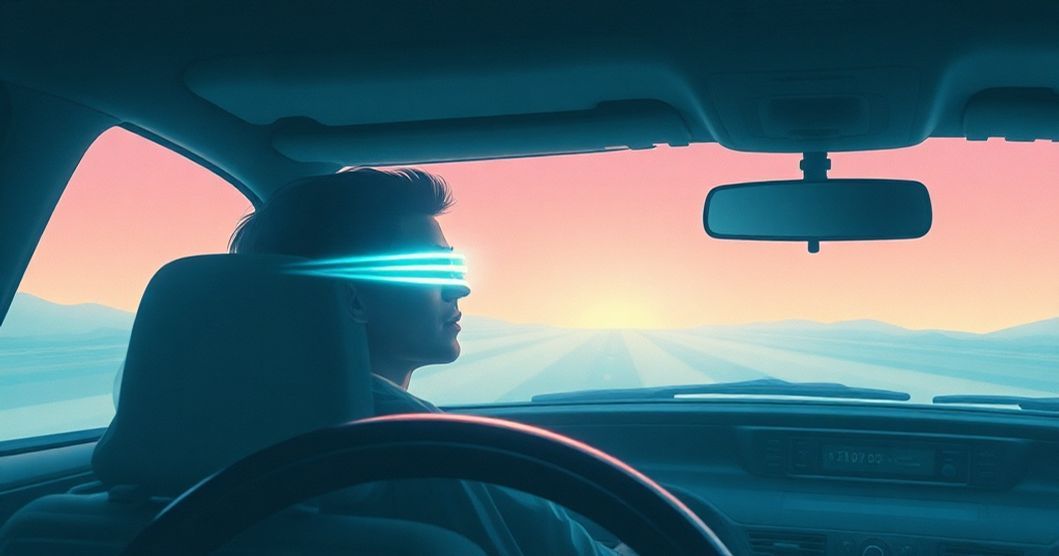
I frequently find myself in dreams where I’m seated behind the wheel, reaching for the ignition, yet my eyes remain stubbornly closed—no matter how hard I try to open them, vision eludes me. These recurring nightmares typically unfold at night, on long, winding country roads that stretch into darkness, where the dashboard lights flicker and the steering wheel feels cold beneath my palms. But last night’s dream diverged dramatically from this familiar pattern. Instead of darkness, the world was bathed in intense sunlight; the sky blazed blue, and the road ahead shimmered with clarity. I could see perfectly well at first, my eyes wide open and focused, which struck me as deeply unusual for my usual dreams. Curiosity overcame me, so I glanced at my reflection in the side mirror. What I saw there chilled my waking awareness: my eyes were completely white, with no irises or pupils—just blank, luminous whiteness staring back at me. I twisted my head, checking the rearview mirror and even squinting, but the surreal image remained identical. To my surprise, I felt no panic. There was a strange calmness, almost clinical detachment, as I realized what this might mean. I thought, I should probably get this checked out soon, just to be safe—a practical thought, not a panicked one. Yet when I looked around, the world seemed perfectly normal: the sun shone brightly, birds chirped, and the road ahead appeared unremarkable. Nothing about my surroundings suggested an emergency, so I dismissed the urgency, reasoning that perhaps it was just a strange dream. Still, I felt compelled to share it, hoping someone might offer insight into its meaning.
Part 2: Clinical Analysis
Want a More Personalized Interpretation?
Get your own AI-powered dream analysis tailored specifically to your dream
🔮Try Dream Analysis FreeSymbolic Landscape: The Visual Paradox of Control and Self-Awareness
The dream’s core elements reveal a fascinating symbolic landscape that invites exploration. The recurring motif of driving without vision (initially at night) represents a fundamental tension: the dreamer’s relationship with control and direction in waking life. Driving is a powerful metaphor for agency—we steer our paths, make choices, and navigate uncertainty. When vision is lost, it signals a fear of losing control or clarity in decision-making. The nighttime setting amplifies this theme, as night often symbolizes the unconscious, where our fears and unresolved anxieties manifest. The shift to a bright, sunny day introduces a critical contrast: daytime typically represents the conscious mind, rationality, and exposure. Here, the dreamer can see clearly yet encounters a surreal visual anomaly, creating a paradox: clarity in vision but loss of self-understanding.
The white, pupil-less eyes are particularly striking. In dream symbolism, eyes represent perception, self-awareness, and the ability to “see” truth. The absence of pupils and irises—those windows to the soul—suggests a loss of identity or self-awareness. In some traditions, white eyes symbolize spiritual insight or detachment, but here, their presence in a driving context hints at a deeper tension: the dreamer’s attempt to maintain clarity while experiencing a fundamental shift in how they perceive themselves. Notably, the dreamer’s reaction—calm, rational, and unpanicked—contrasts with the usual emotional response to such anomalies, suggesting a psychological shift toward acceptance.
Psychological Perspectives: Unconscious Narratives and Archetypal Imagery
From a psychoanalytic lens (Freud), the dream might reflect repressed anxieties about health or vulnerability. The “checkup” thought suggests a latent fear of physical decline or loss of control over one’s body—a common preoccupation in midlife or during periods of transition. However, the lack of panic subverts typical Freudian interpretations of repressed anxiety, suggesting the unconscious is processing these fears with unexpected calm.
Jungian psychology offers another framework, where driving represents the “path of life” and visual impairment symbolizes a temporary loss of connection to the collective unconscious. The white eyes could represent the “shadow” self—parts of the personality we’ve disowned or ignored. In this case, the shadow (loss of self-awareness) is visible yet not feared, suggesting the dreamer’s psyche is integrating these parts without panic.
Neuroscientifically, the dream aligns with REM sleep’s role in processing emotional memory. The visual anomaly (white eyes) may reflect the brain’s attempt to make sense of fragmented sensory input during sleep, while the calm response suggests the dreamer’s default mode network (responsible for self-referential thought) is active but not overwhelmed by fear responses.
Emotional & Life Context: Health Concerns and Unspoken Pressures
The dream’s themes likely connect to the dreamer’s waking emotional state. The recurring “can’t see while driving” pattern may emerge during periods of uncertainty or transition—career changes, relationship shifts, or midlife reflections. The daytime setting introduces a layer of conscious awareness: the dreamer is trying to “see” clearly in waking life but encounters unexpected blind spots.
The non-panicked response to visual impairment hints at a deeper emotional shift: the dreamer may be developing resilience in the face of uncertainty. The rational decision to “get checked out” reflects a proactive approach to health, suggesting the dreamer values self-care but feels empowered to address concerns without panic.
The contrast between the usual nighttime driving (unconscious fear) and daytime clarity (conscious awareness) suggests the dreamer is beginning to confront previously avoided truths. The “normal” surroundings during the dream reinforce this: the world isn’t falling apart, but the dreamer is learning to accept that some anomalies require attention, not panic.
Therapeutic Insights: Self-Reflection and Integration Strategies
This dream offers valuable lessons for self-awareness. First, the dreamer’s calm response to visual impairment suggests they’ve developed psychological flexibility—a strength to nurture. To integrate this, they might practice mindfulness meditation, focusing on breath and present-moment awareness to recognize when they’re avoiding clarity in waking life.
Second, the “checkup” thought hints at the importance of addressing unspoken concerns. Journaling about health anxieties and their roots can help the dreamer distinguish between real threats and symbolic fears. Keeping a dream journal to track recurring themes (like driving without vision) can reveal patterns in waking life.
Third, the white eyes symbolize the need to reconnect with self-awareness. The dreamer might benefit from asking: What parts of myself have I been “blind” to? Journaling about relationships, career, or self-care can help identify these blind spots.
Finally, the dream’s daytime setting encourages the dreamer to embrace conscious awareness. Rather than avoiding uncertainty, they can practice “driving with open eyes” in waking life—actively engaging with challenges while trusting their ability to adapt.
FAQ Section: Addressing Key Dream Elements
Q: Why did the dreamer feel calm despite seeing white eyes?
A: The calm response suggests the unconscious is processing anxiety without overwhelming the dreamer. This reflects resilience or a growing ability to accept uncertainty, even in surreal scenarios.
Q: What does driving without vision usually symbolize in dreams?
A: Driving without vision often represents fear of losing control, uncertainty about life direction, or avoidance of difficult truths. Here, it contrasts with the daytime clarity, suggesting a shift toward acceptance.
Q: How does the white-eyed imagery connect to self-awareness?
A: White eyes without pupils/irises symbolize loss of self-awareness or identity. The dream’s calm response suggests the dreamer is integrating these feelings without panic, promoting healthier self-perception.
Q: Why was the daytime setting important in this variation?
A: Daytime represents conscious awareness, so the dream’s brightness symbolizes the dreamer’s attempt to see clearly in waking life while confronting internal blind spots. It suggests progress toward self-understanding.