
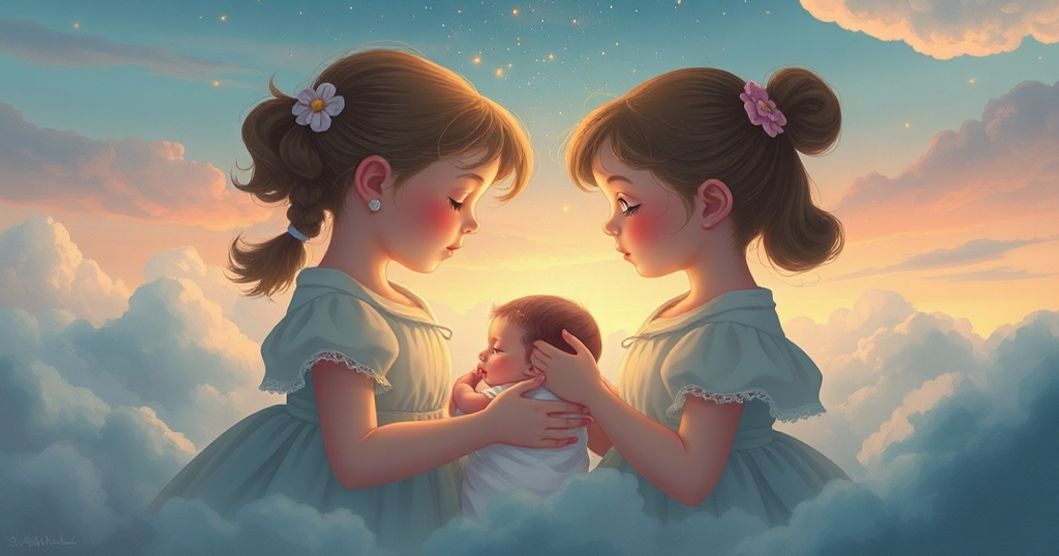
Part 1: Dream Presentation
The unconscious mind often speaks through vivid imagery that bypasses waking logic, and this dream arrives as a tender yet turbulent portrait of a young woman’s deepest maternal yearnings. In a world where she has always known children would one day be part of her story—specifically twin girls—her subconscious crafts a birth narrative that merges reality and fantasy. The dream begins in ordinary calm, a reflection of her everyday life, before violently shifting into a surreal pregnancy and public birth. The sudden pain, the unexpected transformation into a pregnant woman, and the birth in a communal park all serve as powerful symbols of how our most cherished desires can feel both inevitable and terrifyingly out of control.
In the dream, the 21-year-old protagonist experiences a rapid, inexplicable pregnancy—suggesting her desire for motherhood has become so intense it has breached the boundaries of waking reality. The public park, typically a space for social connection and leisure, becomes a site of medical intervention and vulnerability, creating a stark contrast between public exposure and private intimacy. The presence of medical personnel underscores the dream’s emphasis on birth as both natural and medicalized, while the still-young age of 20-21 hints at her identity as someone still in transition, questioning where she stands in life’s timeline.
Most poignant is the emotional resonance of holding the twin girls and immediately missing them—a bittersweet longing that suggests this dream taps into deeper anxieties about loss, impermanence, and the fear of not being ready for such profound responsibility. The dream’s emotional arc moves from calm anticipation to sudden crisis to tender loss, mirroring the complex emotions surrounding motherhood and future identity.
Want a More Personalized Interpretation?
Get your own AI-powered dream analysis tailored specifically to your dream
🔮Try Dream Analysis FreePart 2: Clinical Analysis
Symbolic Landscape: The Language of Unconscious Desires
The dream’s central symbols reveal layers of meaning about the dreamer’s relationship to motherhood and self. The sudden, painless pregnancy contrasts sharply with the physical and emotional reality of pregnancy, suggesting a tension between her intellectual desire for children and her emotional readiness. In psychoanalytic terms, this abrupt transformation can represent the unconscious mind’s attempt to reconcile abstract ideals with concrete fears.
The public park birth is perhaps the most striking symbol. Parks typically represent public space, community, and shared experience—yet birth is inherently private and vulnerable. This juxtaposition suggests the dreamer’s anxiety about how society might perceive her motherhood journey. The medical personnel present in the dream may symbolize external validation or societal expectations of how motherhood should unfold, while the absence of shame in the face of this public event hints at her underlying confidence in her maternal role.
The twin girls themselves represent the dreamer’s vision of a specific future: two daughters, symbolizing duality, connection, and the expansion of self through relationship. Their beauty and the immediate longing to hold them suggest the depth of her desire, while the subsequent loss (missing them) introduces the theme of impermanence and the fear that desired futures might not materialize as hoped.
Psychological Undercurrents: Archetypes and Unconscious Processing
From a Jungian perspective, this dream activates the Anima and Animus archetypes—the feminine and masculine aspects of the psyche. The dreamer’s desire for twin girls reflects her Anima’s projection of nurturing, creativity, and connection. The sudden pregnancy and birth can be seen as the activation of the Mother archetype, a powerful symbol of creation and renewal.
Freud’s theory of dream work might interpret this as a wish-fulfillment dream, where the dreamer’s repressed desire for children is expressed through the narrative of pregnancy and birth. The absence of a partner in the dream (she is 21 and unmarried) suggests a focus on her own internal capacity for motherhood, separate from romantic relationships.
Neurologically, dreams process emotional memory and future projections, so this dream likely represents the brain’s attempt to integrate her desire for children into her sense of self. The public birth could symbolize the pressure to perform motherhood in a way that meets societal expectations, while the pain and subsequent loss may reflect the anxiety of not knowing if she can fulfill this role successfully.
Emotional and Life Context: Navigating Identity and Desire
The dreamer’s 21 years, unmarried status, and clear desire for children create a unique psychological context. She stands at a crossroads in life, questioning her place in the world and her readiness for such a profound role. The dream’s timing—occurring after she has explicitly acknowledged her desire for twin girls—suggests her conscious longing has triggered a deeper, possibly unconscious, exploration of what motherhood truly means.
The absence of a romantic partner in the dream might indicate that she is processing motherhood as a solo journey, or perhaps as a journey separate from romantic relationships. This could reflect her current relationship status or her need to establish self-sufficiency before taking on such a profound role.
The emotional resonance of missing the babies immediately after birth hints at existential anxiety about the fragility of desired futures. In our society, where motherhood is often portrayed as a universal life goal, the dreamer’s subconscious might be questioning whether she is ready for the vulnerability and loss that accompany such a significant life change.
Therapeutic Insights: Processing the Dreamer’s Desires
This dream offers rich material for self-reflection and therapeutic exploration. The first step is to journal about the emotional tone of the dream—specifically, the tension between excitement and loss. Journaling can help the dreamer unpack her feelings about motherhood without judgment.
Exploring the 'public' aspect of the birth might reveal how she fears being judged for her choices regarding motherhood. She might benefit from examining societal pressures around timing, relationship status, and family structure. Therapy could help her separate external expectations from her authentic desires.
The theme of twin girls suggests a desire for balance and multiplicity in her life—perhaps a longing for both independence and connection. Exploring what 'twin girls' symbolize beyond literal children (e.g., duality, partnership, creativity) could help her understand her need for these qualities in her life.
FAQ Section
Q: Why did the dreamer feel the need to give birth in a public park?
A: The public park symbolizes societal observation and pressure. It may reflect the dreamer’s anxiety about how others will judge her motherhood journey, or her subconscious testing her confidence in her ability to embrace vulnerability publicly.
Q: What does the sudden pregnancy and immediate birth suggest about her emotional state?
A: This rapid transition suggests a conflict between her intellectual desire for children and her emotional readiness. It may indicate excitement about the future balanced with fear of the unknown or fear of not being 'ready' for such a profound change.
Q: Why does the dreamer miss the babies immediately after birth?
A: This loss symbolizes the fear of impermanence and the anxiety that desired futures might not materialize. It may also reflect her underlying awareness that motherhood involves significant loss of self as she shifts into a new identity.
Keywords: pregnancy symbolism, twin girls, public birth, maternal desire, future identity, unconscious processing, societal pressure, dream analysis, motherhood anxiety, life transitions Entities: twin girls, public park, medical personnel, 21-year-old woman, sudden pregnancy