
Part 1: Dream Presentation
Dreams often arrive as cryptic messengers from the depths of our unconscious, and this particular dream unfolded with striking clarity, blending mundane holiday details with charged symbolic imagery. As I recount it, I find myself transported back to the moment of waking, still processing the strange yet vivid tableau that played across my mind’s eye.
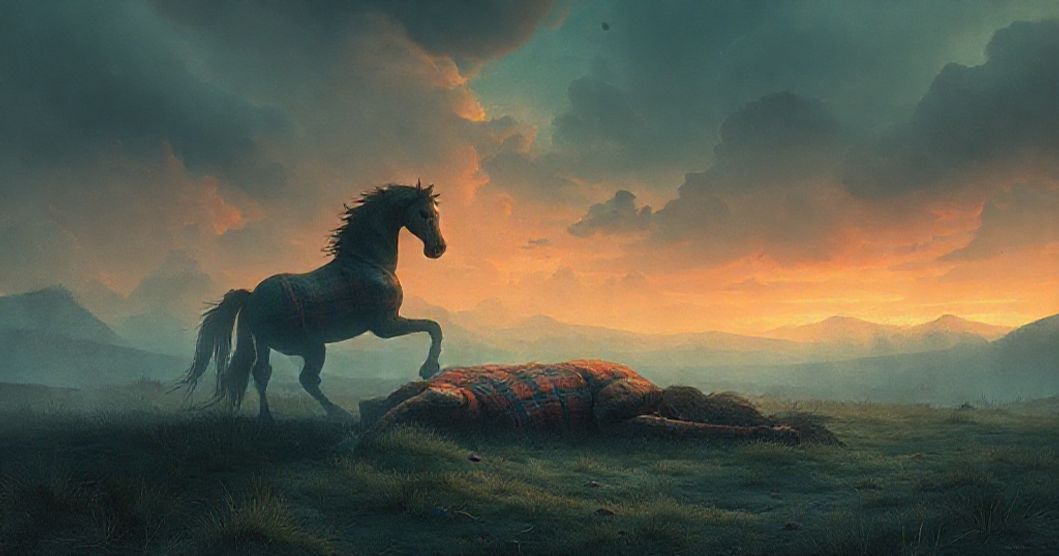
During a holiday in Scotland with my wife, we resided in a modern house that overlooked a quiet road winding through a small village. The crisp air of the Scottish countryside lingered in my memory as I stood at the window, drawn by an unsettling sight: a dead horse sprawled across the asphalt, its once-vibrant coat now still and lifeless, as if it had met a tragic end in a car accident. Nearby, a group of men—their kilts and jackets emblazoned with intricate tartan patterns—gathered in heated dispute, their voices rising in angry argument before erupting into physical conflict. Fists flew, tempers flared, and the scene grew increasingly chaotic. Then, unexpectedly, a figure appeared, methodically using a hose to wash away the dark stain of blood that had pooled beneath the horse’s body. As the crimson hues faded, traffic along the road resumed its normal flow, as if the entire incident had been a brief, forgotten interruption.
This dream felt profoundly out of the ordinary—a rare departure from my usual sleep patterns—and I turned to this community seeking to decode its hidden messages, hoping to understand what my unconscious might be communicating.
Want a More Personalized Interpretation?
Get your own AI-powered dream analysis tailored specifically to your dream
🔮Try Dream Analysis FreePart 2: Clinical Analysis
Symbolic Landscape: The Dreamer’s Visual Language
The dream’s imagery is rich with symbolic potential, each element carrying layers of meaning that invite exploration. The dead horse stands as a powerful central symbol, representing vitality that has been extinguished or potential that has been unfulfilled. In dream psychology, horses often embody freedom, power, and life force—so a dead horse suggests a loss of these qualities, whether in the dreamer’s waking life or within a significant aspect of their identity. The setting in Scotland, with its iconic tartan patterns worn by the group of men, introduces cultural and ancestral dimensions. Tartan is deeply tied to Scottish heritage, representing clan identity, history, and collective memory. The men’s argument and subsequent fight within this cultural context may symbolize conflicts over values, heritage, or territory—either personal or ancestral.
The road outside the house serves as a classic dream symbol for life’s journey or path forward. Its dual nature—first as a site of tragedy (the accident) and then as a space of renewal (traffic resuming)—reflects the tension between disruption and restoration in life. The washing away of blood is particularly significant: blood symbolizes life force, emotional vitality, and trauma; its removal suggests an attempt to process or resolve something painful, to cleanse emotional wounds, or to find closure. Finally, the traffic’s return to normalcy represents the resumption of daily life after disruption, a common theme in dreams about conflict or crisis.
Psychological Undercurrents: Layers of the Unconscious
From a psychoanalytic perspective, this dream may reveal repressed emotions or unresolved conflicts. Freud might interpret the men’s argument as a manifestation of the dreamer’s own internal conflicts—perhaps tensions between different aspects of self, or between the dreamer and others in waking life. The dead horse could represent a part of the dreamer’s psyche that feels “dead” or neglected—a project, relationship, or aspect of identity that has lost its vitality.
Jungian analysis, however, would view the dream through the lens of the collective unconscious, where symbols like the horse and tartan connect to universal archetypes. The horse might reflect the dreamer’s connection to primal energy or life force, while the tartan represents the collective unconscious’ relationship to cultural identity and heritage. The conflict between the men could symbolize the shadow aspects of the dreamer’s personality—those parts of self that feel fragmented or in conflict with one another.
Cognitive theory offers another framework, suggesting that dreams process daily stressors and unresolved problems. The dream’s sequence—disruption (dead horse), conflict (argument/fight), and resolution (blood washed away, traffic restored)—mirrors how the mind attempts to resolve real-world issues during sleep. The dreamer may be grappling with a situation that feels chaotic, and the dream provides a symbolic space to work through these tensions before waking life resumes.
Emotional & Life Context: The Dreamer’s Internal Landscape
To fully understand the dream, we must consider the emotional and situational context of the dreamer’s waking life. The holiday setting suggests a temporary escape from routine, a period of transition or reflection. Scotland’s cultural significance may connect to the dreamer’s relationship with heritage, family history, or personal identity. The presence of the wife in the dream hints at relationship dynamics—perhaps tensions in the marriage, or a need to process shared experiences.
The men in tartan arguing could reflect the dreamer’s relationship with cultural identity—maybe questioning one’s place within a family or community, or struggling with conflicting values. The dead horse might symbolize a loss or potential that feels unfulfilled, whether in career, relationships, or personal growth. The washing of blood suggests an attempt to confront and heal from something painful, while the traffic resuming represents the return to normalcy after crisis—a natural human need to find equilibrium.
Therapeutic Insights: From Dream to Daily Life
This dream offers valuable insights for the dreamer. First, it signals the importance of acknowledging and processing emotional conflicts rather than suppressing them. The sequence of disruption, conflict, and resolution mirrors the natural cycle of healing—we cannot avoid life’s “accidents,” but we can learn to process them with intention. The tartan-clad men suggest that cultural identity and heritage may be central to the dreamer’s internal conflicts, inviting reflection on how one’s roots influence current life choices.
Reflection exercises could include journaling about recent conflicts or unfulfilled potential, using the dead horse as a starting point to identify what feels “dead” in waking life. The washing of blood might inspire creative visualization: imagine yourself washing away emotional stains, using mindfulness to process pain. Finally, the traffic resuming reminds us that life continues, and after conflict, there is always the opportunity to rebuild and move forward.
FAQ Section: Clarifying the Dream’s Messages
Q: Why did the men wear tartan kilts?
A: Tartan in dreams often represents cultural identity, heritage, or collective values. The men’s argument may symbolize tensions between different aspects of the dreamer’s identity or conflicts with others sharing similar cultural backgrounds.
Q: What does the dead horse represent specifically?
A: A dead horse typically symbolizes lost vitality, unfulfilled potential, or emotional numbness. It may reflect a project, relationship, or part of self that has lost its energy, or a situation where life force feels drained.
Q: Why did the blood wash away, and why does traffic resume?
A: Blood washing suggests emotional cleansing or closure, while traffic resuming represents returning to normalcy after disruption. This sequence implies that conflict can be processed and life can continue, even after painful events.