
Part 1: Dream Presentation
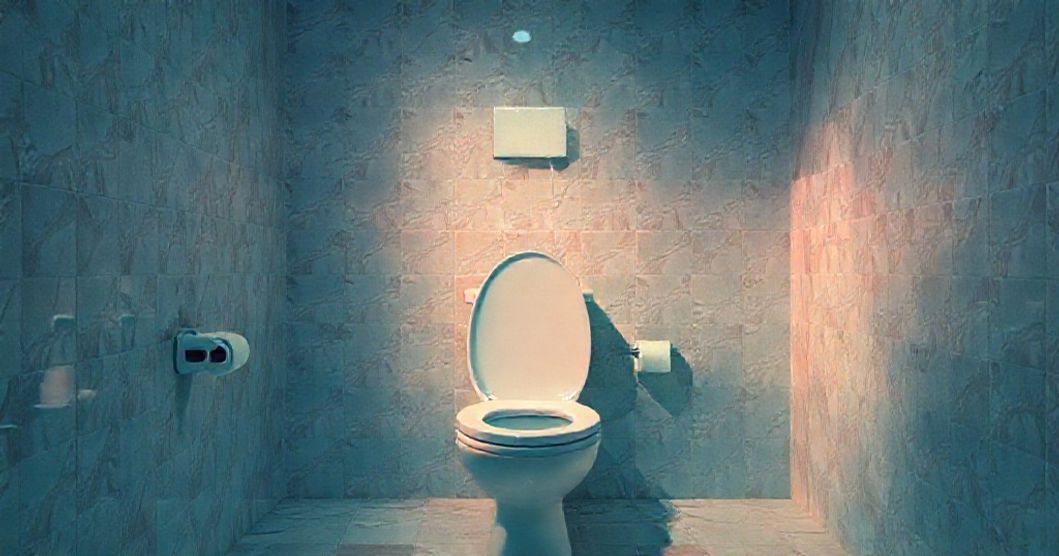
Dreams often serve as mirrors to our waking preoccupations, distilling complex emotions into symbolic narratives. This particular dream arrives at a moment of significant transition: the dreamer has recently begun studying perfumery, a field that demands precision, creativity, and emotional resonance. The narrative unfolds in a sunlit classroom filled with the tools of aromatic artistry—glass vials, copper stills, and the subtle hum of learning. Yet beneath this professional setting lies an unexpected, almost surreal twist: a toilet wedged within a perfume storage closet, where the dreamer experiences a visceral, undignified act followed by a desperate struggle to maintain composure.
The dreamer finds themselves in a space that should represent order and beauty—perfumery, after all, is about crafting scents that evoke emotion and memory—yet the unconscious mind has inserted a jarring element: a toilet in the supply area. This incongruity immediately signals deeper themes at play. The act of defecation, typically a symbol of release or unresolved emotional 'waste,' becomes conflated with the meticulous, delicate work of perfume-making. The dreamer’s struggle to clean themselves—reaching for empty toilet paper, scrubbing furiously with inadequate resources—suggests an internal conflict between presenting a polished public image and confronting the messy, imperfect reality of their creative process.
Part 2: Clinical Analysis
Want a More Personalized Interpretation?
Get your own AI-powered dream analysis tailored specifically to your dream
🔮Try Dream Analysis FreeSymbolic Landscape: The Perfumed Toilet as Unconscious Metaphor
The perfume classroom functions as a powerful symbol of the dreamer’s professional identity—precision, learning, and the cultivation of beauty. The glass vials and essential oils represent the tangible tools of their trade, while the instructor’s lectures reflect the external expectations of mastery. The anomalous toilet, however, disrupts this ordered world, emerging as a symbol of the unconscious mind’s attempt to integrate both the pristine and the primal aspects of human experience. In Jungian psychology, such 'anomalous' elements in dreams often arise from the shadow self—the collection of repressed traits, fears, or behaviors we project outwardly.
The toilet’s placement in the perfume closet suggests a hidden intersection of the dreamer’s professional life and personal vulnerability. Perfumery requires balancing artistry with scientific rigor, yet the toilet introduces a raw, bodily function that cannot be neatly categorized as 'professional' or 'personal.' This spatial incongruity mirrors the dreamer’s internal tension between the desire to present a flawless public self and the recognition that creativity often emerges from messy, unrefined places.
The persistent cycle of uncleanliness—repeating the same sequence until waking—indicates an unresolved emotional loop. In dreamwork, repetition often signifies an issue requiring attention; the dreamer’s inability to escape the 'messy' scenario suggests an unaddressed fear of imperfection in their creative work.
Psychological Currents: The Perfumery Student’s Internal Conflict
From a Freudian perspective, the toilet scene taps into anal stage dynamics—the developmental phase associated with control, order, and hygiene. The dreamer’s struggle to 'clean' themselves might reflect an unconscious fear of losing control over their creative process. The perfume industry, with its emphasis on meticulous blending and olfactory hierarchy, could be triggering performance anxiety: the dreamer may feel pressured to maintain a facade of expertise while grappling with the inherent messiness of learning.
Jungian analysis expands this by situating the dream within the context of the 'shadow' archetype. The shadow represents the parts of ourselves we disown—here, the dream’s toilet symbolizes the shadow of the perfumer: the raw, unrefined, and even 'unprofessional' aspects of creativity that feel incompatible with the polished public image. The dream’s repetition mirrors the shadow’s persistence; until the dreamer integrates these messy elements, they will continue to project them onto external situations.
Neurologically, the dream may represent the brain’s attempt to process the novelty of learning a complex skill. The hippocampus, responsible for memory consolidation, often weaves together recent experiences (perfumery studies) with deeper emotional patterns, creating hybrid symbols that bridge conscious learning with unconscious processing.
Emotional & Life Context: Creative Growth and the Fear of Exposure
The dreamer’s waking immersion in perfumery illuminates the emotional subtext. Perfumery demands both technical precision and artistic intuition—qualities that often feel at odds with the vulnerability of 'not knowing' as a learner. The dream’s toilet in the supply closet embodies this paradox: the 'supply closet' is where raw materials are stored, and the toilet represents the bodily functions and emotional 'waste' that accumulate during the learning process.
The classroom setting amplifies performance anxiety: the instructor’s voice, the collective gaze of classmates, and the pressure to produce 'perfect' scents all contribute to a dreamscape where the dreamer cannot escape judgment. The act of defecation, typically a private, bodily function, becomes public—a metaphor for the fear of exposing one’s true self in professional settings.
The dreamer’s internal conflict may also reflect the tension between creation and destruction. Perfumery involves synthesizing disparate elements into something cohesive, yet the toilet introduces an element of chaos and waste. This duality mirrors the creative process itself: beauty emerges from combining both the refined and the raw.
Therapeutic Insights: Embracing the 'Unclean' in Creative Work
This dream offers valuable insights for the dreamer’s professional and personal growth. First, it invites acknowledgment of the 'messy' aspects of learning—a necessary phase in developing expertise. The perfumery student who dreams of an unclean toilet is likely grappling with imposter syndrome, fearing that their work lacks the polish expected of a professional.
Reflection exercises can help integrate these insights: the dreamer might journal about moments when they felt 'unclean' in their studies—perhaps a botched blending session, a missed deadline, or a moment of self-doubt. By naming these experiences, they can transform the 'unclean' symbol into a source of strength.
Therapeutically, the dream suggests the need to separate 'performance anxiety' from 'creative vulnerability.' The toilet, in this context, is not a source of shame but a reminder that growth requires engaging with the messy, unrefined parts of ourselves. Perfumery, like any art form, thrives on both precision and intuition; the dream’s repetition urges the dreamer to embrace this duality.
FAQ Section
Q: Why did the toilet appear in the perfume closet?
A: The toilet symbolizes the unconscious mind’s attempt to integrate the 'pristine' (perfumery) with the 'primal' (bodily functions), representing the messy, unrefined aspects of creativity that often feel incompatible with professional expectations.
Q: What does the repeated cycle of uncleanliness mean?
A: Repetition in dreams signifies unresolved issues. The cycle suggests the dreamer is stuck in a loop of avoiding imperfection, needing to address this fear of failure in their creative work.
Q: How can the dreamer reconcile their perfumery studies with this imagery?
A: The dream invites embracing the 'messy' side of learning—perfumery requires both precision and intuition, and the toilet represents the raw, unrefined foundation from which beauty emerges.