
Part 1: Dream Presentation
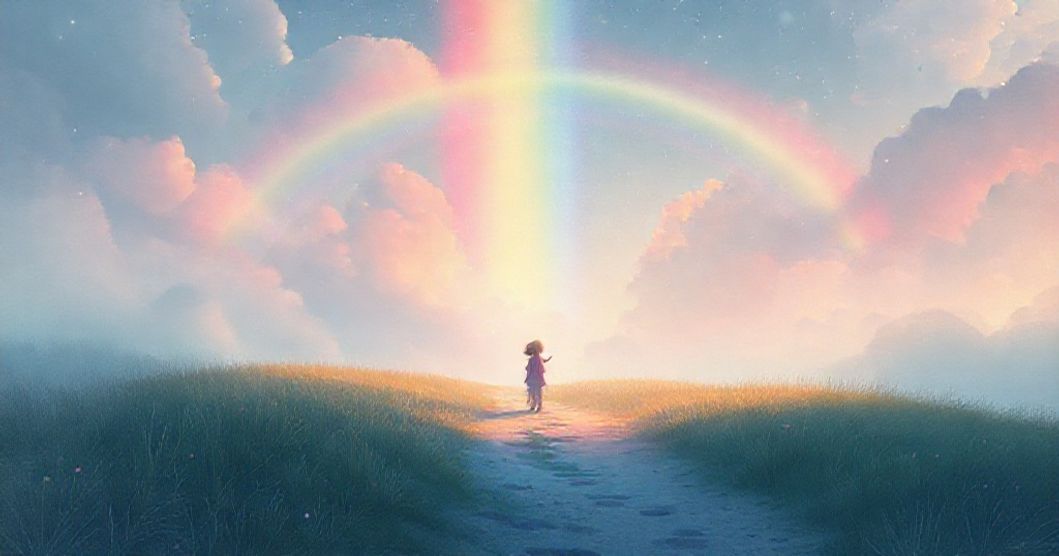
Dreams from childhood often carry the purity of early experiences, filtering through the lens of our developing consciousness like a watercolor painting. This particular dream, triggered by a nostalgic association with a video, offers a vivid snapshot of innocence and exploration that transcends the boundaries of ordinary memory. As the dreamer recounts, they found themselves walking—not on a familiar road, but on something infinitely more magical: a wide, pale rainbow stretching endlessly before them, its iridescent hues muted to gentle pastels of lavender and pale blue, as if painted with watercolors rather than sunlight. The surface beneath their feet felt surprisingly solid yet ethereal, like walking on the thinnest layer of silk spun from sky and light. At the far end of this luminous path stood a small, white schoolhouse, its windows glowing faintly even in the dream’s soft light. Unlike the ordinary homes in their neighborhood, this structure felt purposeful, like a gateway to new knowledge rather than mere shelter. Approaching it slowly, drawn by an inexplicable sense of purpose, the dreamer felt neither fear nor anxiety, only a quiet hum of possibility. When reaching the school’s door, they woke with a strange mix of nostalgia and wonder—this dream, their first clearly remembered one, had never found its equal in reality, yet it felt deeply familiar, as if glimpsing a truth about themselves they’d forgotten long ago.
Part 2: Clinical Analysis
The Symbolic Landscape of the Rainbow and School
Want a More Personalized Interpretation?
Get your own AI-powered dream analysis tailored specifically to your dream
🔮Try Dream Analysis FreeThe pale rainbow serves as the dream’s central symbol, representing a unique perspective on transition and hope. Unlike the vibrant, multicolored rainbows often associated with fairy tales, this 'pale' version suggests a softer, more delicate emotional tone—perhaps reflecting the dreamer’s tender, developing consciousness. In psychological terms, rainbows universally symbolize bridging the conscious and unconscious realms, with their curved shape representing the journey between different states of awareness. The 'end of the rainbow' as a destination carries Jungian undertones of the collective unconscious and the 'individuation process,' where the dreamer seeks meaning and direction through symbolic exploration. The schoolhouse, conversely, embodies the foundational structures of learning and identity formation. In childhood, schools represent not just education but the first formal introduction to social roles, self-expression, and the boundaries of knowledge. A 'small' schoolhouse in this context suggests a more intimate, personalized relationship with learning—a reflection of the dreamer’s early, unfiltered perception of growth.
Psychological Perspectives on Childhood Dreams
From a Jungian perspective, this dream reveals the archetypal nature of early memories. The schoolhouse might represent the Anima/Animus archetype—the self-image we carry from childhood—and the rainbow the North Star guiding our development. For Freud, childhood dreams often express repressed desires or unmet needs, though in this case, the dream’s peaceful tone suggests less conflict and more wonder. Cognitive dream theory offers another lens: children’s dreams reflect their developing understanding of space, time, and causality, with the rainbow as a literal representation of their emerging abstract thinking. The dream’s 'first remembered' status aligns with developmental psychology, where the transition from infantile amnesia to explicit memory formation occurs around age 3–4. This dream’s persistence suggests it may encode crucial information about the dreamer’s earliest sense of self and purpose.
Emotional Resonance and Life Context
The emotional tone of the dream—wonder, nostalgia, and uniqueness—reflects the sacred quality of first memories. The 'caseoh video' trigger hints at a connection to childhood media or learning experiences, suggesting the dreamer’s current life may be prompting reflection on early educational experiences or unfulfilled curiosity. The phrase 'never seen anything irl that resembled a dream' speaks to the dream’s role in preserving a pristine, unfiltered view of the world—a common theme in dreams that resist adult rationalization. Psychologically, this could indicate the dreamer’s longing for authenticity or a desire to reconnect with childlike wonder in a world that often prioritizes practicality over exploration. The schoolhouse’s glow might symbolize the enduring power of early educational experiences to shape identity, even when those experiences are forgotten in waking life.
Therapeutic Insights for Dream Integration
This dream invites several reflection practices for the dreamer. Journaling exercises to explore recurring themes in dreams can help uncover patterns in waking life. Asking, 'What did the school represent to me then?' encourages connection to early values or unmet needs. Mindfulness practices that cultivate present-moment awareness can help the dreamer reconnect with the childlike wonder evident in the dream. The 'pale rainbow' suggests softening expectations and embracing life’s subtle, beautiful moments rather than chasing bright, unattainable goals. For those navigating educational or career transitions, this dream might signal a need to revisit foundational motivations and rediscover the joy of learning.
FAQ Section
Q: What does the pale rainbow symbolize compared to a vivid one?
A: A pale rainbow suggests a gentler, more vulnerable perspective—perhaps reflecting the dreamer’s tender emotional state or a need for softness in waking life. It may represent unexpressed sensitivity or a desire for nuanced experiences.
Q: Why is the school the destination at the end of the rainbow?
A: Schools symbolize learning, identity, and socialization. In this dream, it likely represents the dreamer’s earliest encounter with purposeful exploration, suggesting a deep-seated need to reconnect with foundational values or goals.
Q: How does a first remembered dream influence adult identity?
A: First dreams often encode core beliefs about self and the world. This dream’s persistence suggests it may shape how the dreamer views growth, learning, and the pursuit of meaning—reminding them of their capacity for wonder and discovery.