
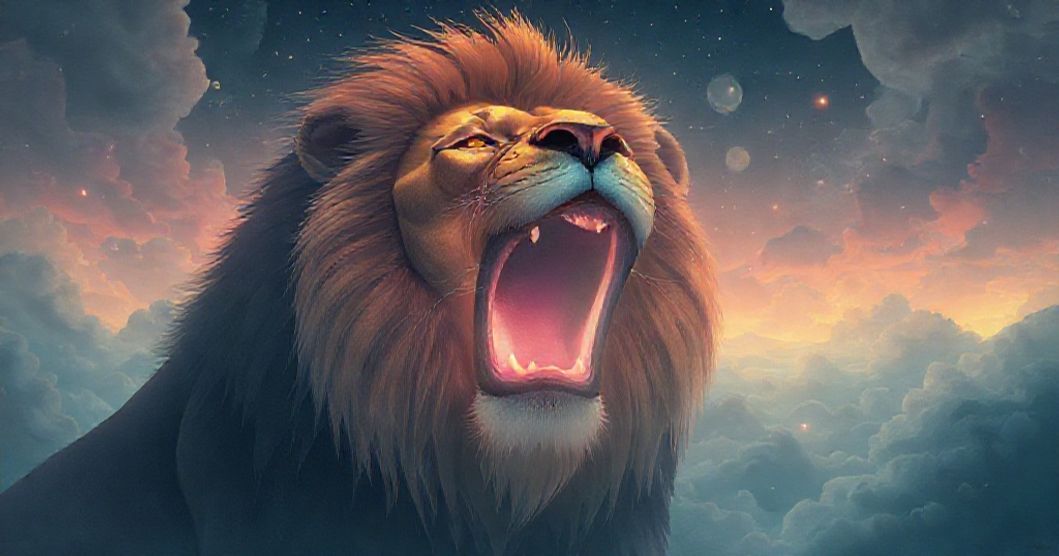
Part 1: Dream Presentation
Dreams often serve as mirrors reflecting our inner landscapes, and this lucid encounter with a mouthless mountain lion offers a profound glimpse into the relationship between expression, vulnerability, and healing. The desert unfolded before me like a living canvas, its golden expanse stretching endlessly under a sky so blue it hurt my eyes. I was hiking along a narrow trail, boots crunching on gravel that sparkled like crushed amber, when the world shifted—this was no ordinary walk. I knew instantly I was in a lucid dream, my consciousness acutely aware of the unreality surrounding me yet oddly at peace with it. Then I saw it: a mountain lion, its form both majestic and profoundly wrong.
Instead of the sleek, powerful predator I’d imagined, this lion was gaunt, its fur sparse and matted, clinging to bones beneath. But what truly stunned me was its face—a lion’s head without a mouth. No lips, no teeth, no jawline; just smooth, featureless skin where a mouth should be. Its eyes were hollow, dark pits that seemed to absorb the desert light rather than reflect it, giving it an air of profound melancholy. It stood stock-still, as if frozen in a moment of existential despair, its breathing shallow and ragged.
I felt an immediate urge to help, though I wasn’t sure how. In lucid dreams, intuition often overrides logic, and here it whispered that this creature’s suffering stemmed from its inability to express itself—perhaps even to eat or communicate. I reached for my backpack, surprised to find an inkbrush and a small jar of black ink, tools I’d never brought on hikes in waking life. Seizing the lion’s jaw gently (its fur was surprisingly warm despite its emaciated state), I steadied its head and began to draw. With quick, deliberate strokes, I sketched a simple cartoon mouth—round and cheerful, with big, friendly teeth. The ink spread across its face, the lines stark against its pale fur. I stepped back, heart pounding, half-expecting an attack, half-dreading my clumsy intervention might make things worse.
Want a More Personalized Interpretation?
Get your own AI-powered dream analysis tailored specifically to your dream
🔮Try Dream Analysis FreeThe lion didn’t move. It simply blinked slowly, its large eyes focusing on my work. For a moment, I wondered if I’d made a mistake—if the mouth was too artificial, too childish. Then, as if testing something, the lion tilted its head slightly, and a slow, deliberate yawn began. First a small opening, then wider, revealing a hidden set of teeth I hadn’t noticed before. The yawn stretched its jaws, and I could almost feel the release of tension in its body. When it finished, it blinked again, this time with a soft, almost amused expression, and turned toward me. Instead of attacking, it trotted away, its gait more fluid now, its movements less labored. It paused once to glance back, then continued into the distance, its form growing smaller until it disappeared over a sand dune. And as it left, I felt a strange sense of completion—not just for the lion, but for myself. The desert air, once oppressive, now felt invigorating, and my role in this dream felt purposeful.
Part 2: Clinical Analysis
Symbolic Landscape: The Mouthless Lion as Archetypal Expression
The mountain lion in dreams carries deep symbolic weight, representing primal power, courage, and the untamed aspects of the self (Jung, 1916). In this case, the lion’s most striking feature—the absence of a mouth—transforms it from a symbol of ferocity to one of suppressed expression. A mouth is the primary vehicle for communication, eating, and self-presentation; its absence suggests a blockage in emotional or creative expression. The lion’s gaunt, hollow-eyed appearance further emphasizes this theme of spiritual or emotional depletion, as if it has lost its